
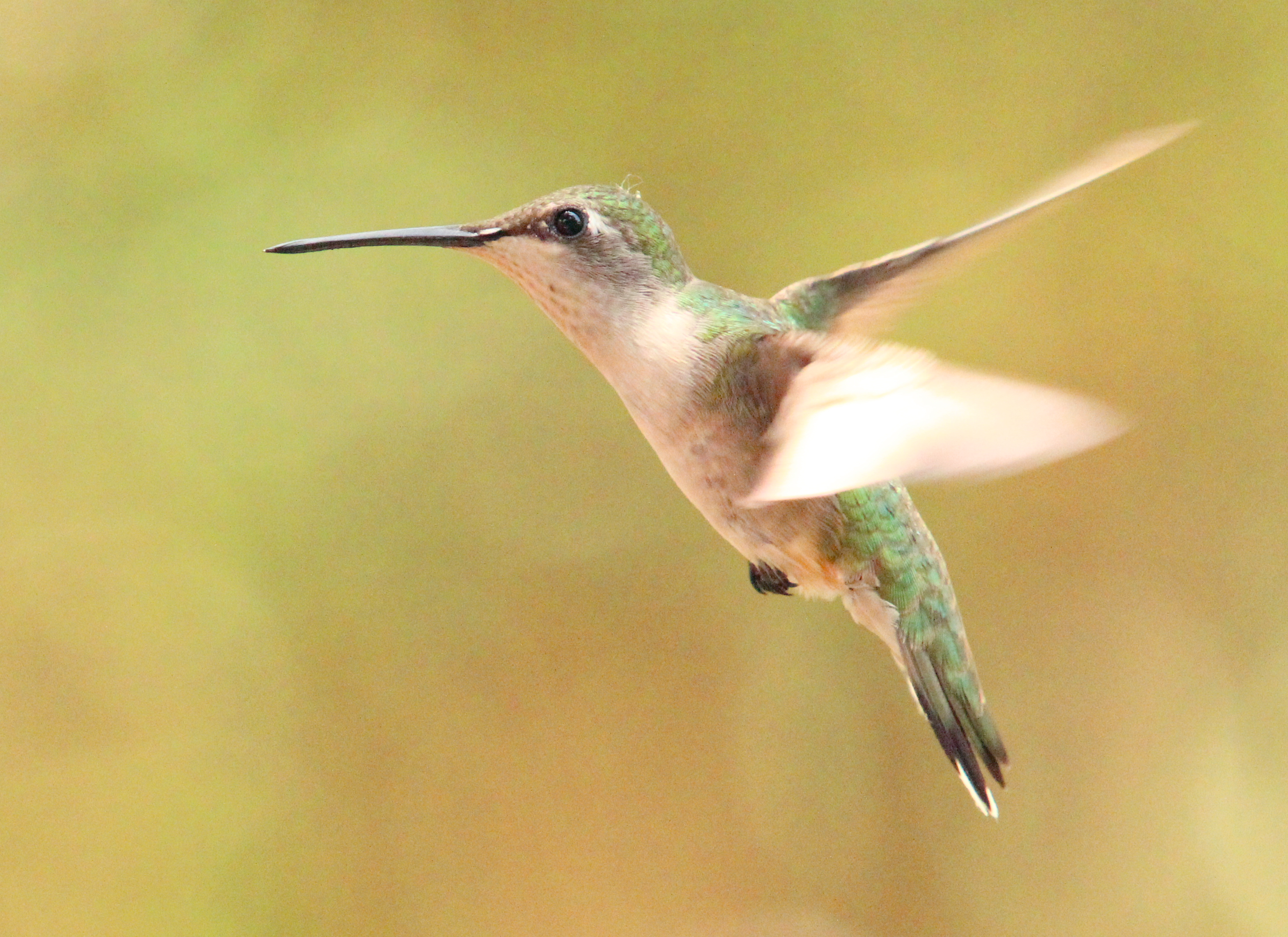
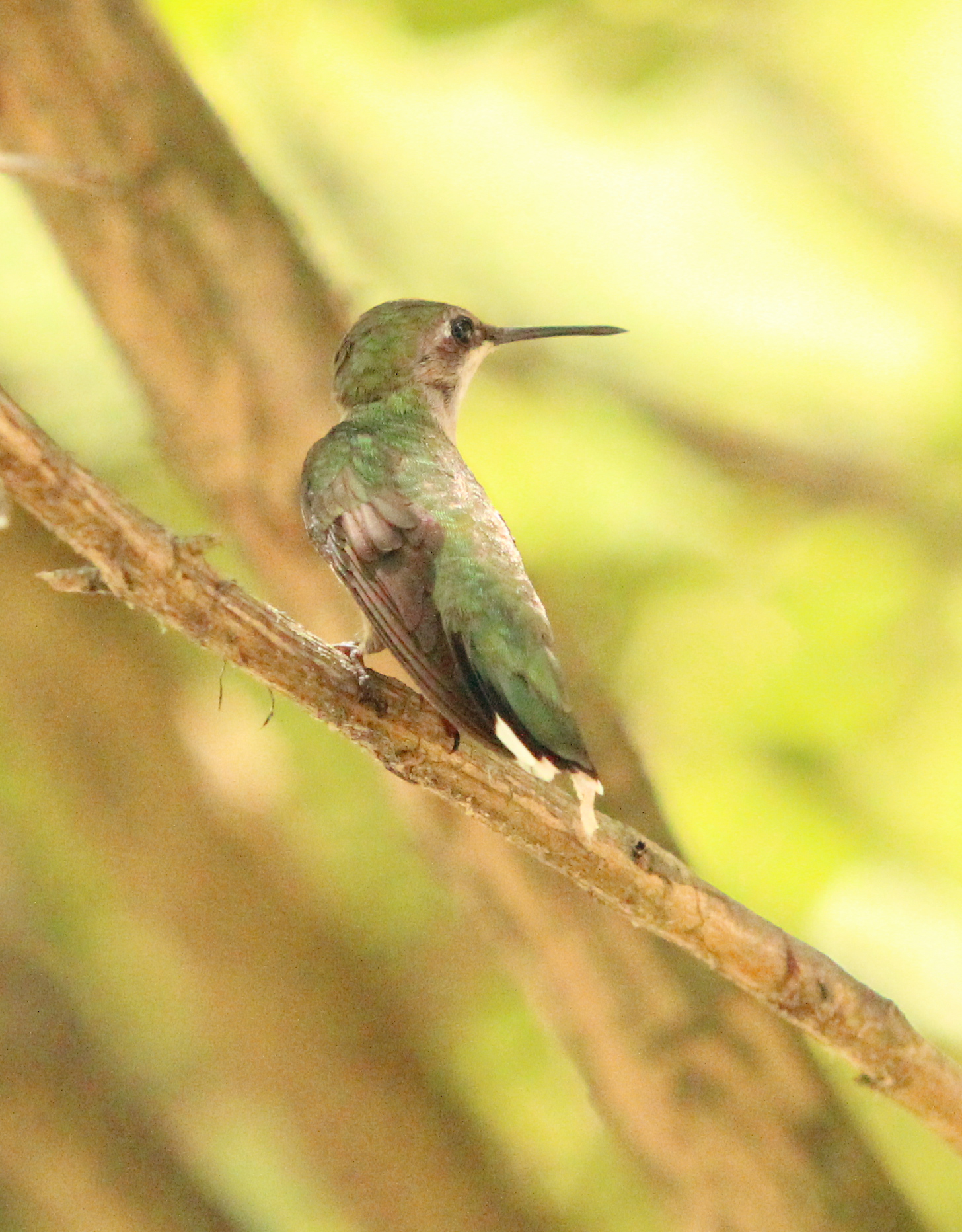
I hope you don’t have the Ruby-Throated Hummingbird in mind when describing how you don’t eat much or “eat like a bird” as the saying goes.
The hummingbird species visits as many as 2,000 flowers per day and consumes about 150-160 pounds of protein per day. I don’t know about you but I don’t think I could eat every 15 minutes like this species does.
I’m absolutely fascinated with this bird, which weighs about two to six grams. It’s the only breeding hummingbird in the eastern North America and its connection with Arkansas County is traced back at least 50 years when area residents began actively setting out feeders.
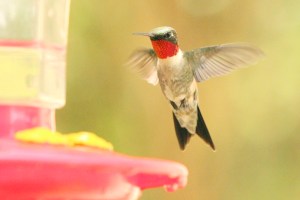
I was first introduced to the Ruby-Throated Hummingbird last year when I attended a program at Potlatch Conservation Education Center at Cook’s Lake in Casscoe. On Saturday, I went back to Cook’s Lake to visit Arkansas’ only licensed hummingbird bander, the center’s director Tanya Beasley. She’s one of about 150 banders with permits in the United States. She highlights her program through monthly workshops on the hummingbirds and the banding process each summer.
There are 300 species of hummingbirds whose habitats are solely in the Americas, although only 15 to 16 of these species are in the United States. Arkansas County only has the Ruby-Throated Hummingbird.
This species visits Arkansas County in the summer months as they head towards Central America via the Gulf of Mexico. Interesting side note: The albino hummingbirds struggle to make the flight across the Gulf of Mexico since the condition weakens their body and these birds rarely live a long life. Most birds only live three to five years.
Presently, Beasley said the hummingbirds in Arkansas County are nesting. Hummingbirds normally lay two pea-sized eggs about two to three days apart, which the female will incubate for about 12-16 days. After hatching, the fledglings are out of the nest by the third week and the female will have a second nest ready for two additional eggs.
“Seventy-five percent of the fledglings don’t make it,” she said. “They are very vulnerable to predators.”

By next month, Beasley said Cook’s Lake visitors will be able to see more than double the hummingbirds viewed this past weekend as more hummingbirds pass through as well as with the fledglings out of the nest.
The birds really are remarkable. They have about 950 feathers and, according to Beasley, one of the largest brains of any animal in relation to its body size. It has an excellent memory as well and will remember where it has found food, such as hummingbird feeders, in past years so it can visit them during future migrations.
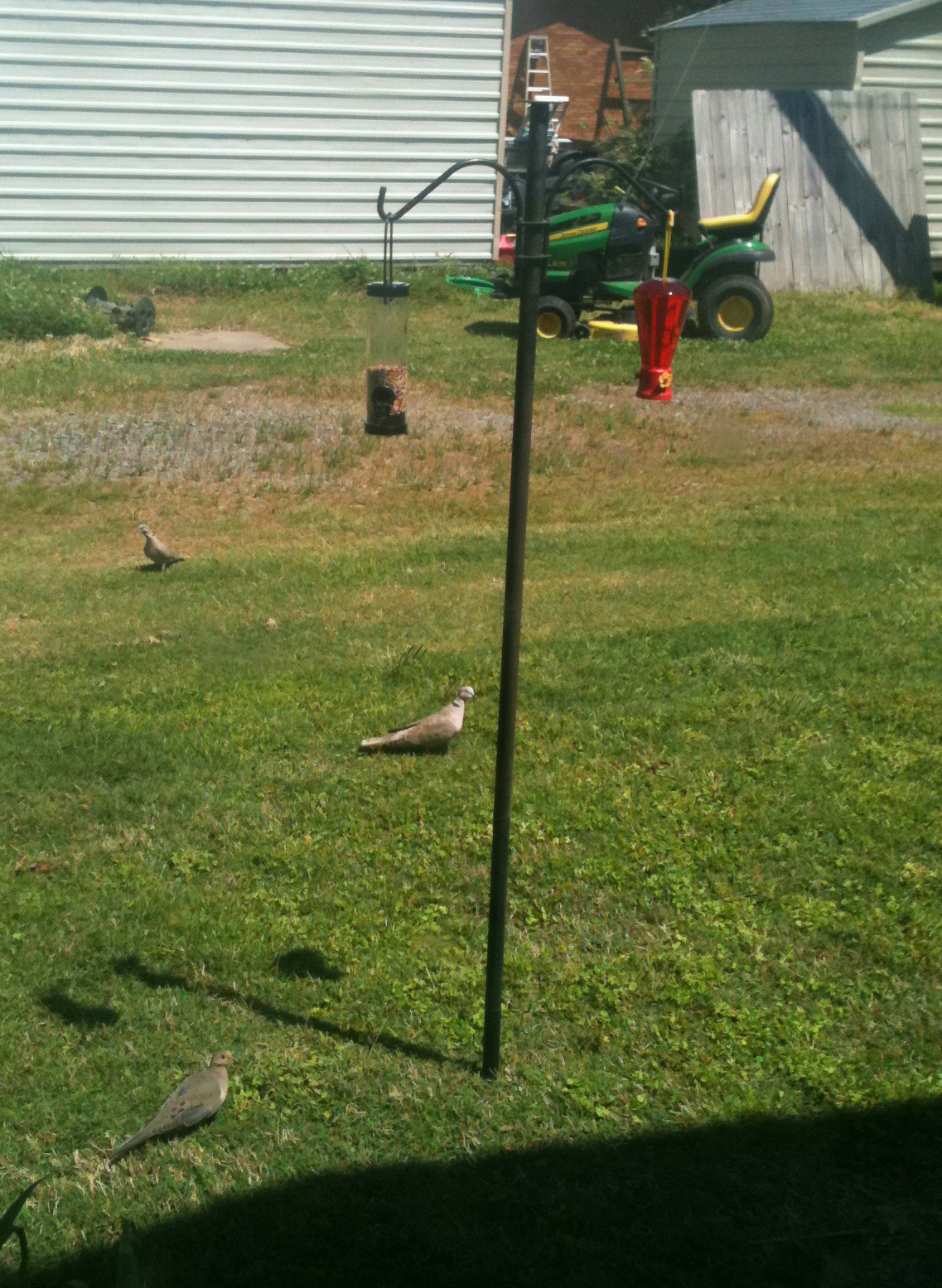
It’s a fact that Beasley and others attending this past weekend’s program kept reminding me of as I complained (okay, whined) that only bees were visiting my newly established hummingbird feeder. In case my luck continues to lag, Beasley also offered this tip: Incorporate red throughout my yard.
The color red attracts hummingbirds along with various plants, including the pineapple sage. I didn’t realize it, but hummingbirds have excellent sight but cannot smell so I was warned not to purchase a plant for the smell alone.
I’m still considering whether to leave my new feeder out year-round. Beasley recommends it, saying the feeder can be hung just above a candle warmer or placed two and a half to three feet away from a spotlight to keep the liquid warm. I’ll probably end up trying the spot light trick.













 Memos for Me