Photo of day: Eastern Kingbird
August 16, 2012

An Eastern Kingbird at the Lake Norrell Access in Saline County. The sighting made a great ending to my trip to see the Brown Booby on Lake Norrell.
An Eastern Kingbird at the Lake Norrell Access in Saline County. The sighting made a great ending to my trip to see the Brown Booby on Lake Norrell.
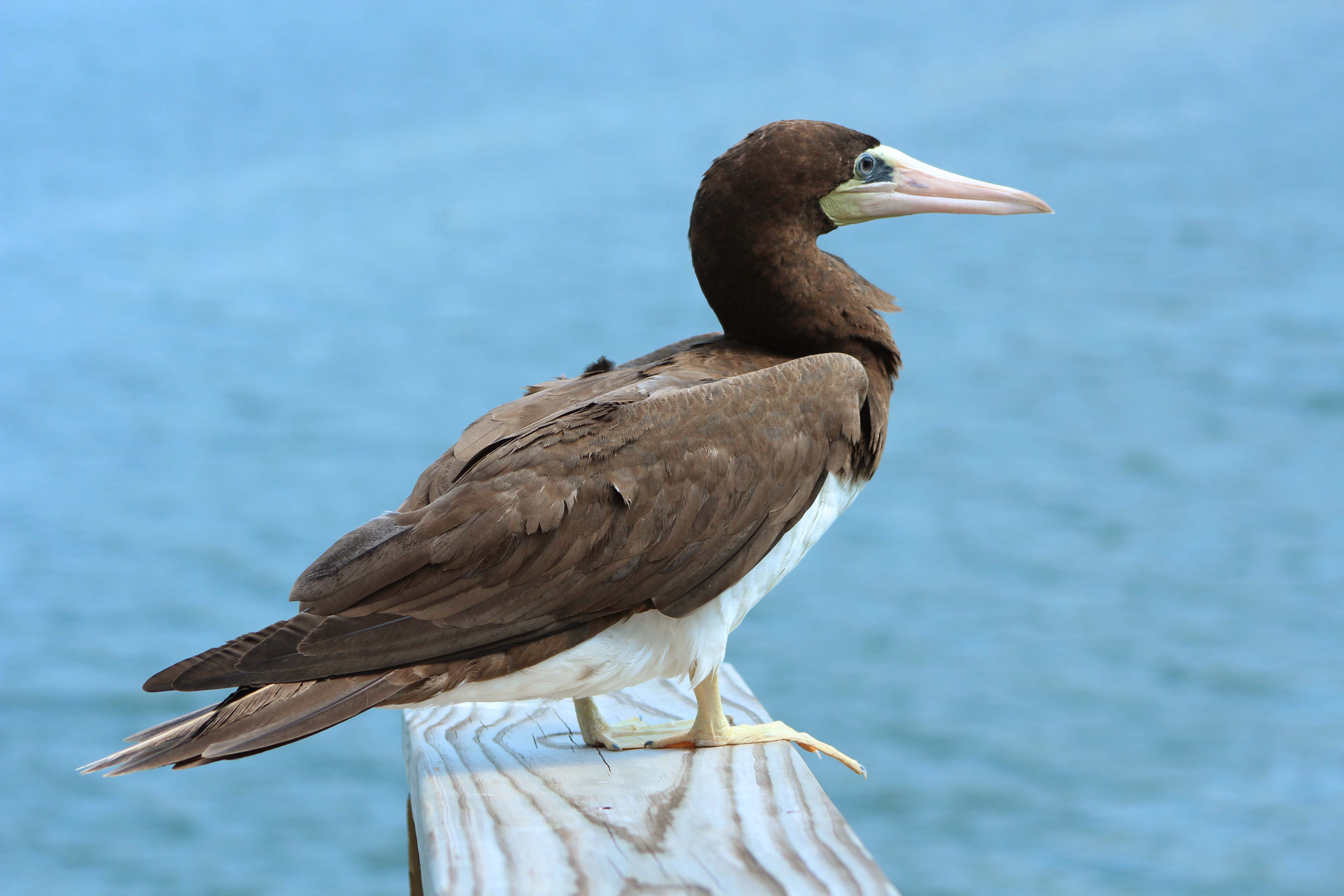
It’s been a while since I’ve been on here — this heat has kept me lazy and indoors. However, that’s slowly changing. Yesterday, I headed only an hour away to Lake Norrell, located just outside of Alexander in Saline County to photograph an unusual visitor.
According to the American Birding Association, Vickie and Pat Martin first photographed this new comer at their Lake Norrell home a week ago on Aug. 9 and sent the picture to a friend to help ID.
Who was it? An adult female Brown Booby, according to their friend, birder Dottie Boyles. It’s the first record of a Brown Booby in Arkansas (pending acceptance) and hundreds of birders had already flocked to Alexander by the time I arrived mid-afternoon Wednesday.
Lake Norrell is a municipal water supply lake for the City of Benton that is located on Bushy Creek, a North Fork Saline River tributary. The lake is released into surrounding streams as well to protect the Fat Pocketbook, a nearby endangered specie. The lake is surrounded by private property, although the city and Arkansas Game and Fish Commission has since provided public access in April 2000.
Presently, water levels are extremely low — at some points its down 15 feet. The low water level didn’t seem to bother this Brown Booby. She spent most of my visit preening.

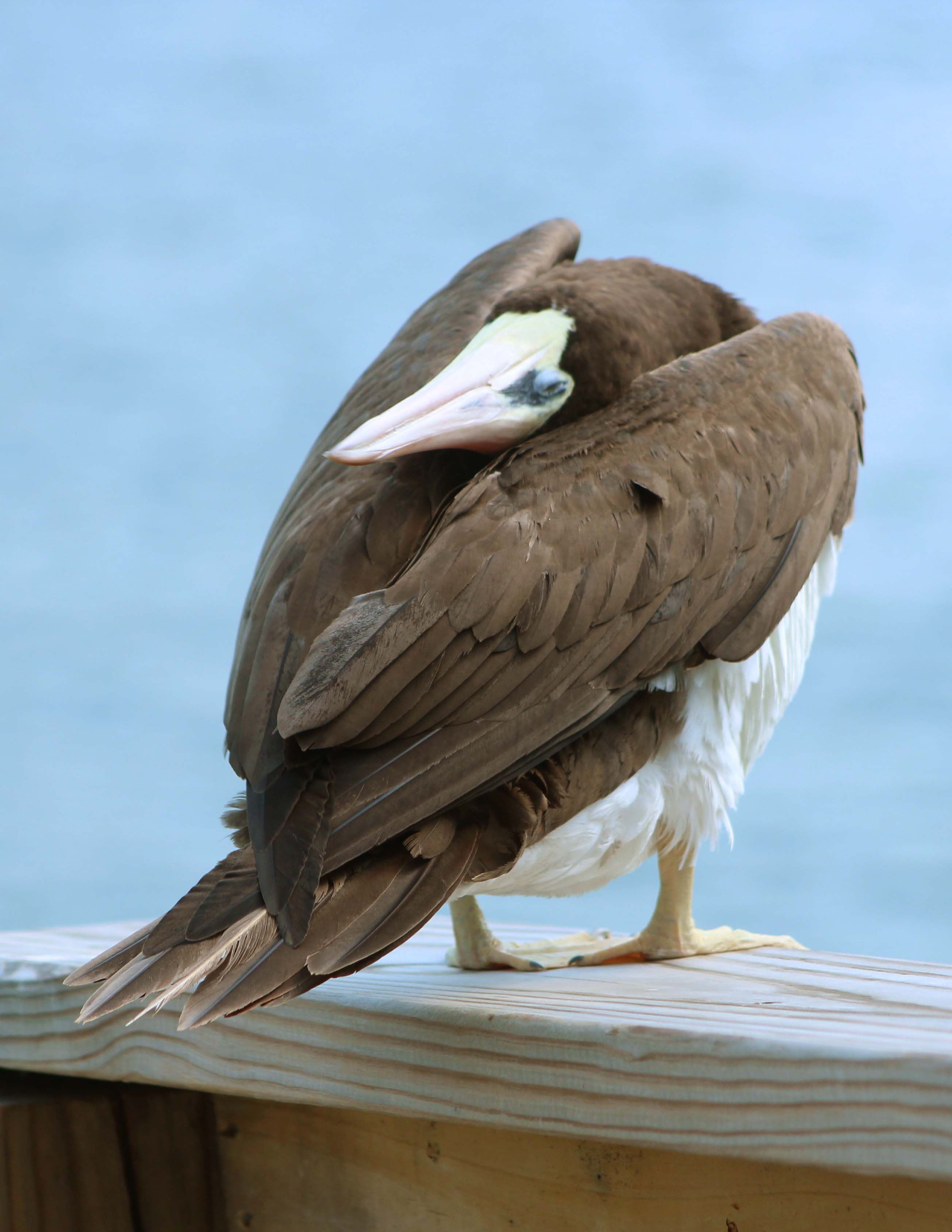
The All About Birds website describes the Brown Booby as a tropical waters seabird that ranges as far north as the Gulf of California, although it is rarely seen on both coasts of the United States.
A Lake Norrell couple (who had an awesome boat flag-see below) offered me a boat ride to see the bird as well as a detour to see a Mute Swan that first joined the lake’s duck and geese population earlier in the year. The swan appeared without its life-long mate.


Mute swans are native to both northern and central Eurasia. They were introduced to North America to inhabit ponds in parks and estates, according to All About Birds. This swan’s aggressive behavior is already known among Lake Norrell’s residents as well as its fierce protectiveness of its’ surrounding goslings and ducklings.

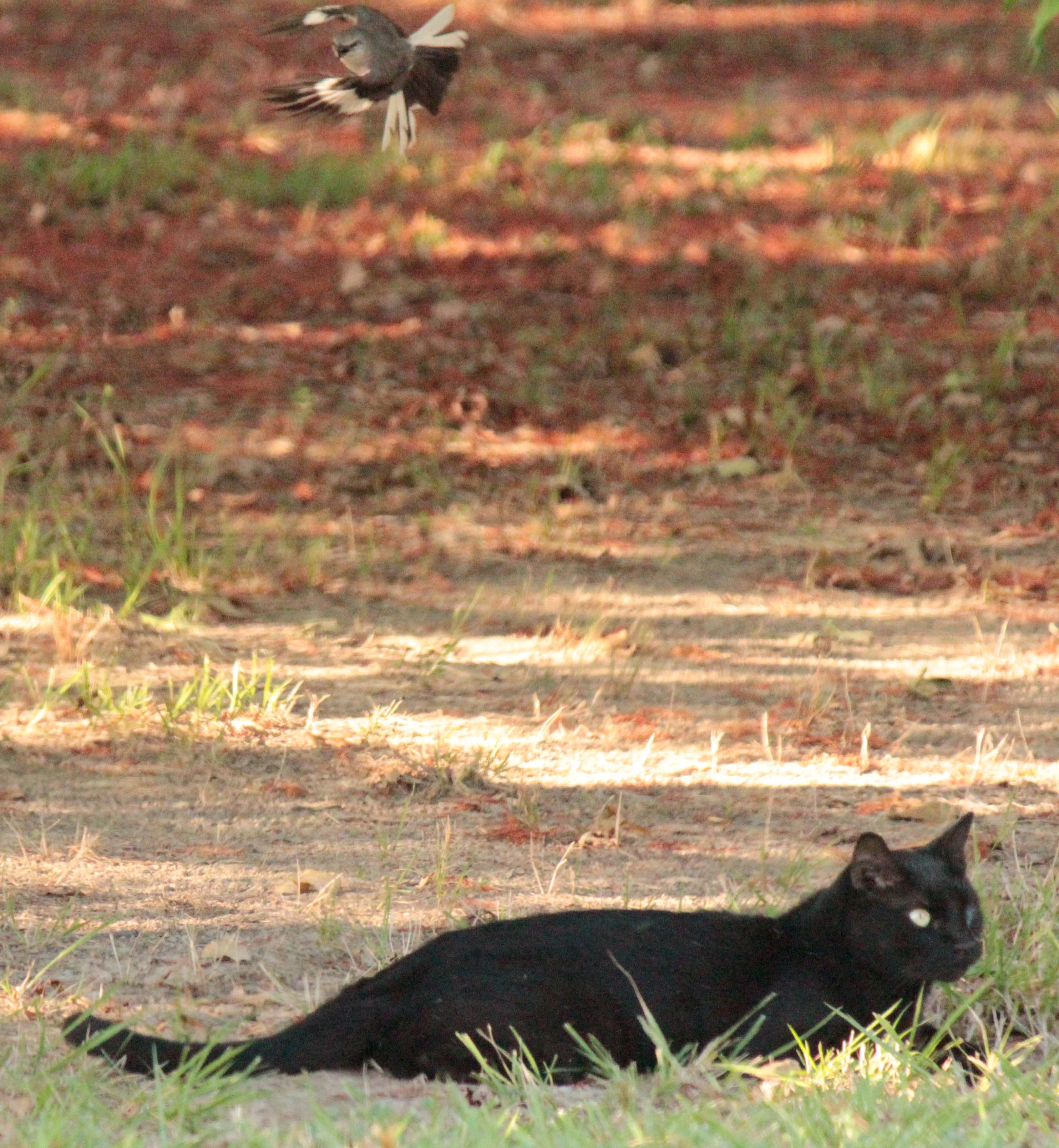
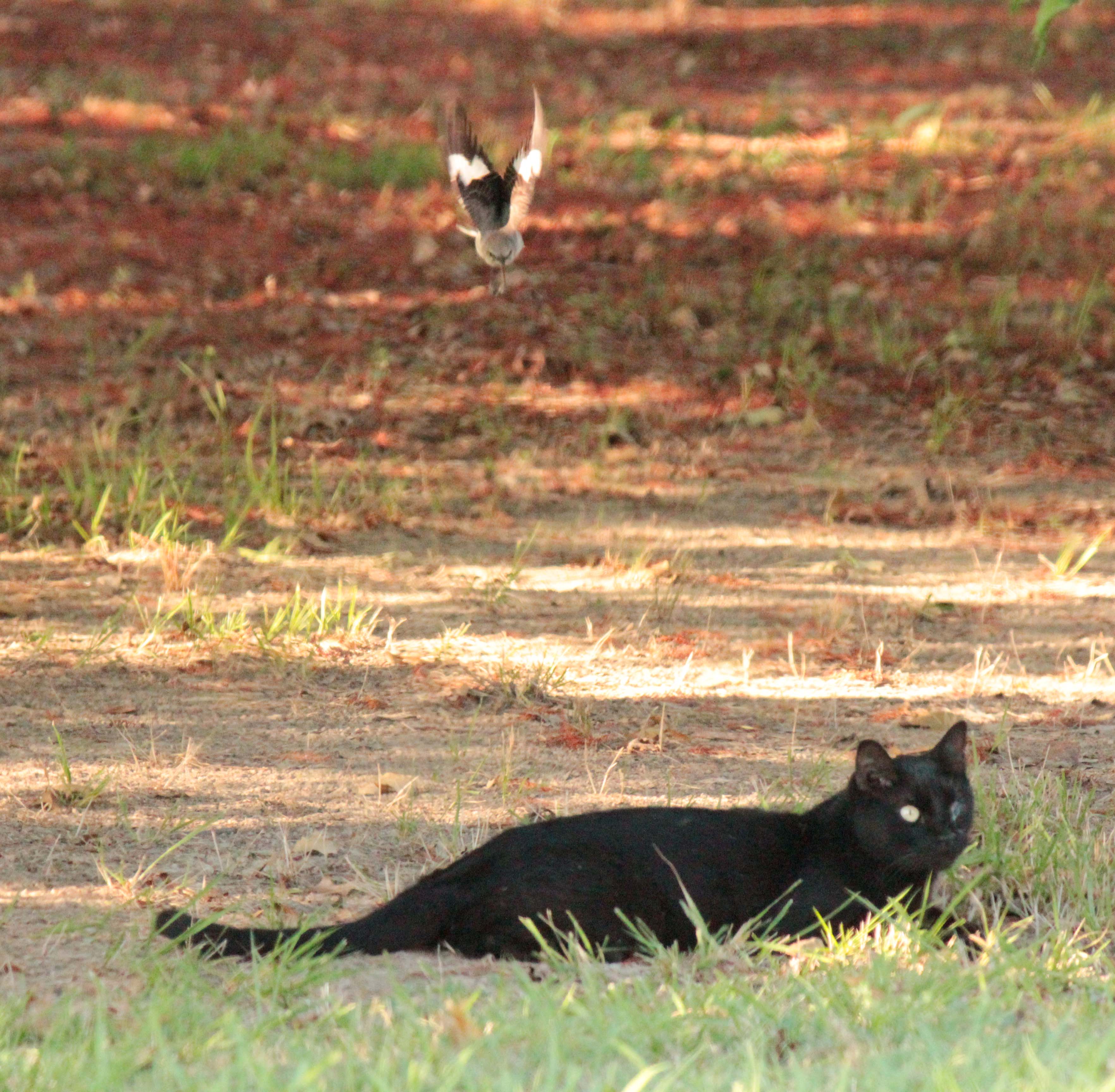
For three days straight, the above Northern Mockingbird attacked my family’s one-eyed cat, Kit, as he roamed the yard and drive way. I watched the bird chase other birds away as well but the main focus was on Kit. Kit was basically apathetic to the ordeal. By Sunday, I think it was more traumatizing to the bird.

Arkansas has been in a drought for the past few weeks. We’re still in extreme wildfire danger. So, as you can imagine, our farmers and county officials, as well as the above great egrets, were pretty excited when it began raining last Friday and continued over the weekend.
It always amazes me how a little rain can change Arkansas County’s dry landscape into a flood zone in a short-time frame. My hometown is near Crowley’s Ridge so I’m used to rolling hills. I’m still getting used to the Grand Prairie, which floods easily.

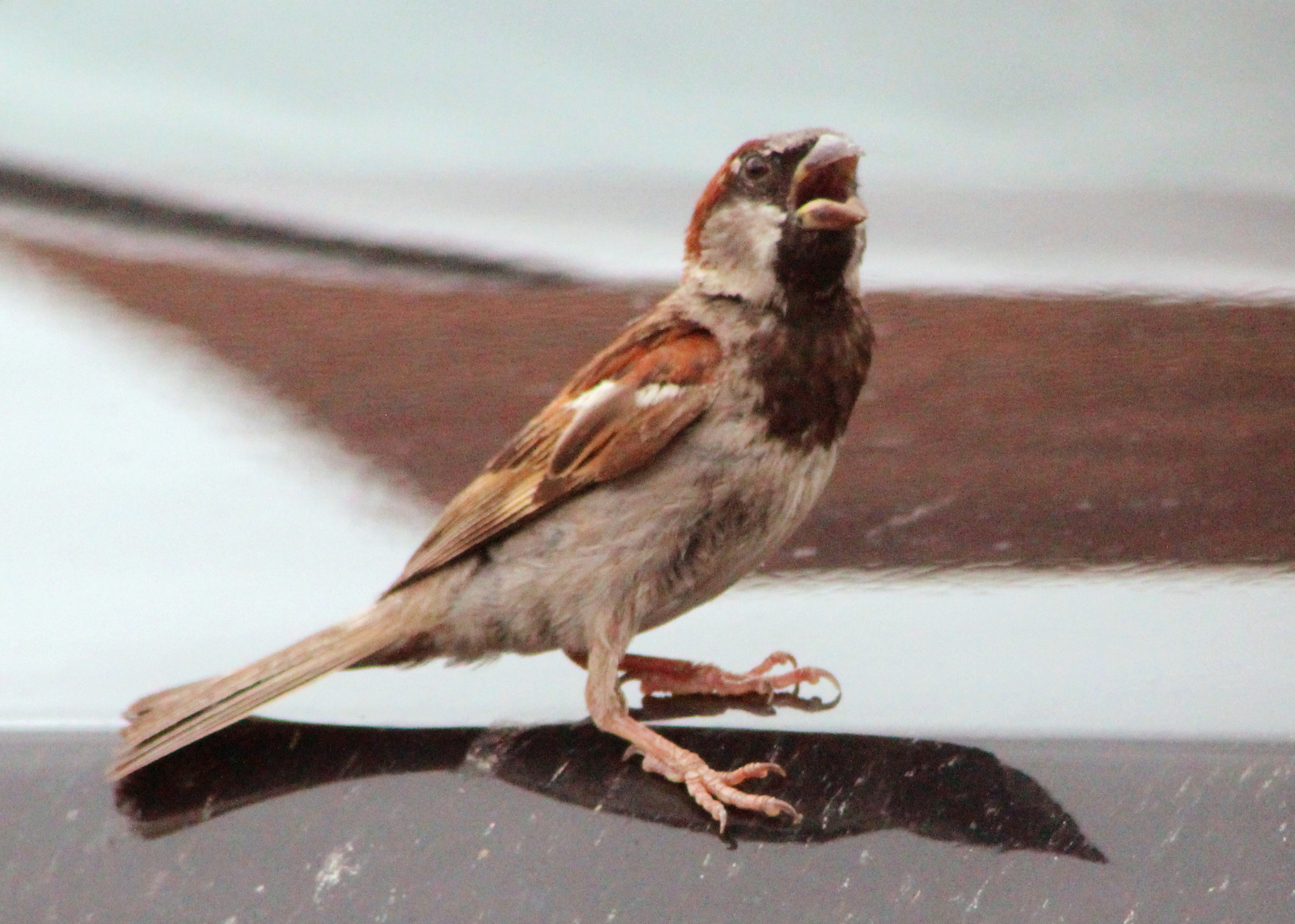
Still, the rain did manage to upset some, such as this House Sparrow. I first noticed the little guy because I thought he was stuck in a vehicle’s grill (see below). Nope, he just flew around the vehicles having a temper tantrum. It was amusing for a bit.


About 10 years ago, I attended my first mass at Morris Hall Chapel on the grounds of St. John Catholic Center in Little Rock. It was during my first Diocese of Little Rock retreat and I ended up visiting the center multiple times over the next year as a staff member for the following retreat.
Last Friday, a candidacy mass for my cousin Stephen reintroduced me to the chapel. We arrived really early (my dad was afraid of traffic despite my repeated assurances that we would be fine) so we had plenty of time to learn about the chapel’s history.
It’s actually pretty neat. Architect Thomas Harding Sr., whose father designed The Cathedral of St. Andrew in the 1880s, designed the Little Rock chapel. Following a 1951 dedication, it was originally used to serve seminarians attending St. John Home Mission Seminary. The seminary closed in 1967 and the St. John Catholic Center is now the site of the Diocese of Little Rock’s administrative offices.

The chapel, renovated in 1989, is gorgeous. It has statues of the Blessed Virgin Mary and St. Joseph (see above picture) that a German artist near Interlaken, Switzerland, carved out of lindenwood while Italian artist Lenatori made the altar in 1910 in Rome. Bishop John B. Morris purchased the altar in 1915 and it was originally used in the Little Rock College chapel before being moved to Morris Hall in 1952.
 There are also 12 stained glass windows depicting saints whose lives are associated with the church’s priesthood or missionary work. The most meaningful one to me was the one portraying St. Theresa, the Little Flower.
St. Theresa (1873-1897) became a Carmelite nun at age 15 and is the patroness of missions. She is known for her “little way” of quiet acts of love, humble suffering and simple trust in God alone.
She is definitely some one worth being like.


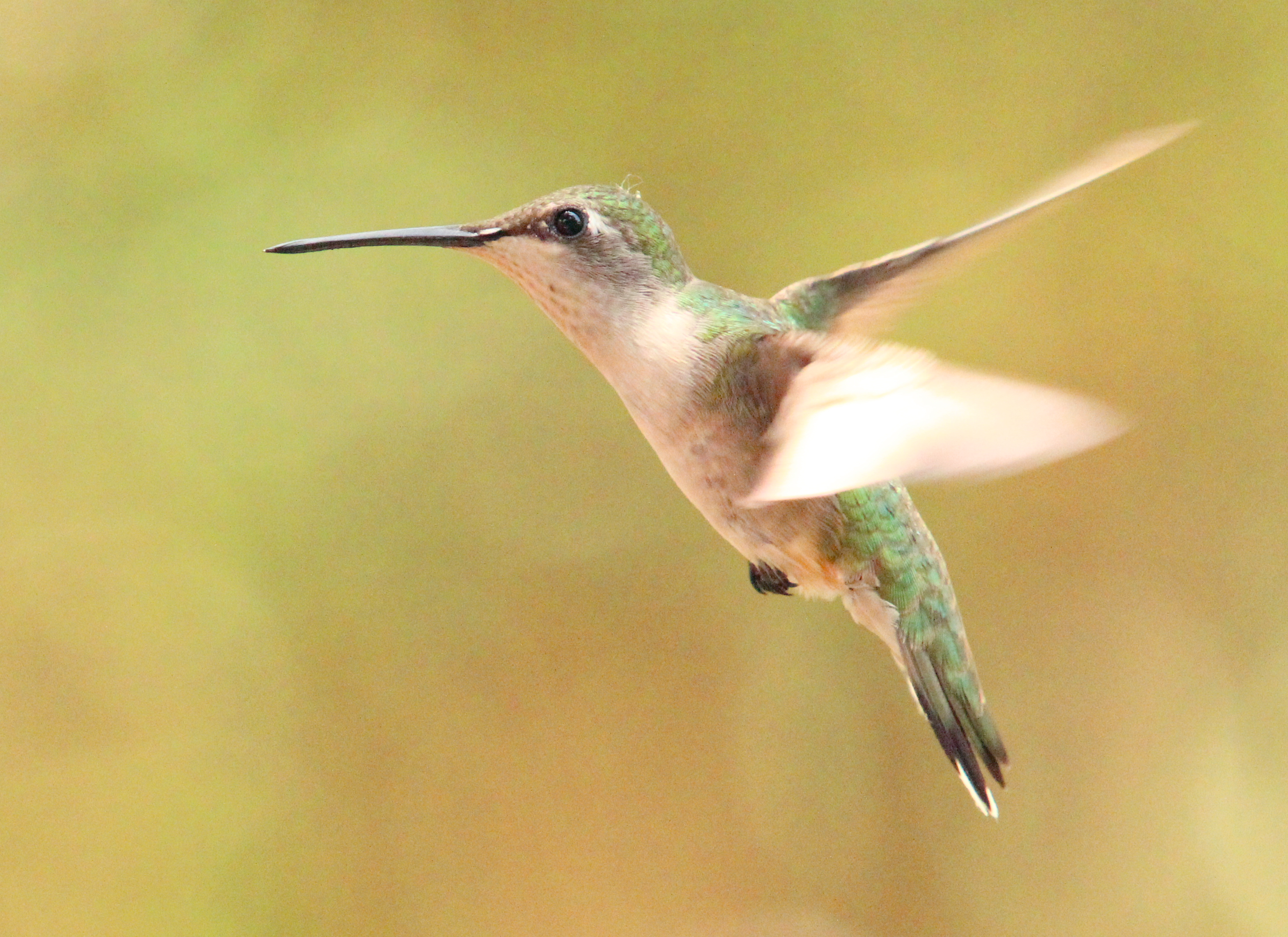
I hope you don’t have the Ruby-Throated Hummingbird in mind when describing how you don’t eat much or “eat like a bird” as the saying goes.
The hummingbird species visits as many as 2,000 flowers per day and consumes about 150-160 pounds of protein per day. I don’t know about you but I don’t think I could eat every 15 minutes like this species does.
I’m absolutely fascinated with this bird, which weighs about two to six grams. It’s the only breeding hummingbird in the eastern North America and its connection with Arkansas County is traced back at least 50 years when area residents began actively setting out feeders.

I was first introduced to the Ruby-Throated Hummingbird last year when I attended a program at Potlatch Conservation Education Center at Cook’s Lake in Casscoe. On Saturday, I went back to Cook’s Lake to visit Arkansas’ only licensed hummingbird bander, the center’s director Tanya Beasley. She’s one of about 150 banders with permits in the United States. She highlights her program through monthly workshops on the hummingbirds and the banding process each summer.
There are 300 species of hummingbirds whose habitats are solely in the Americas, although only 15 to 16 of these species are in the United States. Arkansas County only has the Ruby-Throated Hummingbird.
This species visits Arkansas County in the summer months as they head towards Central America via the Gulf of Mexico. Interesting side note: The albino hummingbirds struggle to make the flight across the Gulf of Mexico since the condition weakens their body and these birds rarely live a long life. Most birds only live three to five years.
Presently, Beasley said the hummingbirds in Arkansas County are nesting. Hummingbirds normally lay two pea-sized eggs about two to three days apart, which the female will incubate for about 12-16 days. After hatching, the fledglings are out of the nest by the third week and the female will have a second nest ready for two additional eggs.
“Seventy-five percent of the fledglings don’t make it,” she said. “They are very vulnerable to predators.”
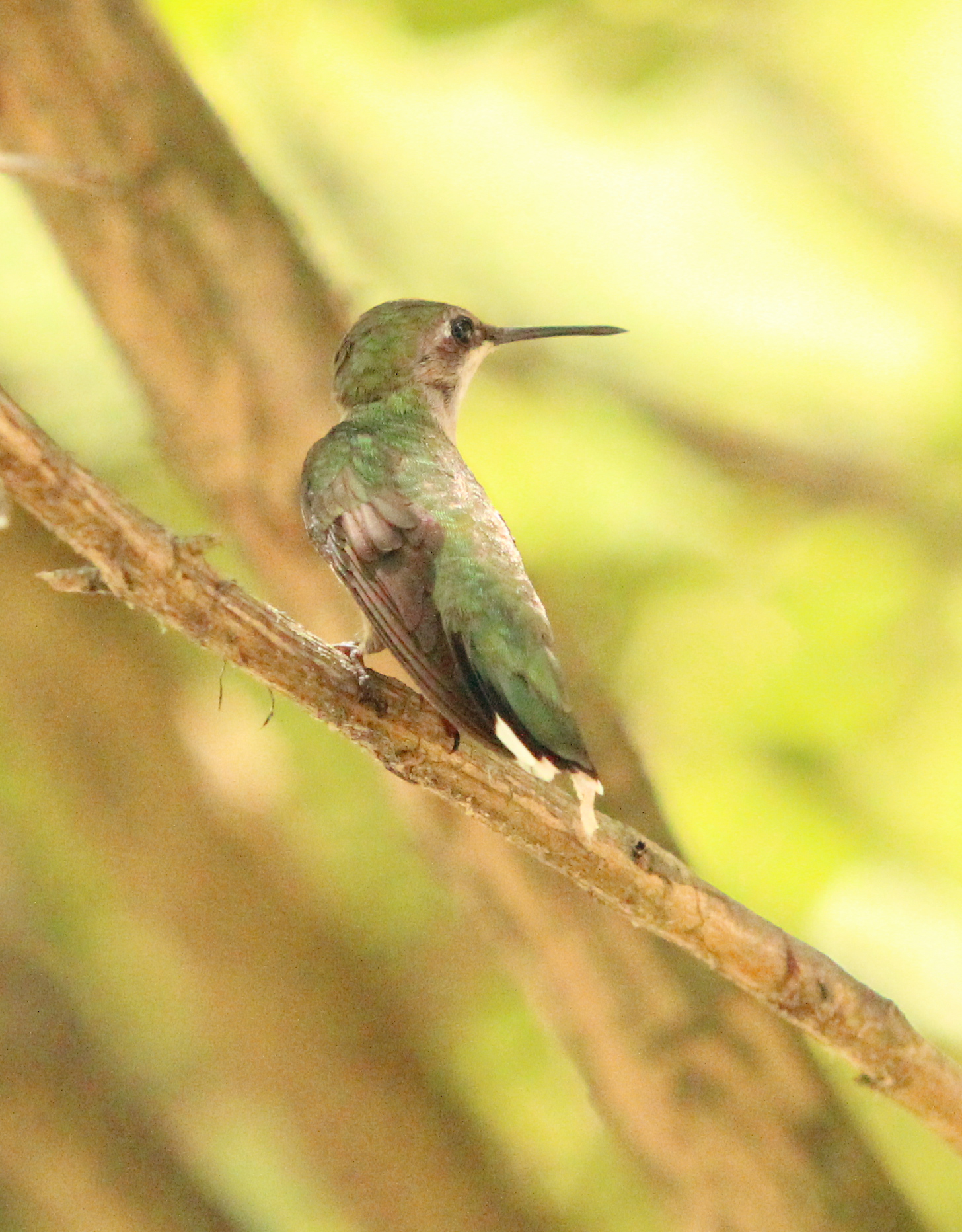
By next month, Beasley said Cook’s Lake visitors will be able to see more than double the hummingbirds viewed this past weekend as more hummingbirds pass through as well as with the fledglings out of the nest.
The birds really are remarkable. They have about 950 feathers and, according to Beasley, one of the largest brains of any animal in relation to its body size. It has an excellent memory as well and will remember where it has found food, such as hummingbird feeders, in past years so it can visit them during future migrations.
It’s a fact that Beasley and others attending this past weekend’s program kept reminding me of as I complained (okay, whined) that only bees were visiting my newly established hummingbird feeder. In case my luck continues to lag, Beasley also offered this tip: Incorporate red throughout my yard.
The color red attracts hummingbirds along with various plants, including the pineapple sage. I didn’t realize it, but hummingbirds have excellent sight but cannot smell so I was warned not to purchase a plant for the smell alone.
I’m still considering whether to leave my new feeder out year-round. Beasley recommends it, saying the feeder can be hung just above a candle warmer or placed two and a half to three feet away from a spotlight to keep the liquid warm. I’ll probably end up trying the spot light trick.


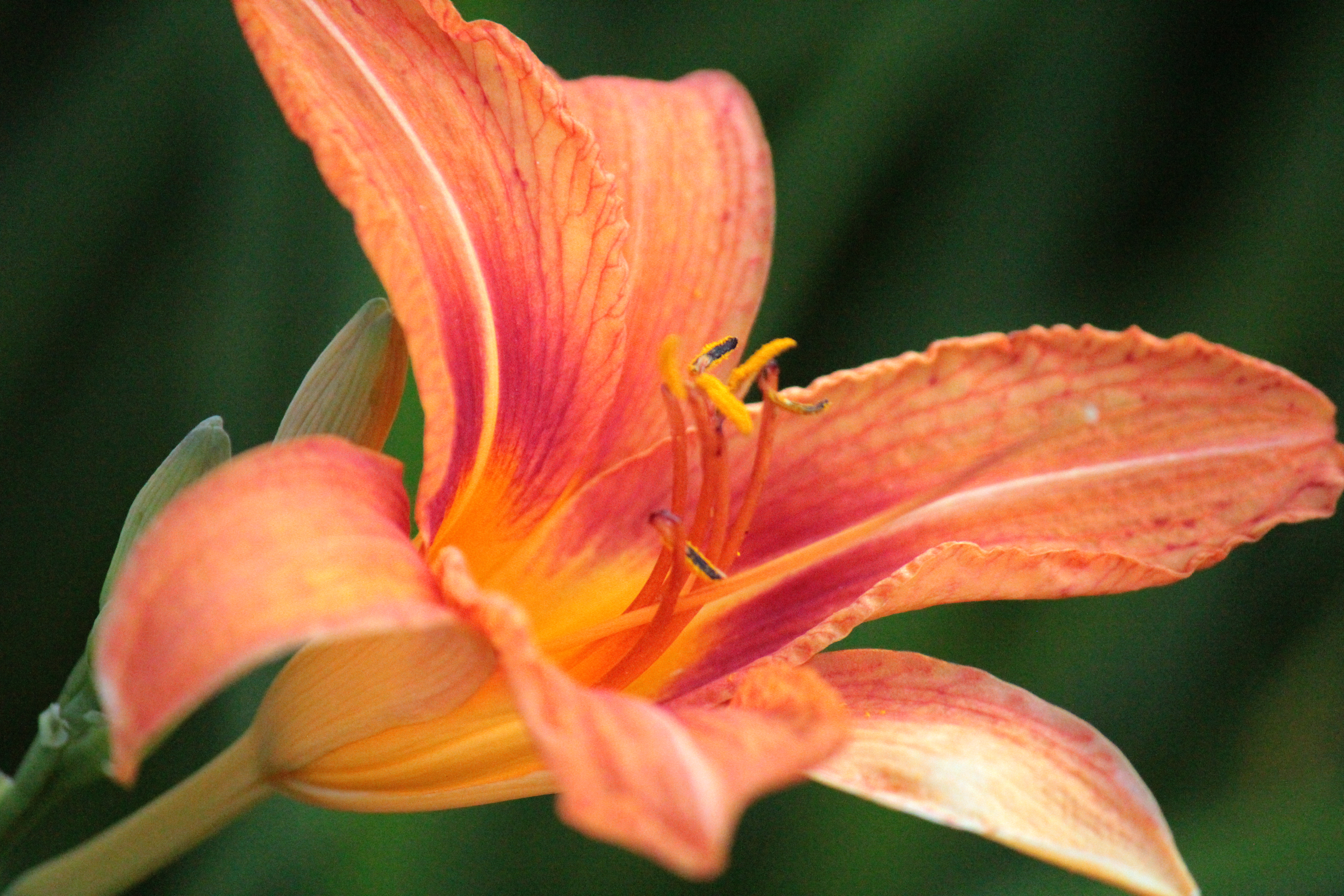
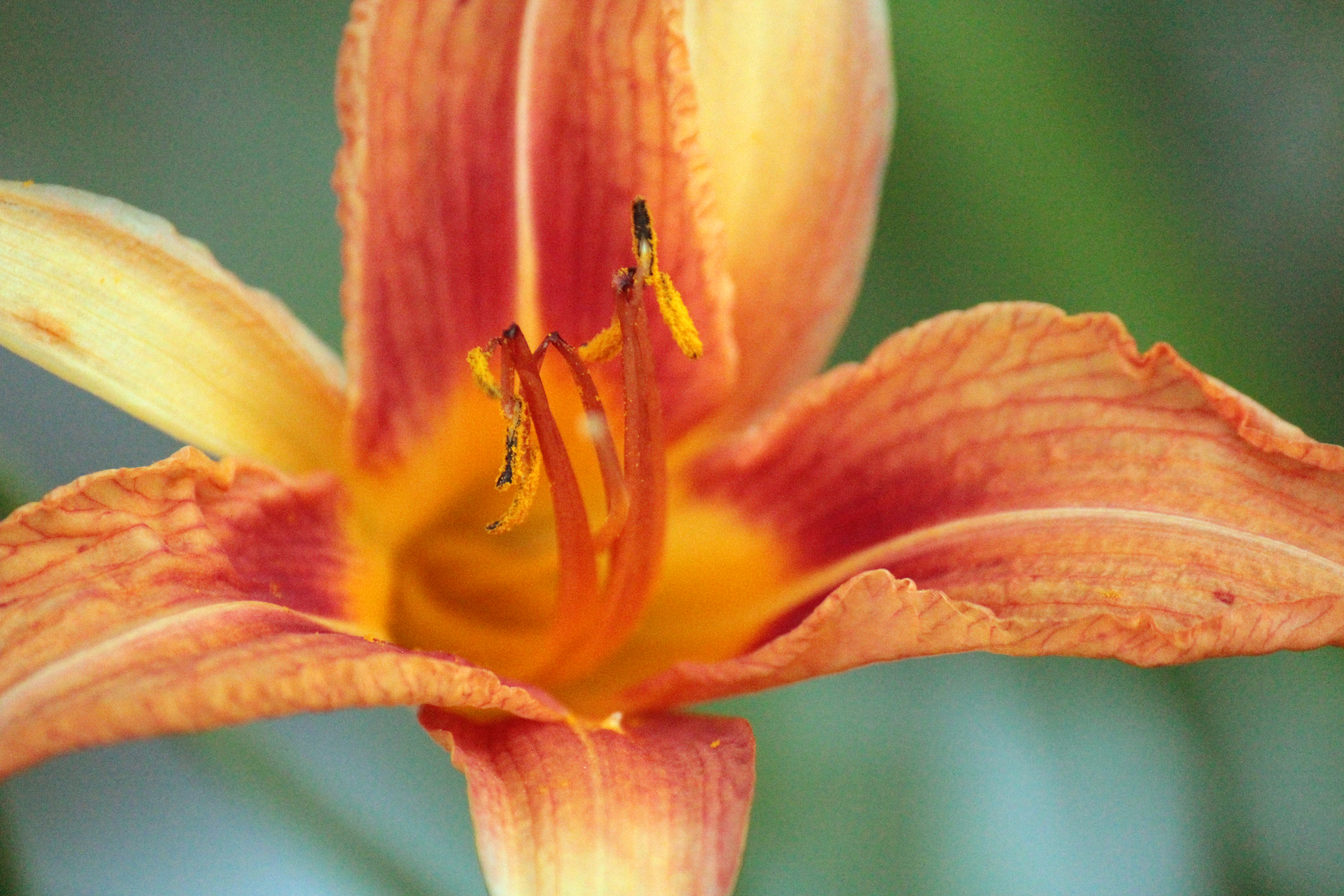
My house is presently surrounded by gorgeous daylilies. I can’t help but smile each time I set foot outside of my house. Sending cheer your way!

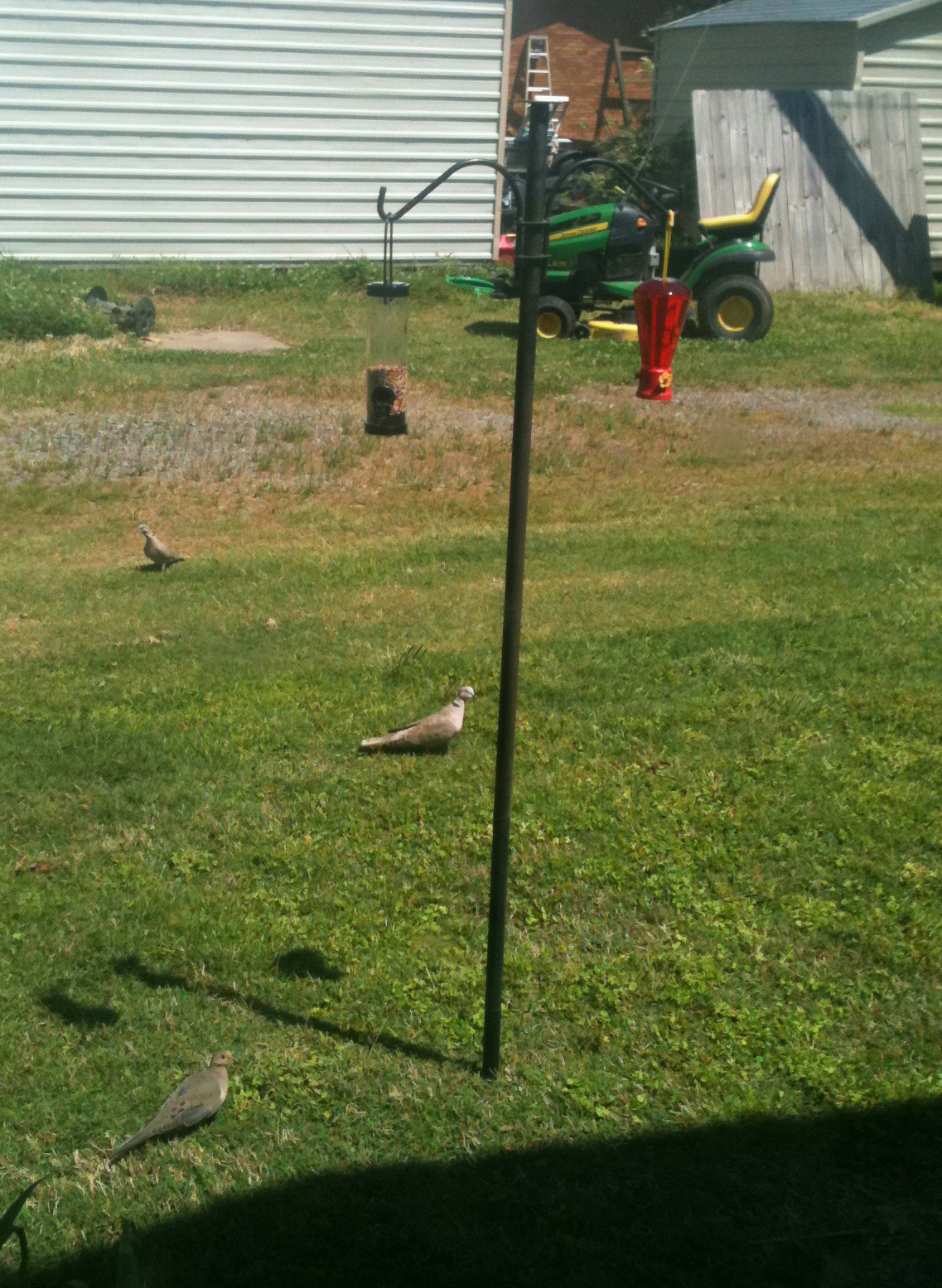
It’s official: My bird feeder is a success!
On Sunday, I put up a bird feeder and a hummingbird feeder and I was afraid that it would go unused. I shouldn’t have worried — there were doves eating when I arrived home for lunch on Monday. This morning, I even noticed smaller (probably sparrows) eating.
I’m pretty excited. Now, if I can just get some hummingbirds I will be even more happier.
Rediscovering Arkansas with a few detours.
We preserve, conserve, and study the native plants of Arkansas
Our Nicaraguan Journey
Rediscovering Arkansas with a few detours.
Think left & think right & think low & think high. Oh, the thinks you can think up if only you try!" -Dr. Seuss
I previously worked as a news and sports photographer. Recently I have been enjoying wildlife photography. My approach toward bird photos is similar to sports photography. I attempt to capture mostly action and hopefully a unique perspective.
Urbanites in the woods, doing all our own stunts.
WILD IN FLORIDA: Exploring and Photographing Florida's Threatened Ecosystems, Wildlife, and More
by Jo Woolf
Rediscovering Arkansas with a few detours.
Rediscovering Arkansas with a few detours.
Rediscovering Arkansas with a few detours.
 Memos for Me