Picture it: 300 bird species in Arkansas
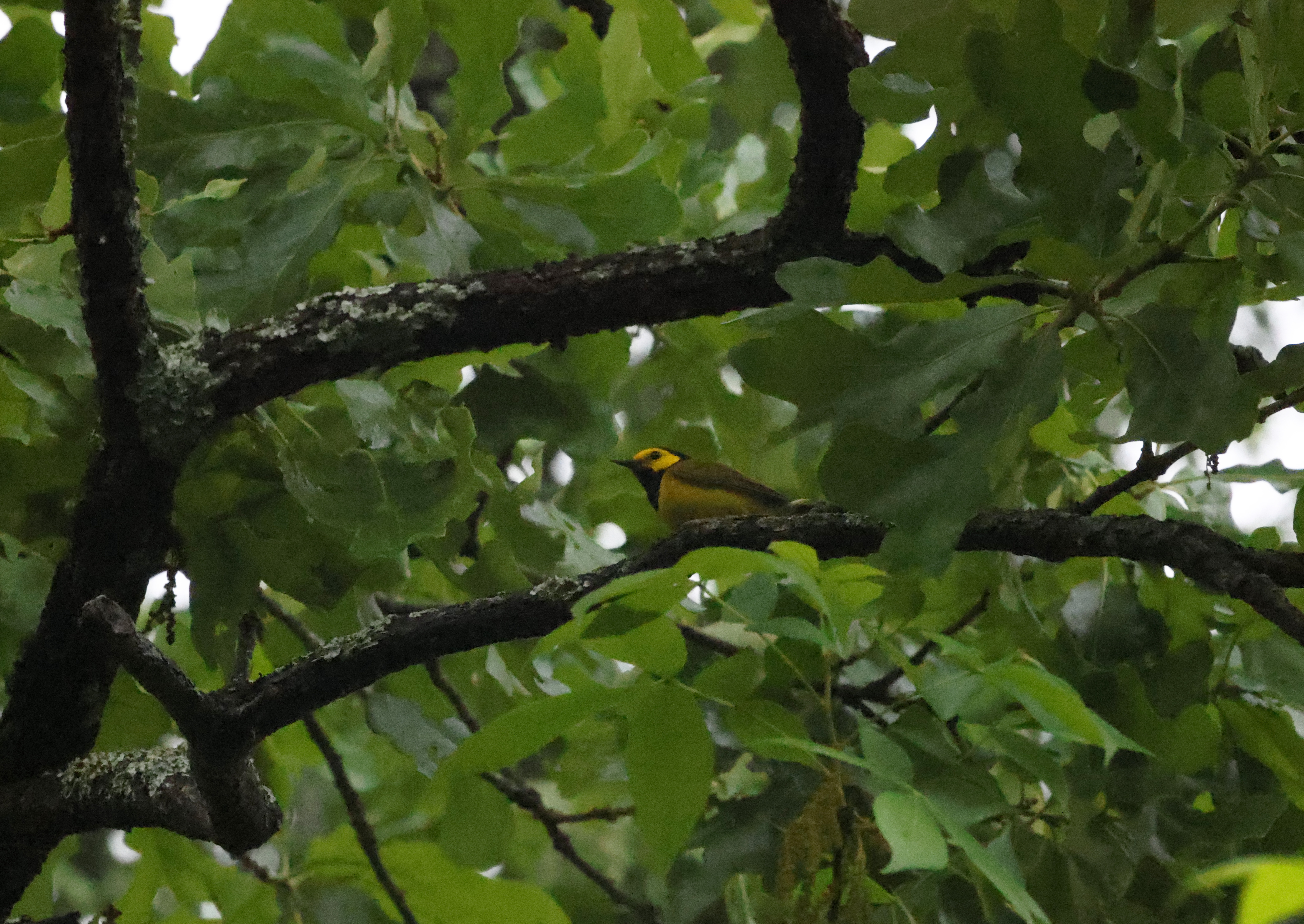
I finally saw the elusive-to-me Hooded Warbler this morning, and photographed my 300th bird species in Arkansas.

I actually got my first great look at a Hooded Warbler in Marion over 10 years ago. I was walking down the steps of my aunt’s back patio and came face to face with one. I think it shocked both of us because I just stood there with the bird fluttering just inches from my face.

But I never got a photo of it. That remained true, even after I took up birdwatching in 2012 and began my attempt to photograph as many bird species in Arkansas as I could. I heard it, but never saw it.

That luck changed Friday when a friend mentioned seeing it at the entrance of the Arkansas Game and Fish Commission headquarters. Around 7:30 a.m., I made it to the AGFC entrance and I didn’t even have to get out of my car to hear two calling to each other. While I never saw one, the second was constantly on the move and easy to spot.

Hooded Warblers breed in Arkansas and most of eastern United States, and winters in Central America. It generally hands out in the understory of forests, according to AllAboutBirds.org. While I do not see them often, the Hooded Warbler is pretty common with low conservation concern.

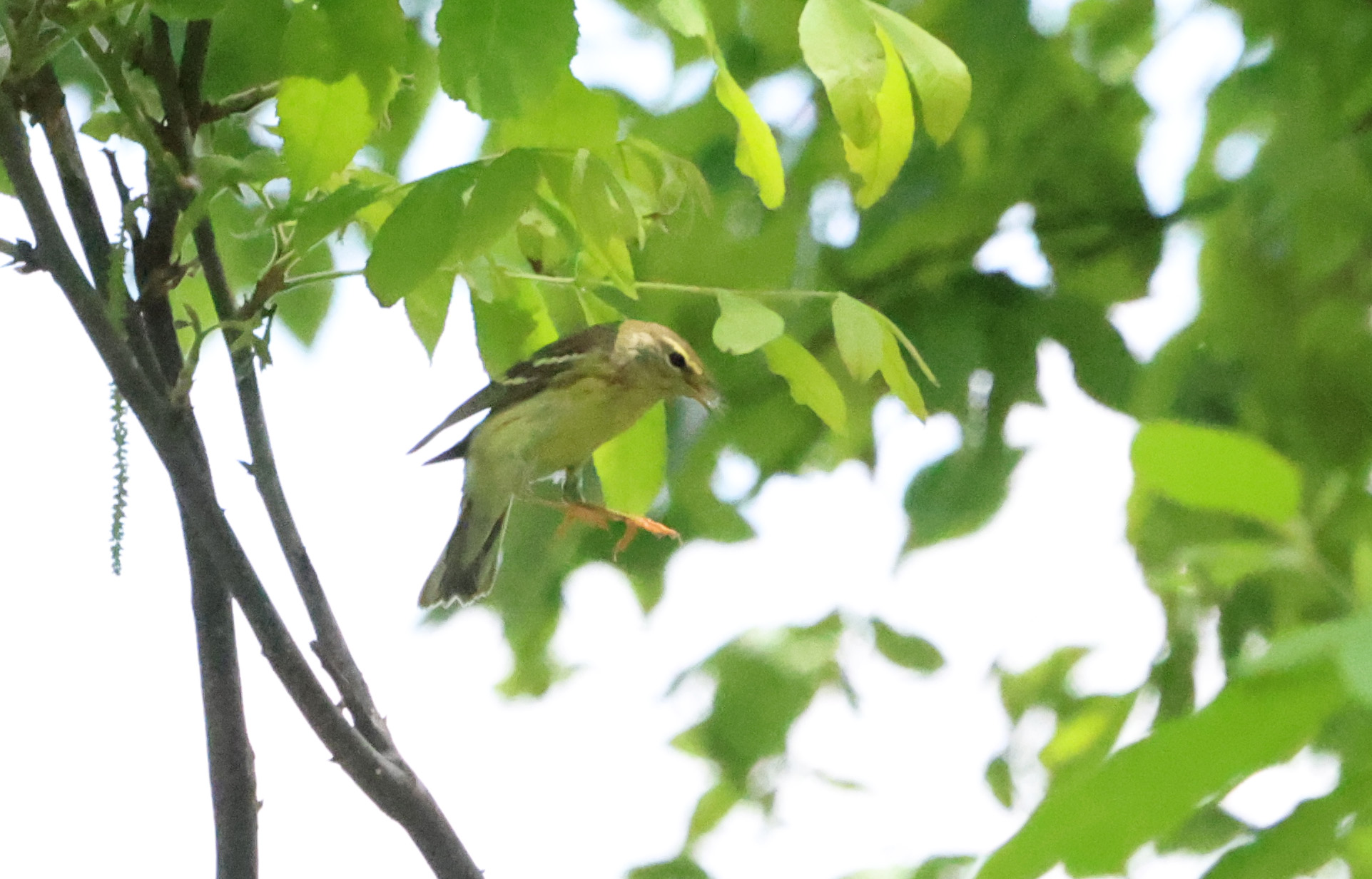
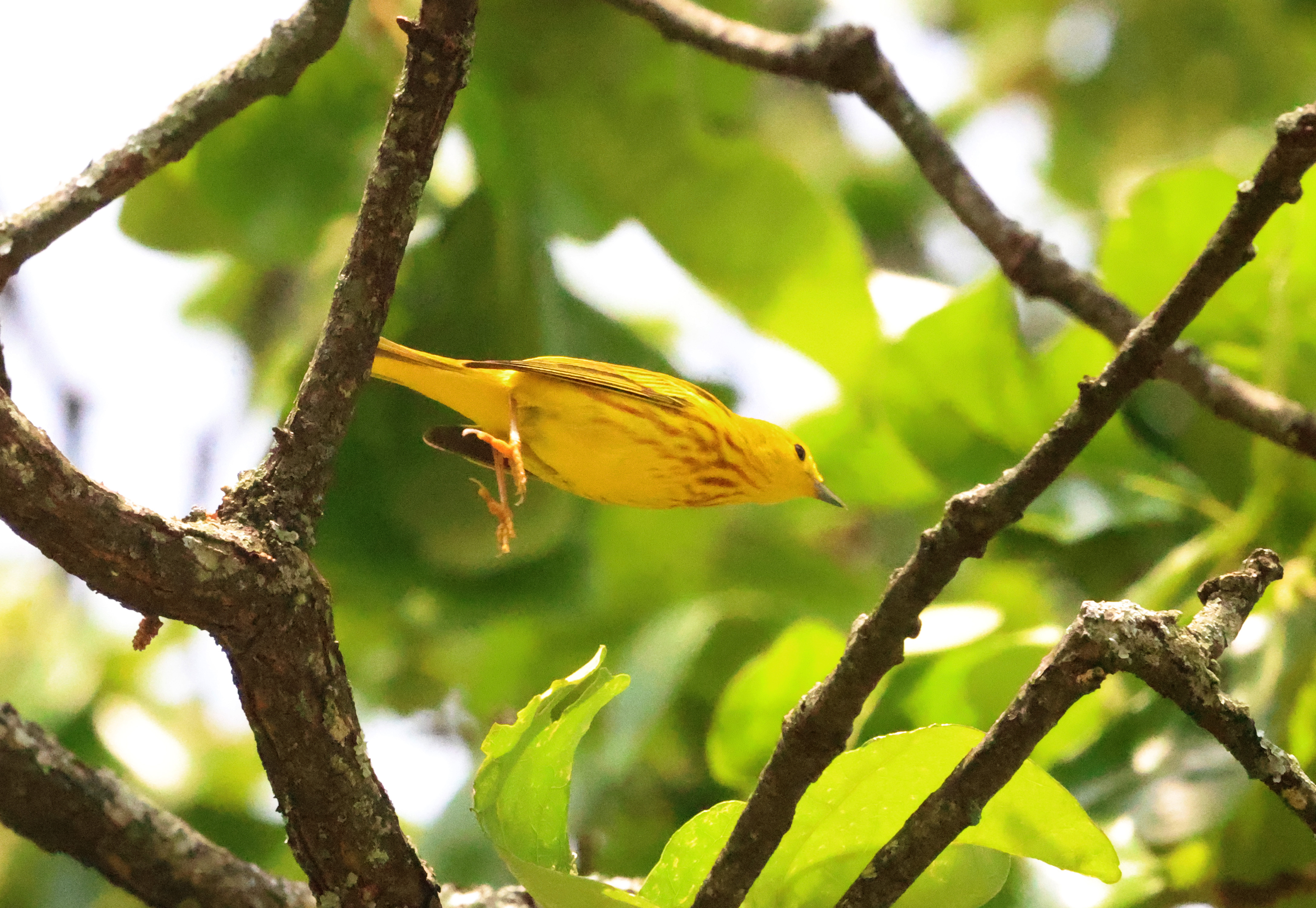
It’s the same for Yellow Warblers, which also breeds in Arkansas in the northern part of the state. It’s not uncommon for me to see these warblers, but today did mark the first time I saw one at home. They eat mostly insects and don’t come to backyard feeders, but it seemed perfectly happy in the large oak tree in my front yard.

Golden-winged Warbler

While the above photograph is of poor quality, it did give me the photograph proof I wanted to say I definitely saw my first Golden-winged Warbler on Sunday.

Golden-winged Warblers are small songbirds that are silvery gray with a slash of gold on the head and wings. They also have two white facial stripes. This one was hopping among the branches of a shrubby habitat at the north access of the Bell Slough Wildlife Management Area near Mayflower.

The world’s population of Golden-winged Warblers have declined sharply. According to AllAboutbirds.org, they now have one of the smallest populations of any bird not on the endangered species list. They are currently on the birds watch list – which lists bird species that are at risk of becoming threatened or endangered with conservation action.

Arkansas has Golden-wined Warblers during the migration seasons. They breed in the shrubby, young forest habitats of the Upper Midwest and Applalachians, and winter in the open woodlands and shade-coffee plantations of Central and South America.

The Struggles to Identify

Bay-breasted Warbler

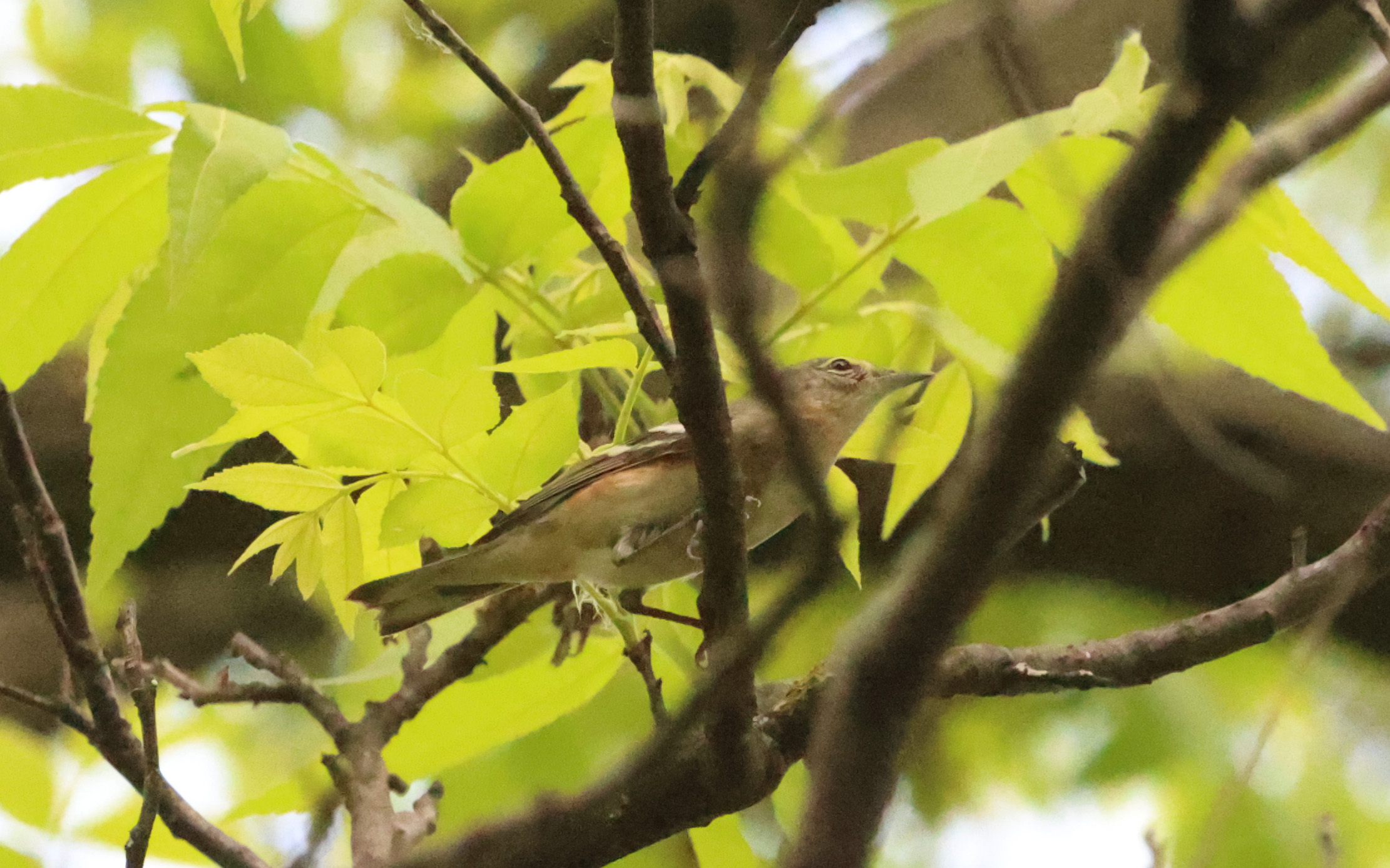
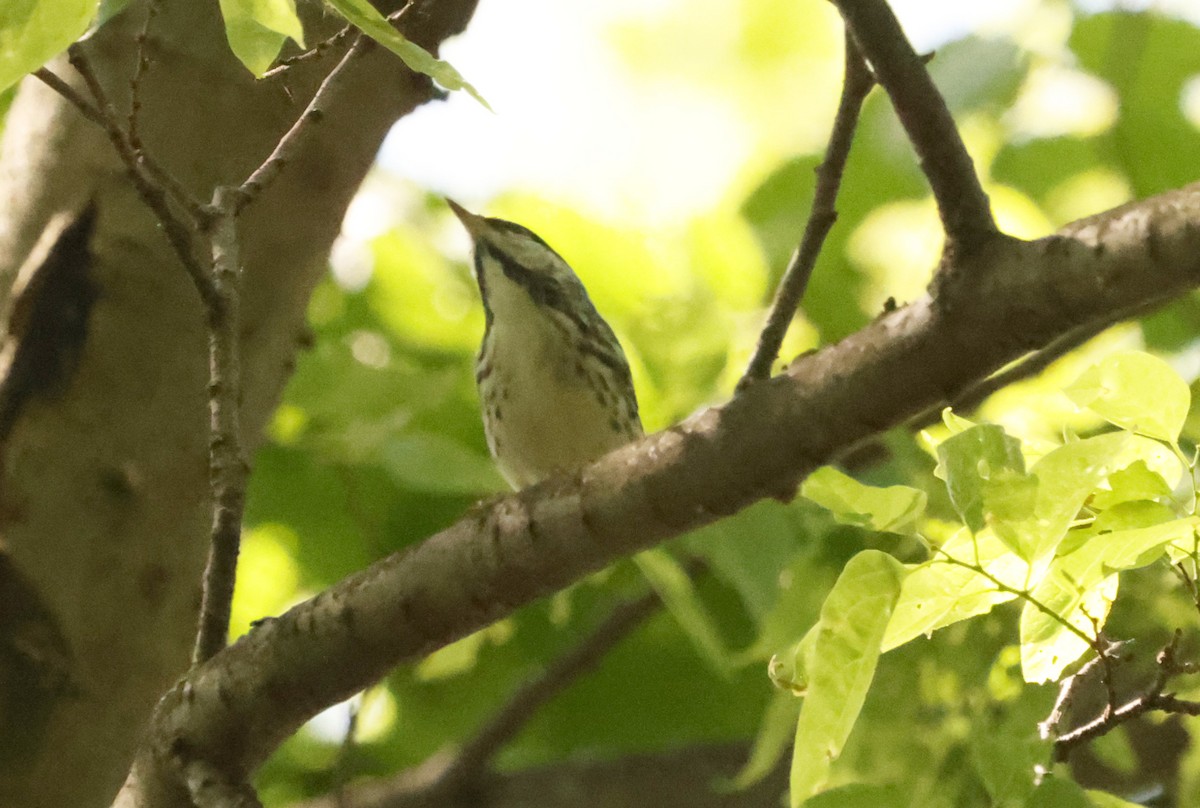
In mid-May, I joined a birding field trip to the David D. Terry Lock and Dam. It was really enjoyable – both in company and birds found. However, I’ve spent the days since trying to figure out the identity of two warblers photographed. I finally broke down and emailed another birder who’s been willing to help me with my identification with needed. While I was correct in identifying the above Bay-breasted Warbler, I learned my other mystery warbler was in fact a Blackpoll. I’m pretty excited to have seen both – especially since it appears I was the only one of the group to have seen them. I snapped the photos while we were looking at some other warblers.

Both warbler species have been migrating through Arkansas for the past few weeks. The Bay-breasted Warbler winters in South America and breeds in northern Canada. According to All About Birds, the Blackpoll Warbler has the longest overwater journey of any songbird – nearly 1,800 miles nonstop over the Atlantic Ocean. It winters in South America and breeds in the boreal forests of Canada.

While common, the Blackpoll’s population is in a steep decline with reports indicating it has lost about 88% of its population in the last 40 years. The Bay-breasted Warbler is of low concern, conservation wise.

Blackpoll Warbler

Veery

Veery

I discovered a Veery, a medium-sized thrush, in the St. Francis Sunken Lands Wildlife Management Area in Craighead County. I had just left a levee road when I heard birds singing in a swampy patch of woods.

A Veery is a small forest thrush, according to All About Birds. They migrate through Arkansas, and I hadn’t paid much attention to the species until I saw this singing one. Until I looked the bird up on All About Birds, I hadn’t realized that its population declined by about 28% between 1966 and 2019.

Alongside the Veery at the WMA were very vocal Blackpoll Warblers. These songbirds migrate through most of Arkansas from the eastern seaboard to where they winter in northern South America and the Caribbean.

Blackpoll Warbler

Photo: Blue-winged Warbler

I saw my first Blue-winged Warbler today at Dale Bumpers White River National Wildlife Refuge in Saint Charles.

The Blue-winged Warbler migrates through Arkansas each year. Cool fact per All About Birds: the oldest recorded Blue-winged Warbler was a male that lived at least 9 years and 11 months. The data was collected during banding operations in Ontario that had the captured, banded, and released.