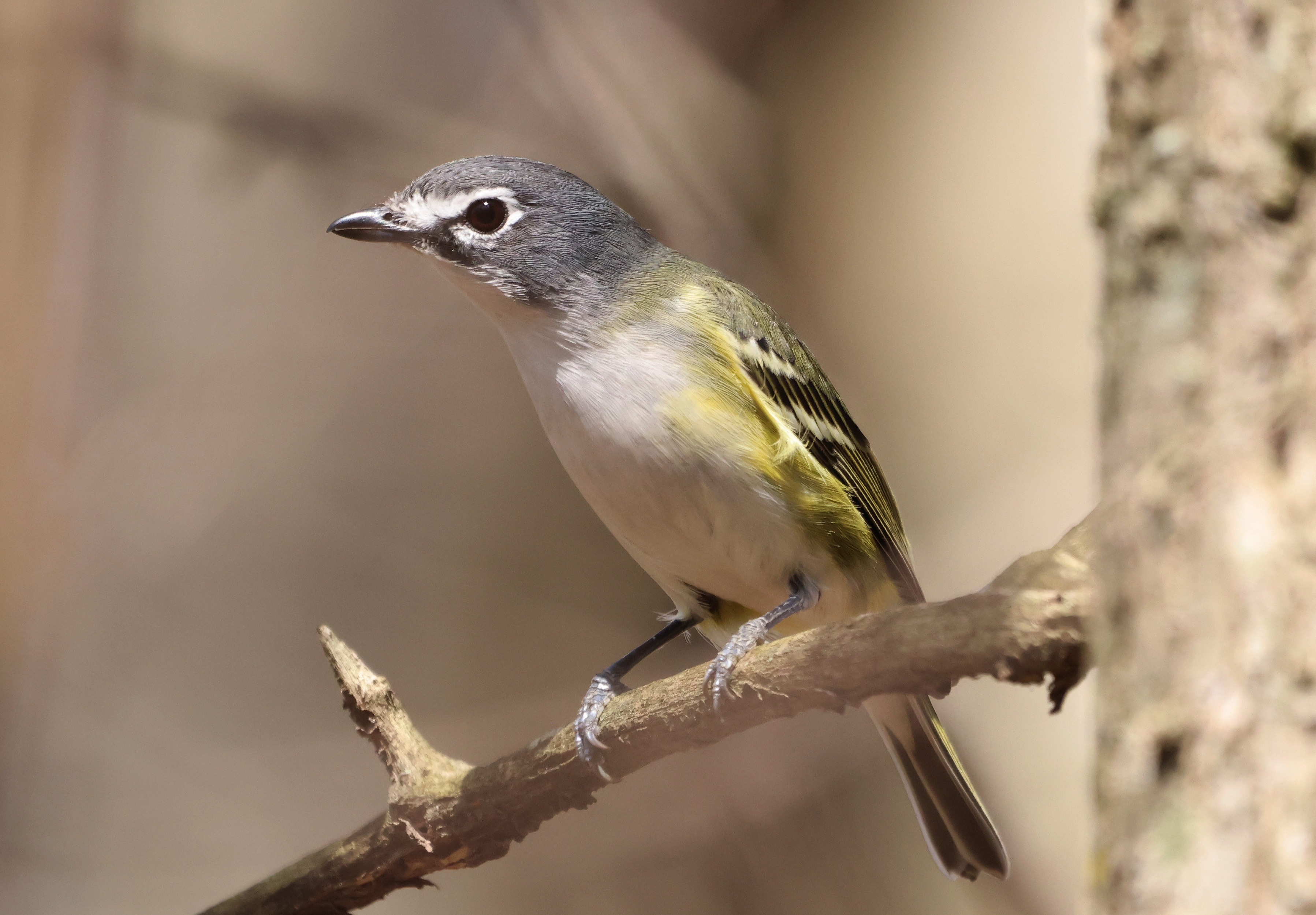
It took two years of actively searching for the Blue-headed Vireo before I finally found one. Although I must admit, I stumbled across this sighting. I was recently in Pine Bluff with five other birders for the monthly field trip of the Audubon Society of Central Arkansas. Our final stop was the William (Bill) G. Layer Nature Trail in Bayou Bartholomew, which is the longest bayou in the world.
We were over half way through the shorter loop when our field trip leader suddenly spotted the Blue-headed Vireo flitting among the trees. As we all watched, it came closer and closer until it was nearly within arms reach at one point.
Blue-headed Vireos are songbirds with thick bills, a blue-gray head, olive-green back and bold white “spectacles.” It has yellow flanks and a white breast and belly. They pass through Arkansas during migration on their way to breeding grounds in eastern North America.
A rare-to-Arkansas Ferruginous Hawk has been staying around Stuttgart recently. This hawk, the largest of North American hawks, is more commonly found in the prairies, deserts, and open range of the West.
I finally caught up with it on Goldman Sunshine Road in a spot I had driven past three times before. I was headed home when I finally spotted it.
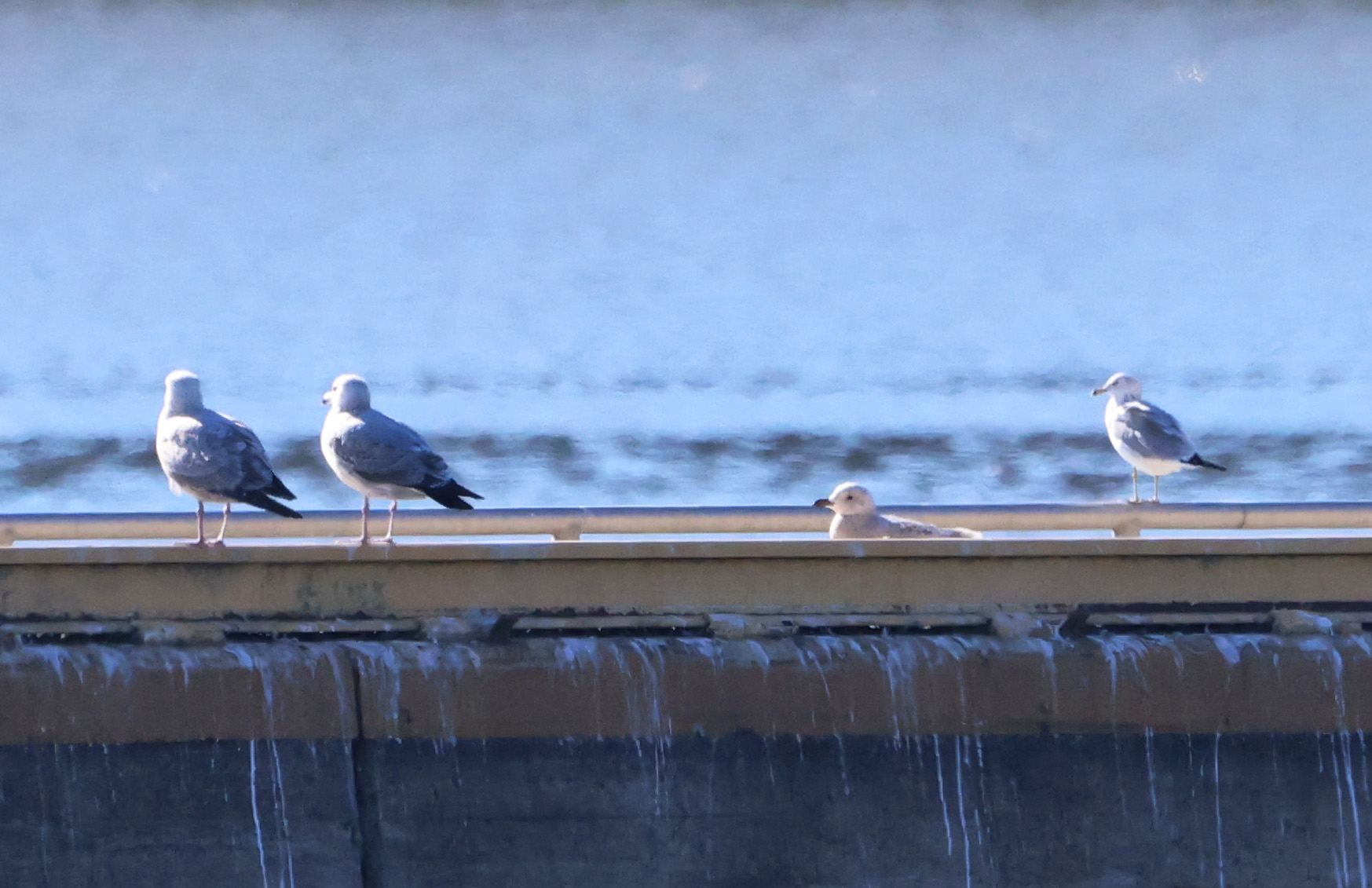
Another rare gull has been spotted at the Lake Dardanelle Lock and Dam, although this time on the Russellville side.
The latest find is a first-year Iceland Gull – Thayer’s (second from right in photo). This gull has first-cycle plumage, a dirty white color, and is smaller than a Herring Gull with an all black bill. It looks like a smaller Glaucous Gull, another rare-to-Arkansas gull that was recently spotted at the same location.
The Iceland Gull breeds in the Arctic and mostly winter in the Arctic waters and the Northeast, Great Lakes and West Coast regions. The gull has three subspecies (Iceland, Thayer’s and Kumlien’s) and the main difference between the three is in how dark the wingtips are in adults. Thankfully, a local birder who initially spotted the Iceland Gull met me at the lock and dam to help me find the Iceland Gull.
The Iceland Gull marked my 300th bird species spotted in Arkansas, and my 296th photo-wise.
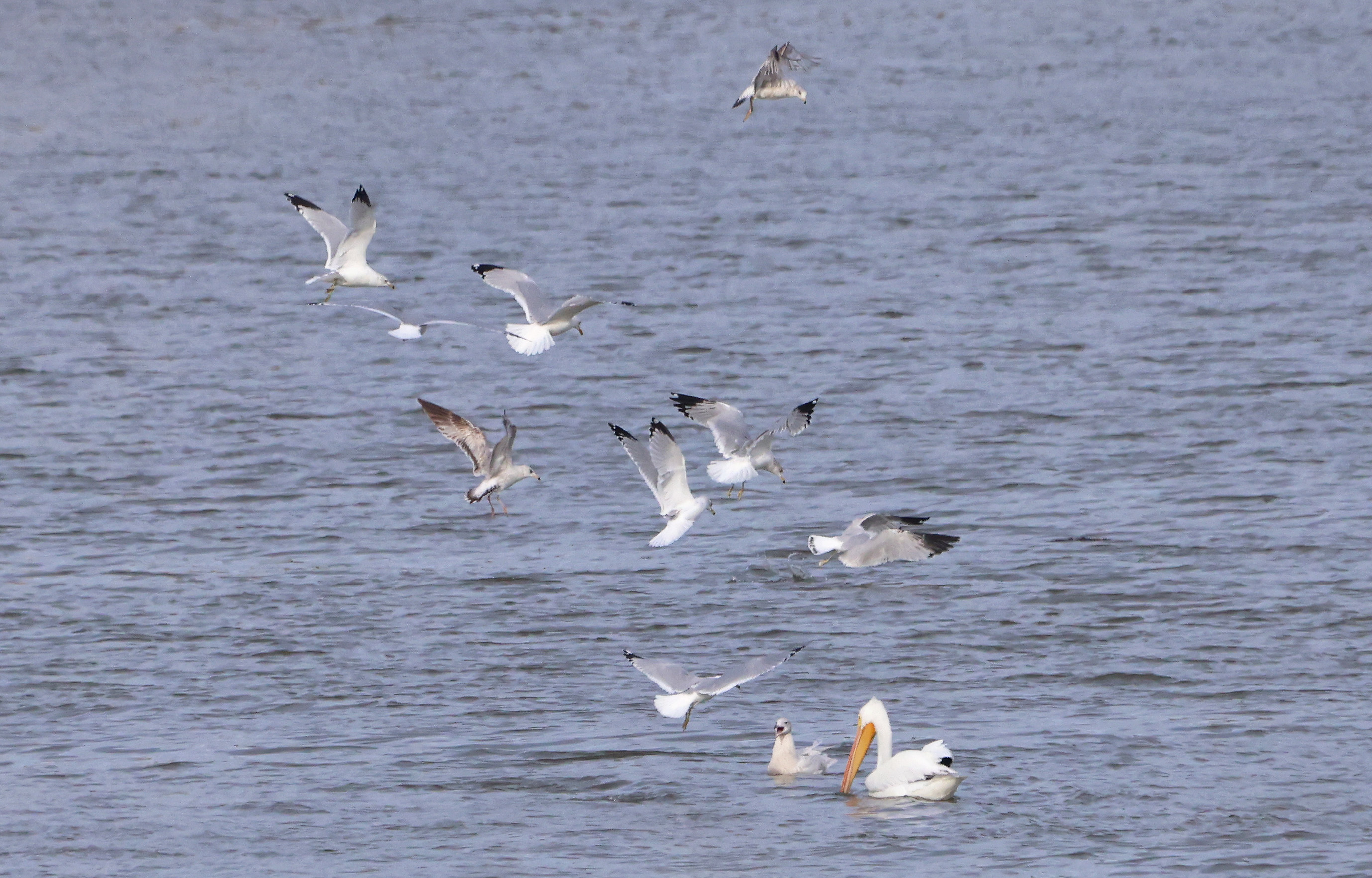
A Glaucous Gull – the second largest gull in the world – was spotted recently at the Lake Dardanelle Lock and Dam. A first winter, the gull was mottled tan and white, and quite larger than the Ring-billed Gulls surrounding it. It also has a pinkish bill with black at the tip.
The Glaucous Gull is in a steep decline, conservation wise. They mostly migrate along coasts and are common in New England and the Pacific Northwest. They nest in the arctic. Needless to say it’s not often you find a Glaucous Gull in Arkansas. But according to AllAboutBirds.org, first- and second-year Glaucous Gulls tend to move farther southward than adults. That makes sense – the one spotted recently was a first-year.
It was fun watching this Glaucous Gull. It had no issue battling over fish with the other gulls and an American White Pelican. It caught one fish and was then chased around by others.
It was overcast and raining all weekend but that didn’t stop the constant flow of birds at my feeders. The newest visitors are American Goldfinches and a Pine Warbler. Here’s hoping to see more.
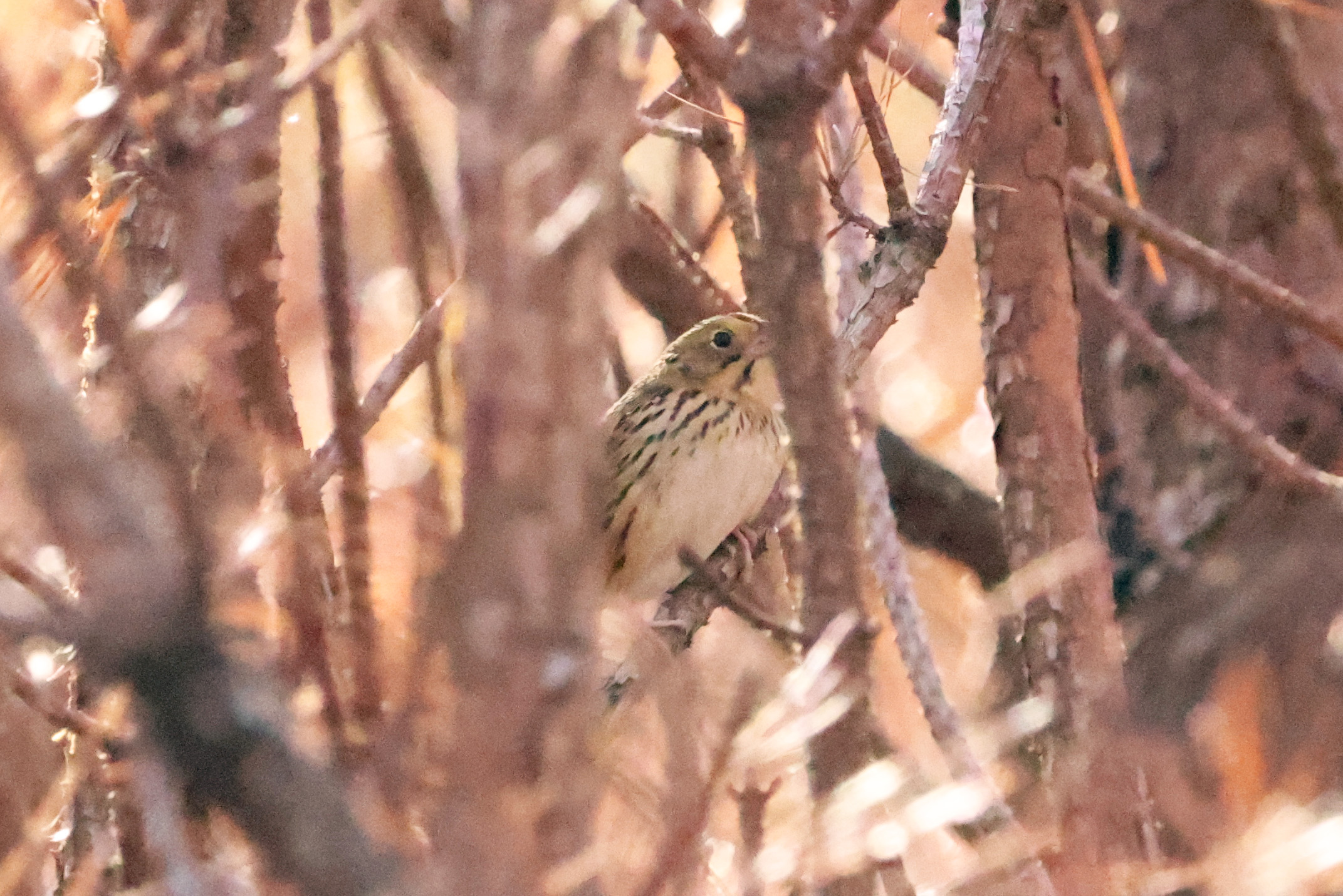
I traveled to the southeast region of Arkansas with a conservation biologist with the Arkansas Natural Heritage Commission in search of the Henslow’s Sparrow.
The biologist was studying the presence of the Henslow’s Sparrow at Warren Prairie Natural Area. Warren Prairie consists of salt slicks, saline barrens, Delta post oak flat woods, mound woodlands, pine flat woods and woodlands, and bottomland hardwood forest communities, according to ANHC. It is one of the few consistent places to find the declining Henslow’s Sparrows, which prefers thick, weedy grasslands and wetlands.
We went back and forth a flooded grassland to flush the Henslow’s sparrows. According to the biologist, these sparrows are rarely vocal so the best chance to find them is when they are flushed from the ground to nearby trees.
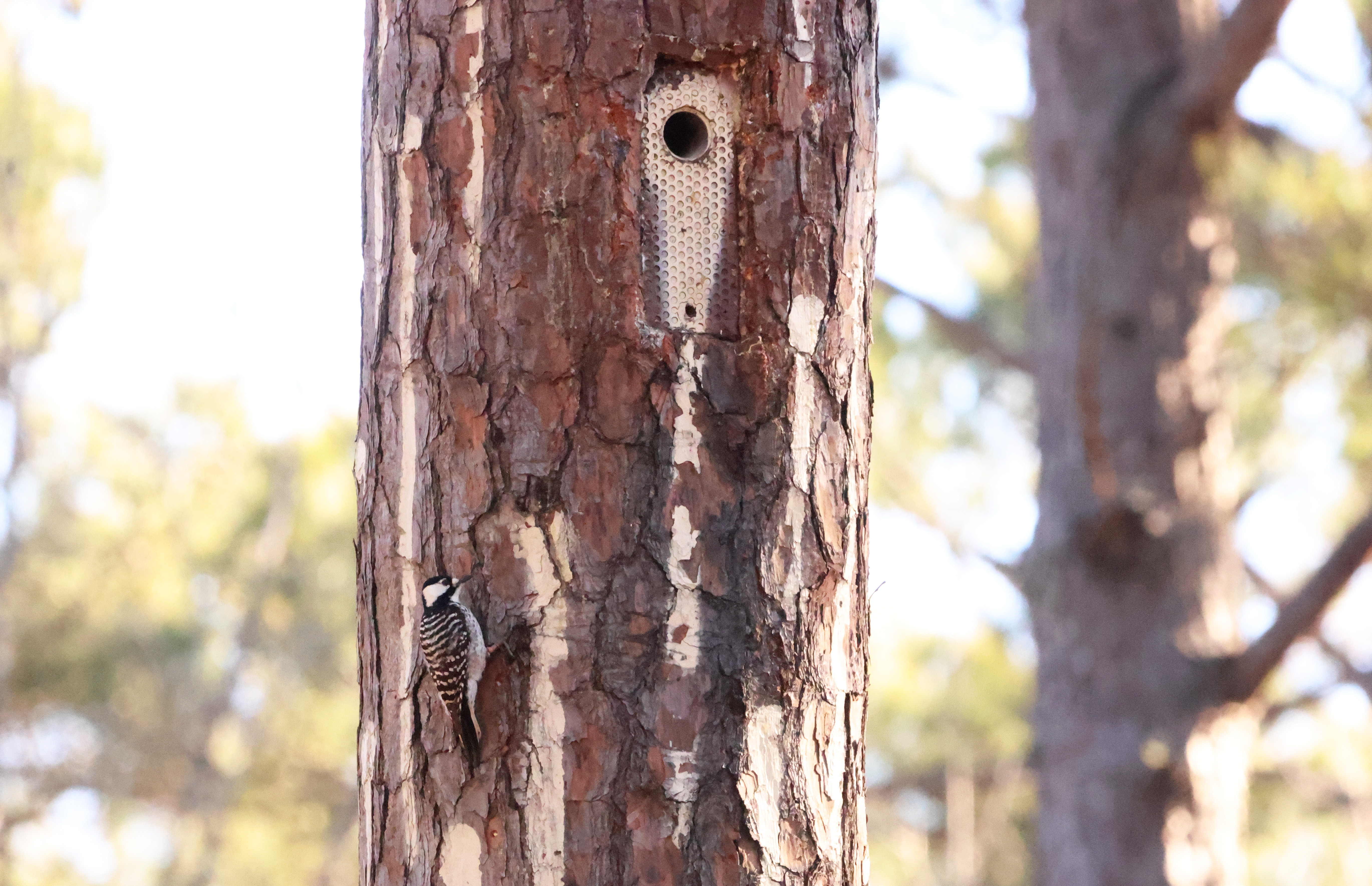
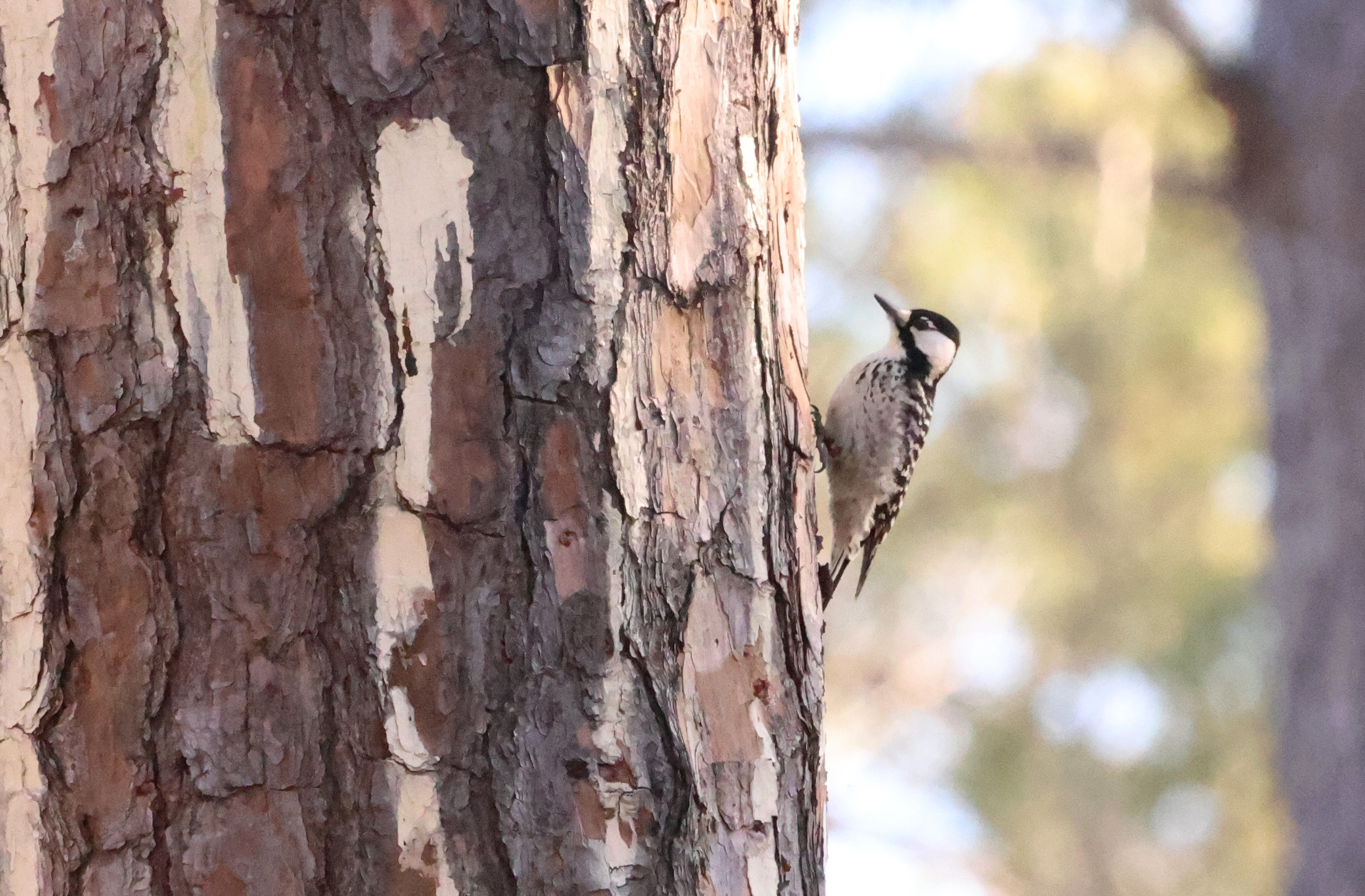
Warren Prairie is also home to several colonies of Red-cockaded Woodpeckers, which the Continental Concern Score indicates is a species of highest conservation concern. Our first stop at Warren Prairie had us watching a Red-cockaded Woodpecker busy pecking at a tree just near a cavity.
The Red-cockaded Woodpecker used to fairly common in the southern United States, but the species is now endangered and only remain mostly in large populations on federal lands due to their dependance of old-growth southern pine forests for food and habitat.
They live in family groups that work together to dig cavities and raise young, according to AllAboutBirds.org. Breeding pairs are monogamous and often stay together for life. They live in family groups of two to five adults usually with only one female. Females will leave during their first winter. It’s neat: sons from previous breeding seasons typically stay with the parents to help incubate, brood and feed the young. When the parents finally leave, these sons will then take over the cavity and the tradition continues.
For roosts and nests, they only live in live pines, preferably ones infected with red heart fungus. The fungus softens the wood making the work of creating the cavity easier. AllAboutBirds.org reports it may take two years or more for the Red-cockaded Woodpecker to completely dig out one cavity. Due to this, family groups rarely colonize new areas.
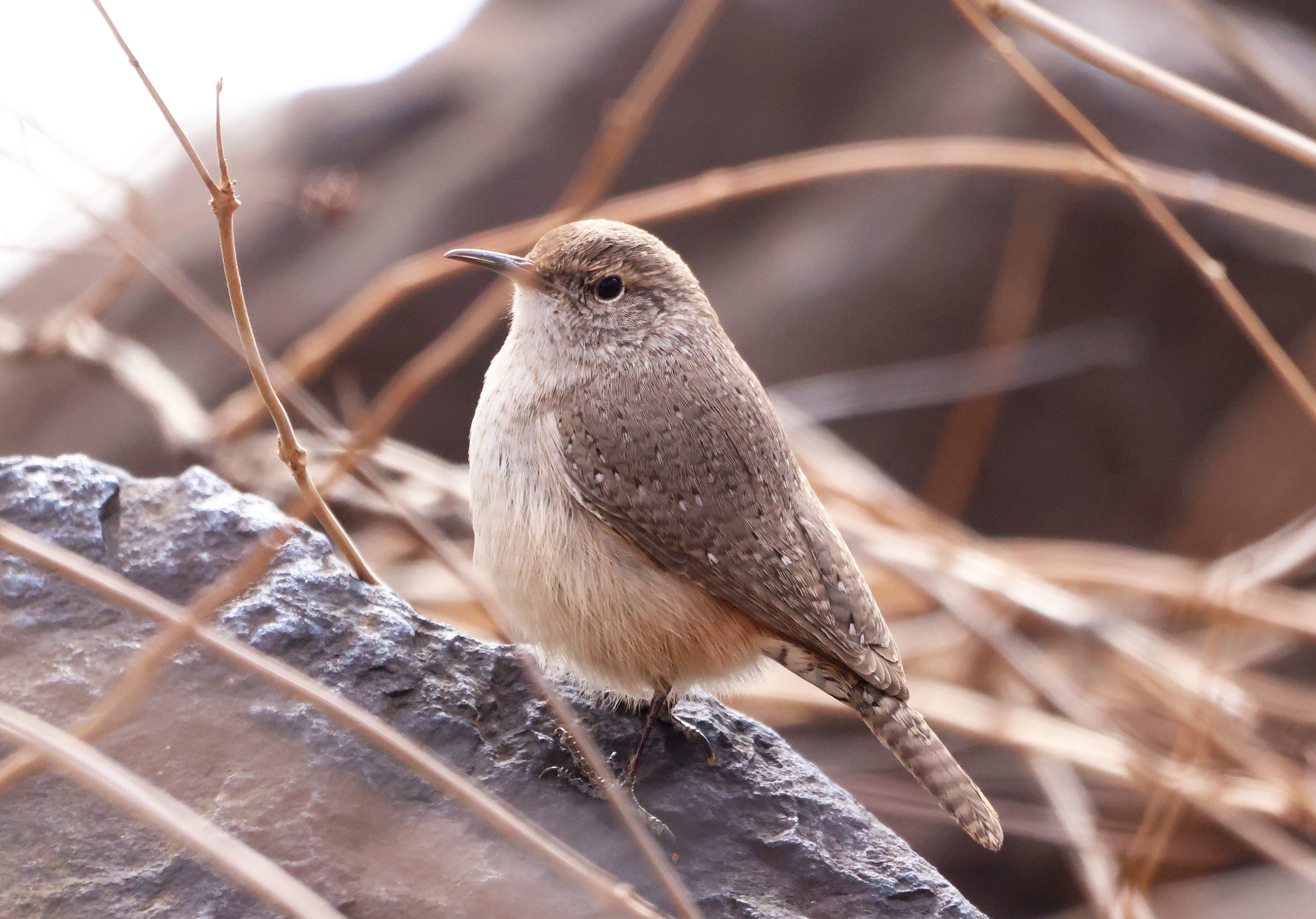
My goal is to find 300 bird species in Arkansas. I’m now so close. I’m at 298 spotted and 294 photographed. My recent finds include the adorable Rock Wren pictured above. It was first spotted at Blackwell Bridge in Conway County by a fisherman who said the wren hung around for weeks before he finally identified it. And the wren was friendly. The wren popped out of the rocks near me when I went to find it and gave me excellent look of it before it finally went back down to be hidden among the rocks and nearby weeds.
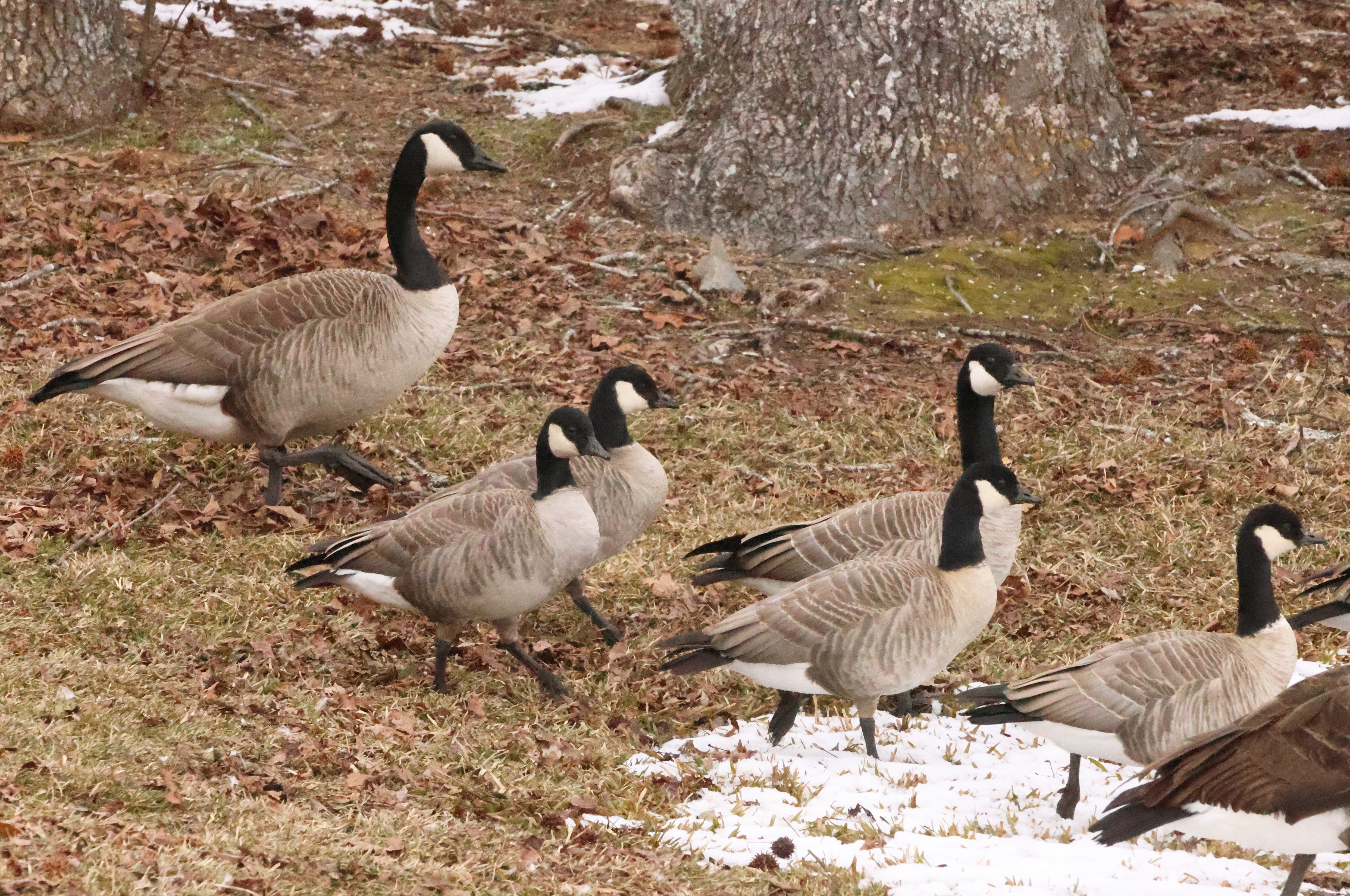
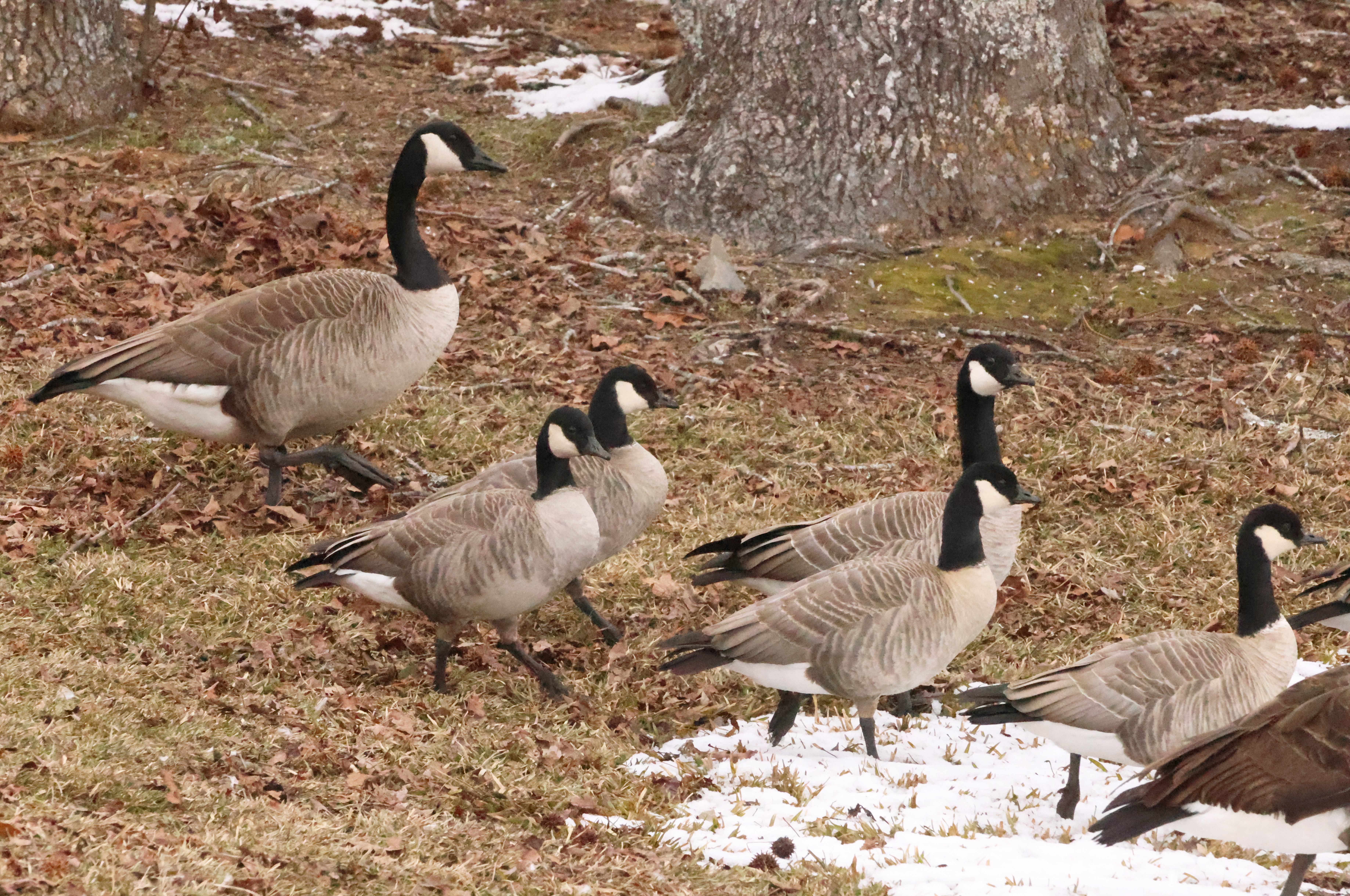
While I had previously seen a Cackling Goose (pictured above alongside the larger Canada Goose), this month marked the first time I was able to get a picture of one. The Cackling Goose looks like the Canada Goose but is smaller with a shorter neck and a smaller beak.
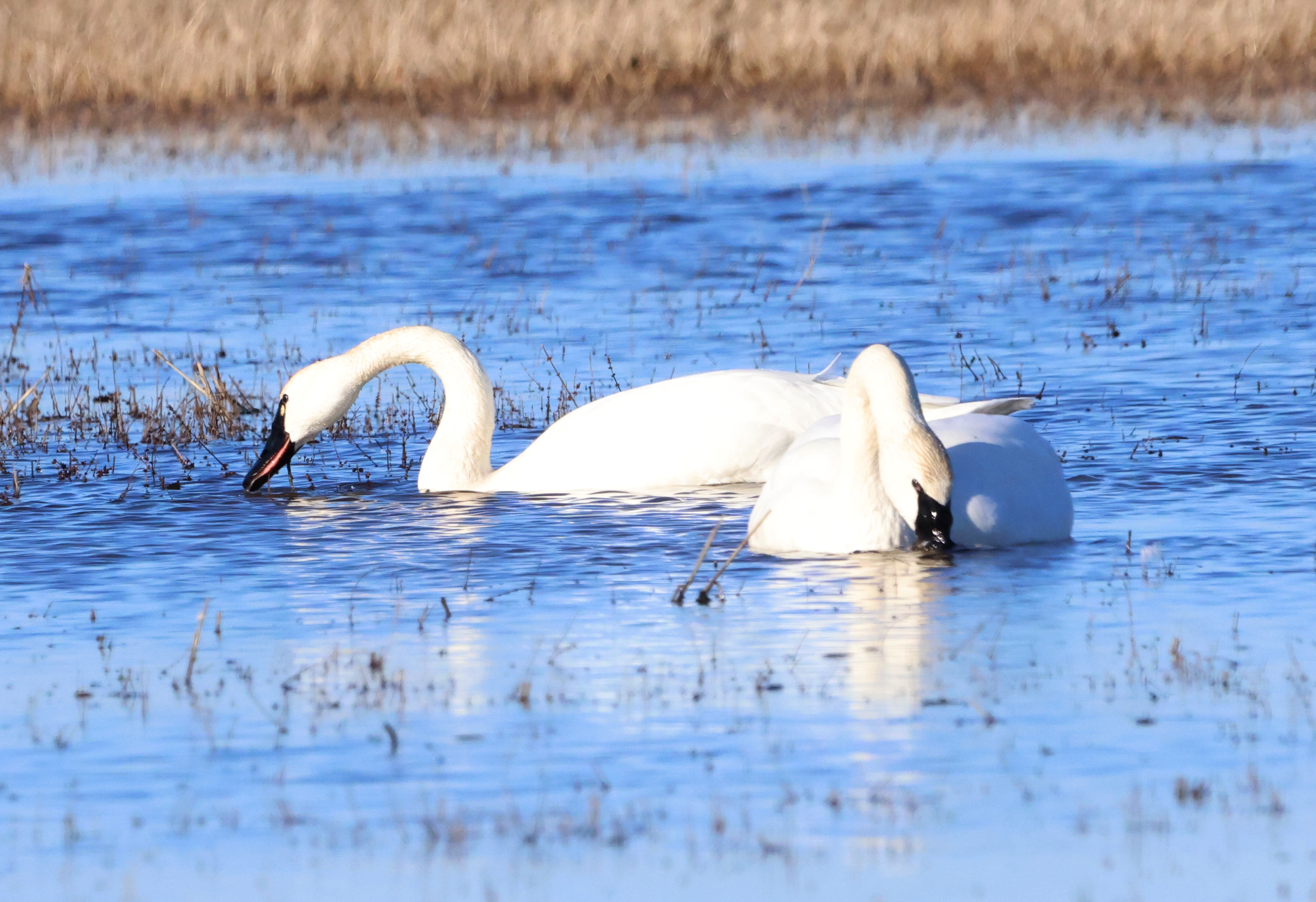
I also found the above Tundra Swan, which looks just like the Trumpeter Swan to its right with the exception of a yellow mark next to its eye.
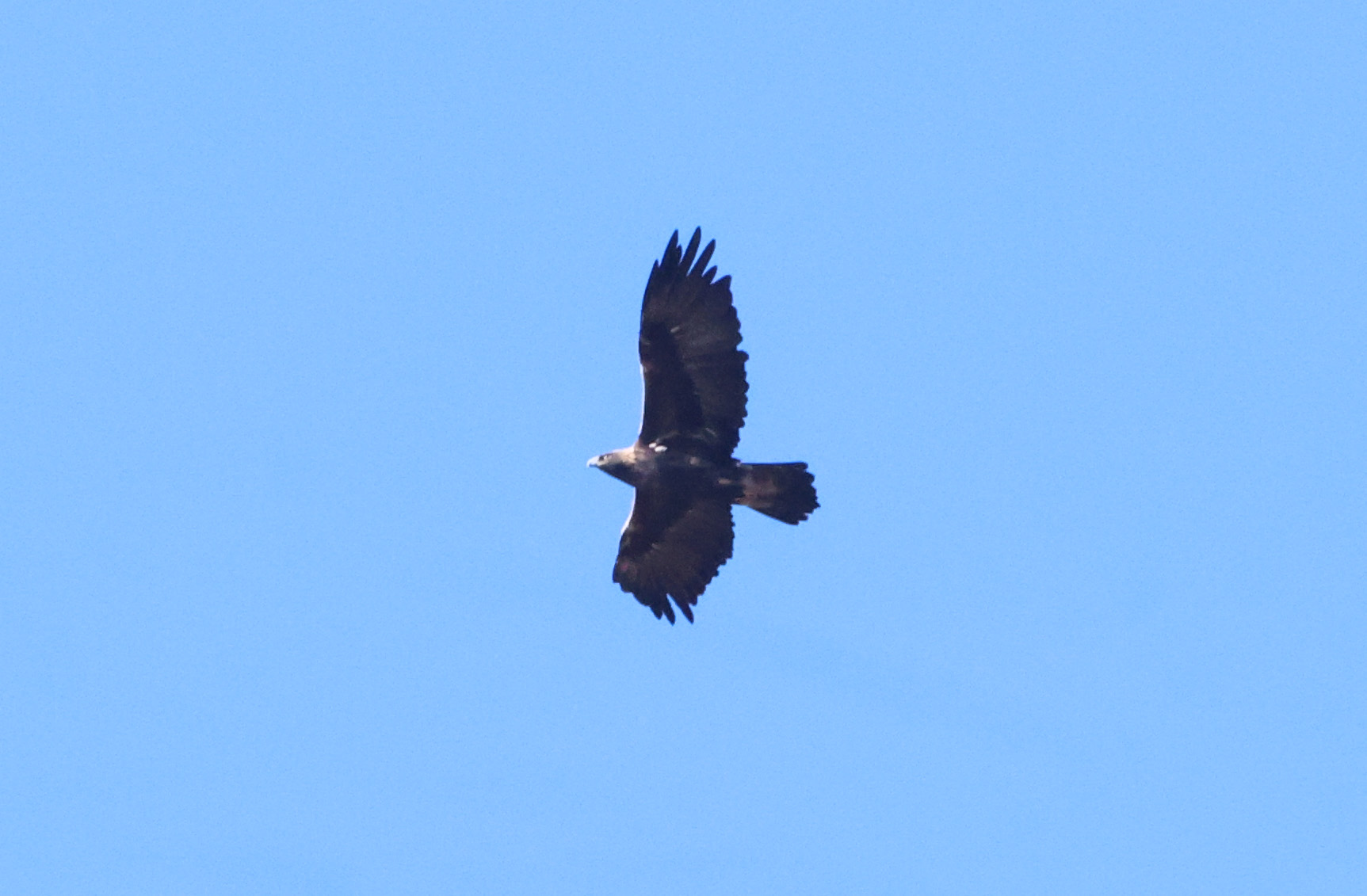
It took about a decade but I finally saw my first Golden Eagle.
While Golden Eagles are spotted in Arkansas every year, these sightings are not plentiful and the eagle is typically long gone by the time another birder arrives to get a look. They are more common out west.
That is until this winter. A Golden Eagle has been hanging around Atkins Bottoms with regular sightings since January 1. After a local shared a great photo of the eagle on Facebook, a friend and I decided to make today our day to see a Golden Eagle.
Arriving early morning, we finally caught up to our Golden Eagle as it was lazily soaring high above fields and stirring up a great flock of Red-winged Blackbirds. We watched it for a good 10 minutes before it finally disappeared from sight.
The Golden Eagle, which has gold feathers on the back of its head and neck, is the largest raptor in North America. It looks similar to a juvenile Bald Eagle so you have to look closely for those gold feathers as well as study the amount of white on the wings. Golden Eagles have less white on the wings than juvenile Bald Eagles.
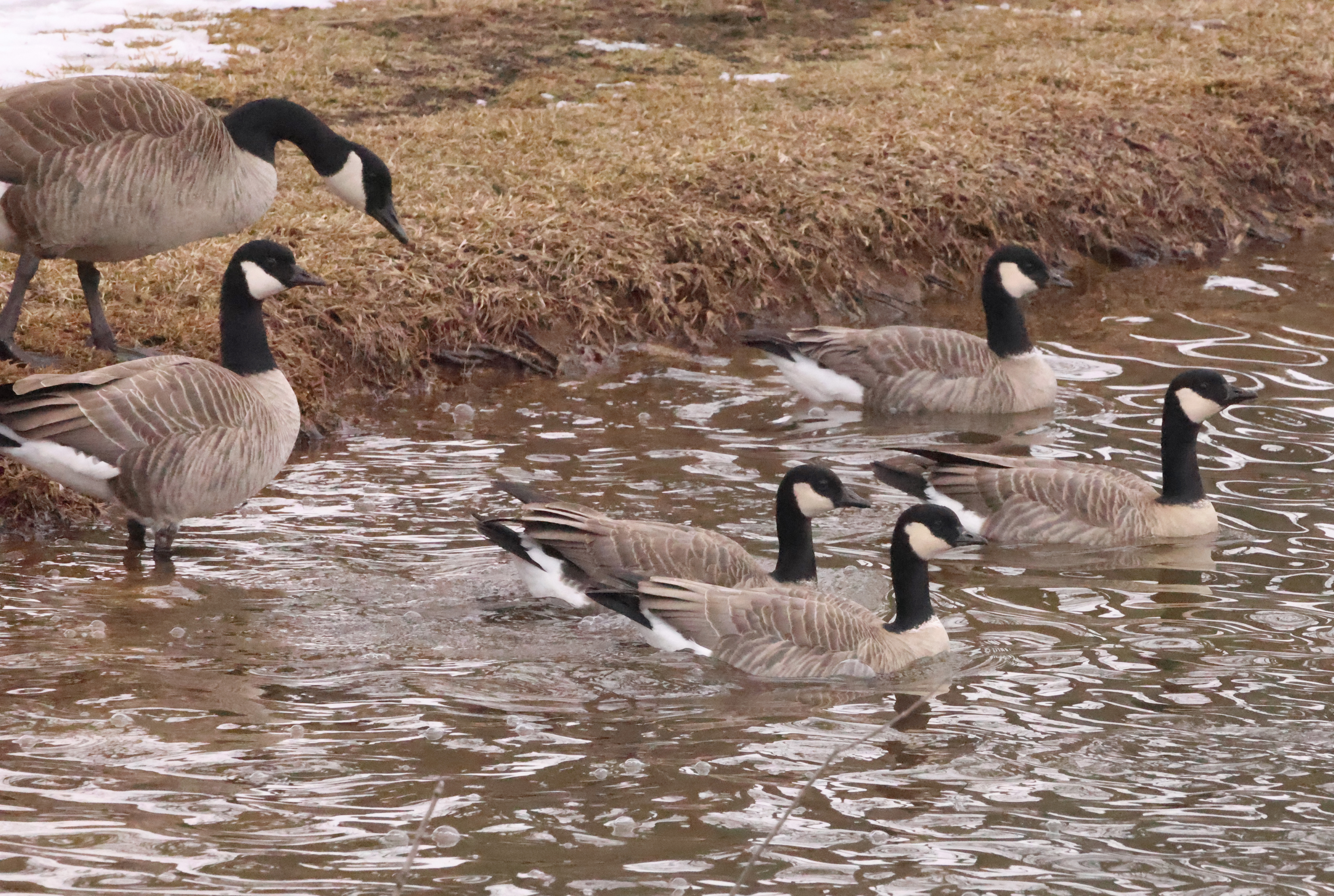
While I saw my first Cackling Goose several years ago, I didn’t actually have a photo of one – that is until today. There were six Cackling Geese mixed in with Canada Geese at Beaverfork Lake in Conway, Ark. Cackling Geese are similar to Canada Geese, but are half the size with a shorter neck, small bill and a steep forehead.
Cackling Geese breed in subarctic and arctic habitats in Canada and Alaska, and can be found in Arkansas during the winter months. But, they are still considered rare in the state. Not many have been spotted over the past few years. The six spotted today actually brought out several birders from Central Arkansas enticed also by reports of Common Mergansers and a Red-necked Grebe being found at the lake. Of the three reported rare birds, I only lacked photos of the Cackling Geese.
Yesterday, we had the Arkansas Audubon Society of Central Arkansas’s monthly field trip. this month it was to the Joe Hogan State Fish Hatchery in Lonoke County.
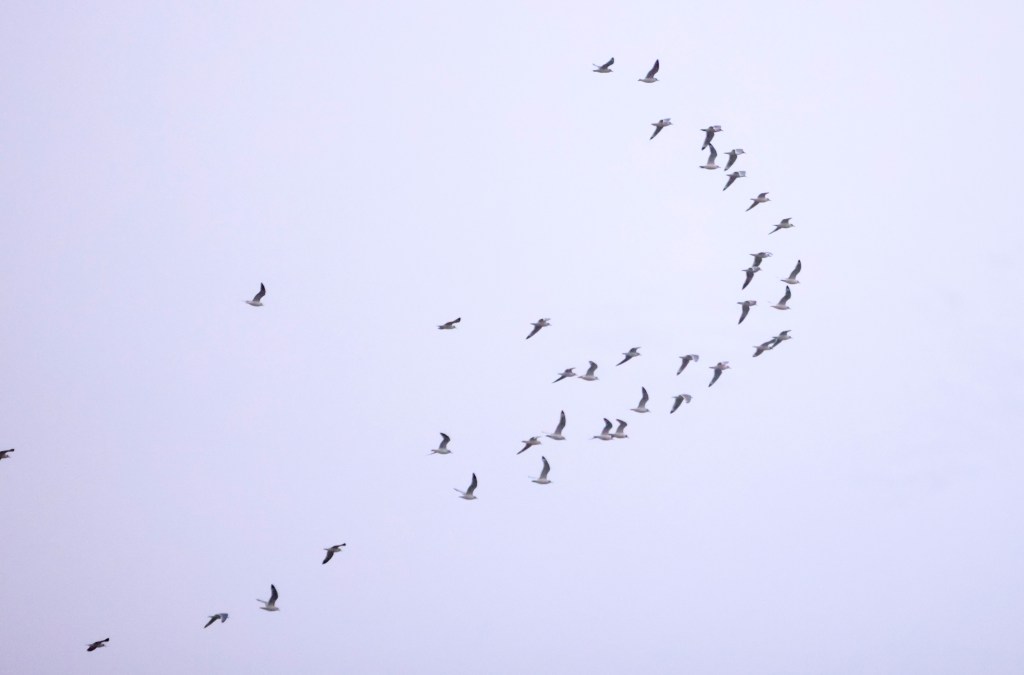
While we were greeted by Scissor-tailed Flycatchers and Bald Eagles, the greatest finds were Black-bellied Whistling Ducks and a large v of 100 Franklin’s Gulls flying over. It took us a while to identify the gulls – none of the trip’s 8 birders had seen that large of a group of Franklin’s before nor seen them fly in a v before.
As for the whistling ducks, they are always just a welcome sight. It was also the first time I’ve heard them whistling. A domestic mallard was hanging out with the whistling ducks.
I previously worked as a news and sports photographer. Recently I have been enjoying wildlife photography. My approach toward bird photos is similar to sports photography. I attempt to capture mostly action and hopefully a unique perspective.








 Memos for Me