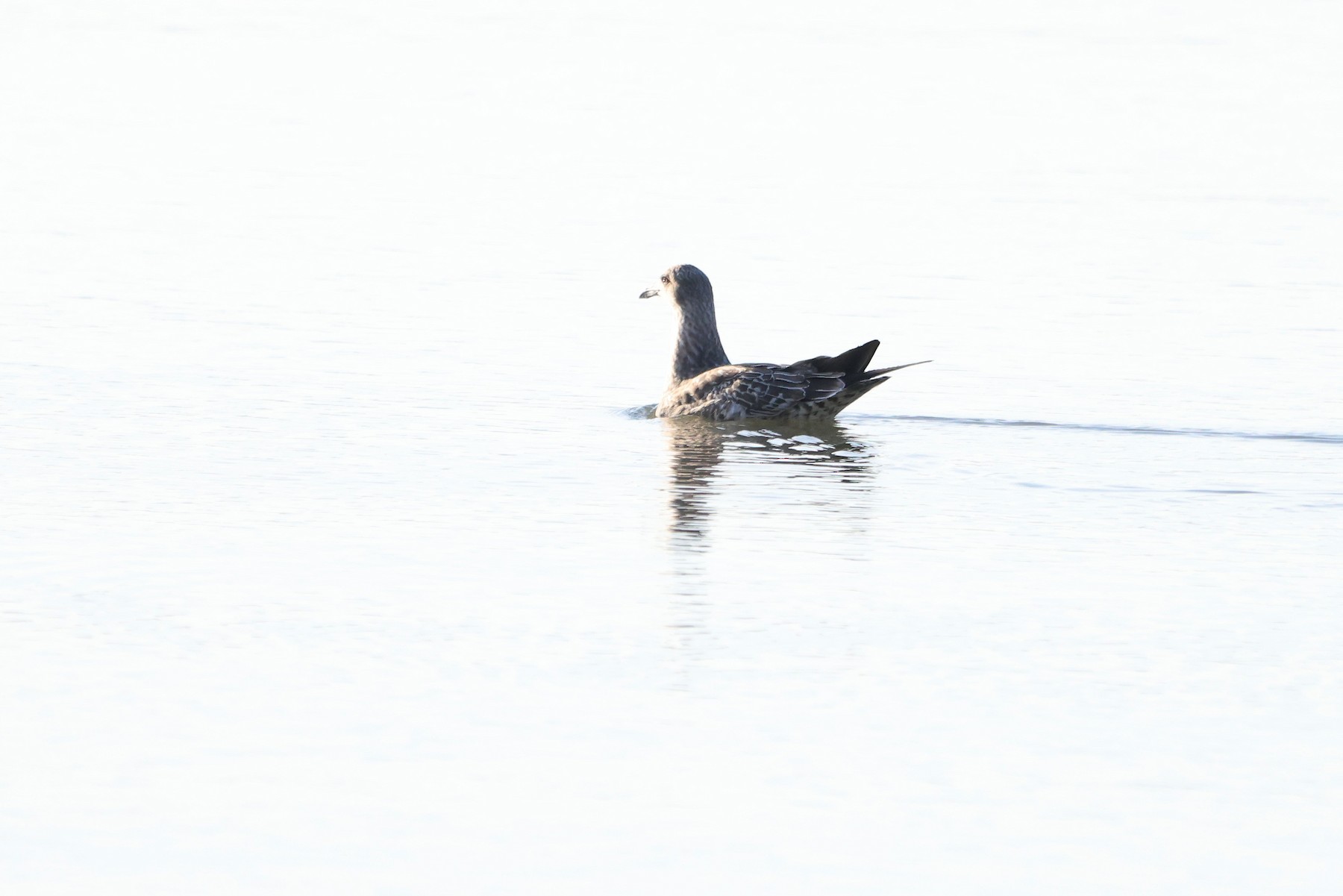
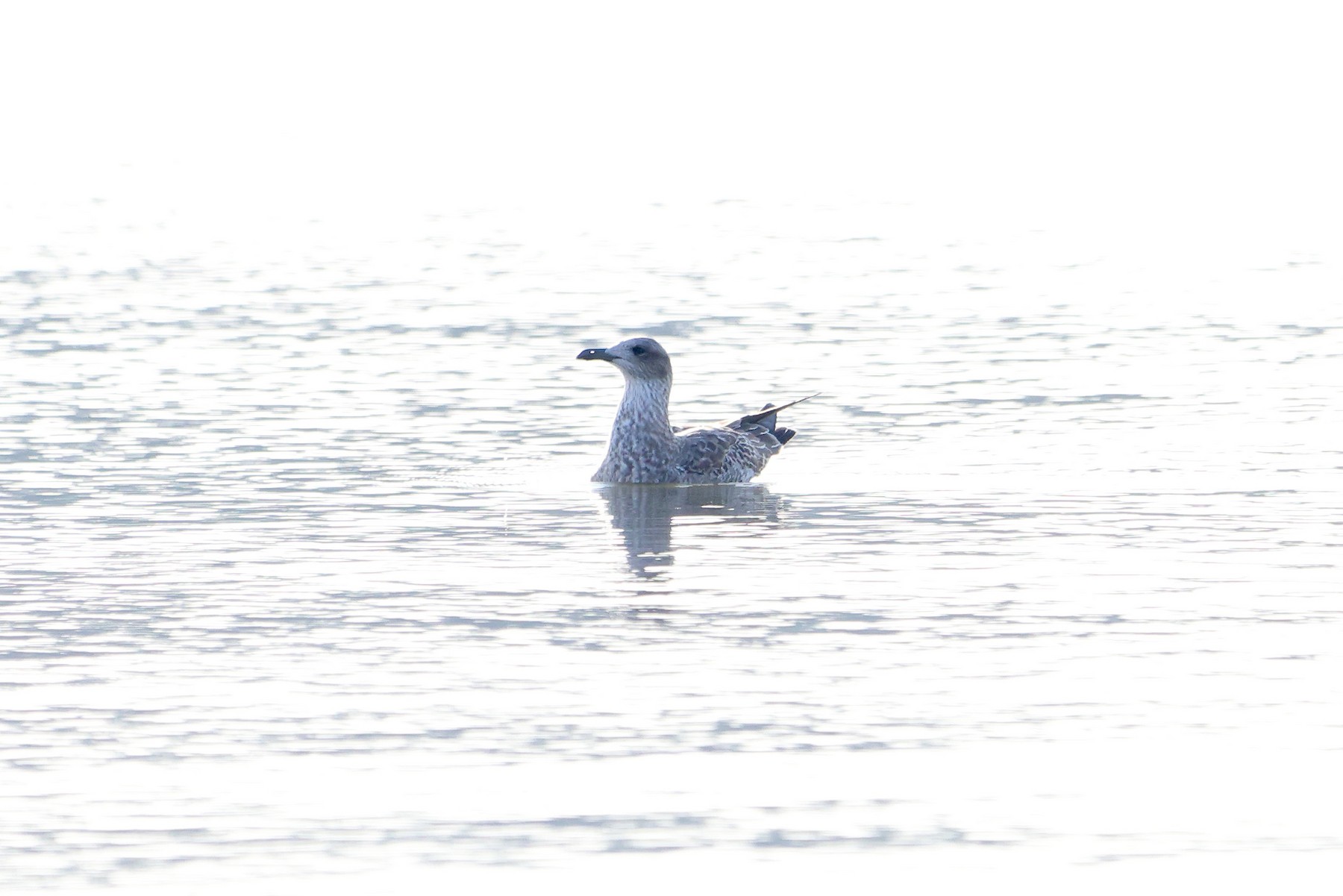
Glaucous Gull

A Glaucous Gull – the second largest gull in the world – was spotted recently at the Lake Dardanelle Lock and Dam. A first winter, the gull was mottled tan and white, and quite larger than the Ring-billed Gulls surrounding it. It also has a pinkish bill with black at the tip.

The Glaucous Gull is in a steep decline, conservation wise. They mostly migrate along coasts and are common in New England and the Pacific Northwest. They nest in the arctic. Needless to say it’s not often you find a Glaucous Gull in Arkansas. But according to AllAboutBirds.org, first- and second-year Glaucous Gulls tend to move farther southward than adults. That makes sense – the one spotted recently was a first-year.

It was fun watching this Glaucous Gull. It had no issue battling over fish with the other gulls and an American White Pelican. It caught one fish and was then chased around by others.
Lesser Black-backed Gull

I spent New Year’s Day participating in the Christmas Bird Count for Lake Dardanelle. It was my first time scouting my particular section, but it was fun, albeit foggy. My most exciting find: A Lesser Black-backed Gull. It was the only one spotted during the count, although the gull has been seen in the area for the past few days.

This particular gull is a first winter with its checkered brown and white body and black bill. AllAboutBirds.org reports that the Lesser Black-backed Gull is common in Eurasia and was once a great rarity in North America; however, it is now becoming relatively common as a winter guest along the eastern coastline even though nesting here has yet to be confirmed. Its range map includes Arkansas in its nonbreeding (scarce) zone. According to eBird, we’ve had a sighting every year since 2016 in the state.

A Short-billed Gull

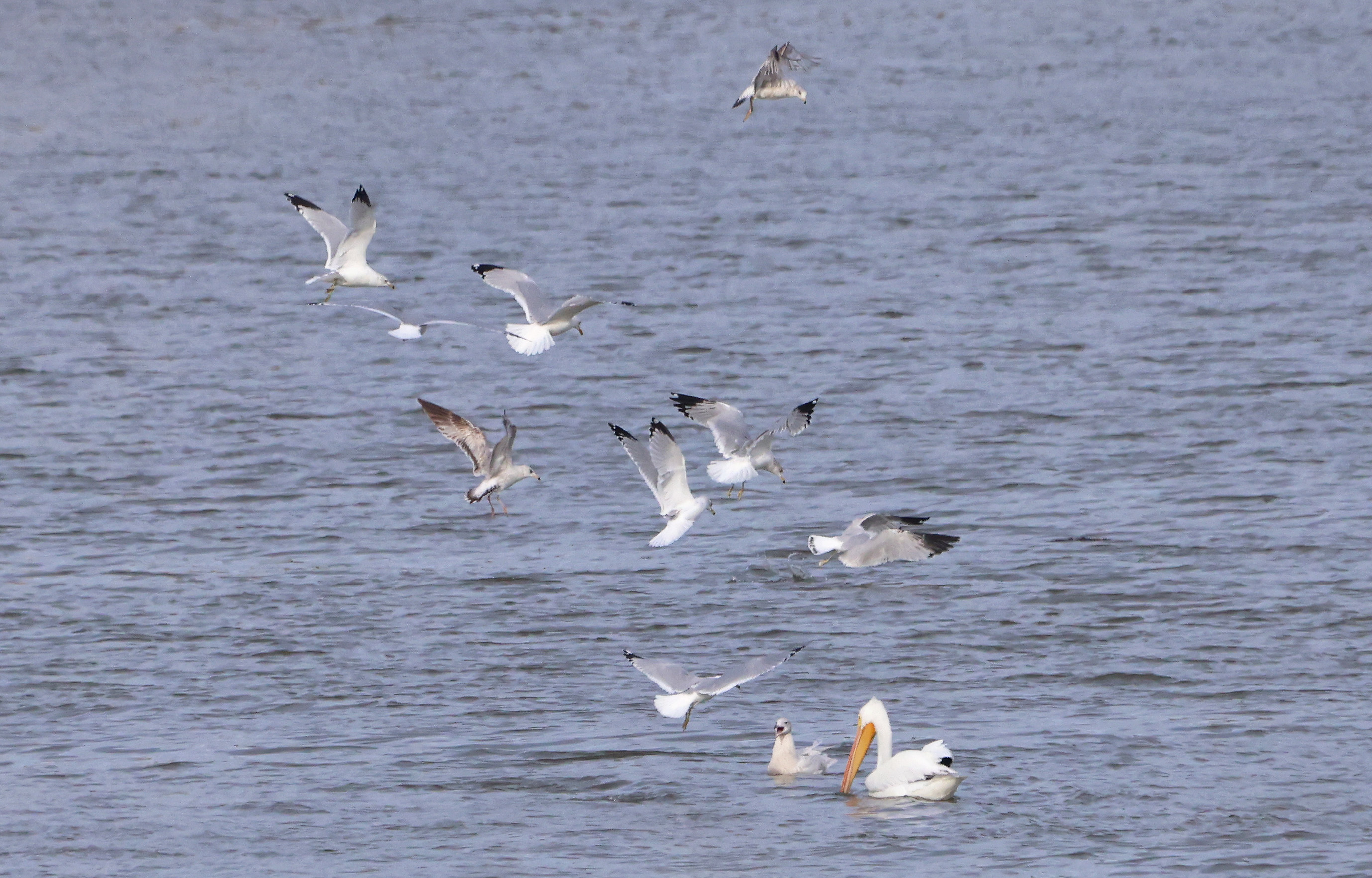
Yesterday, a Short-billed Gull (previously called a Mew Gull until 2021) was spotted at Lake Dardanelle. It’s the small-ish gull standing alone near the middle of the photo with a slightly darker gray back, round head, yellow bill and dark eye.

This gull had birders in a tizzy today – the gull is typically found along the western coastline of the USA, and I’m told these gull rarely travel to the rest of the nation. I arrived at 10:30 a.m. to a flock of people with scopes looking for this sole gull in over 5,000 Ring-billed gulls (the other gulls in the photo). If you are thinking yikes – you said it. It was mind-numbing and basically impossible for me. Luckily, the original spotter was kind enough to spend most of the afternoon with me searching for it. He and his wife were actually the ones who spotted it for me.