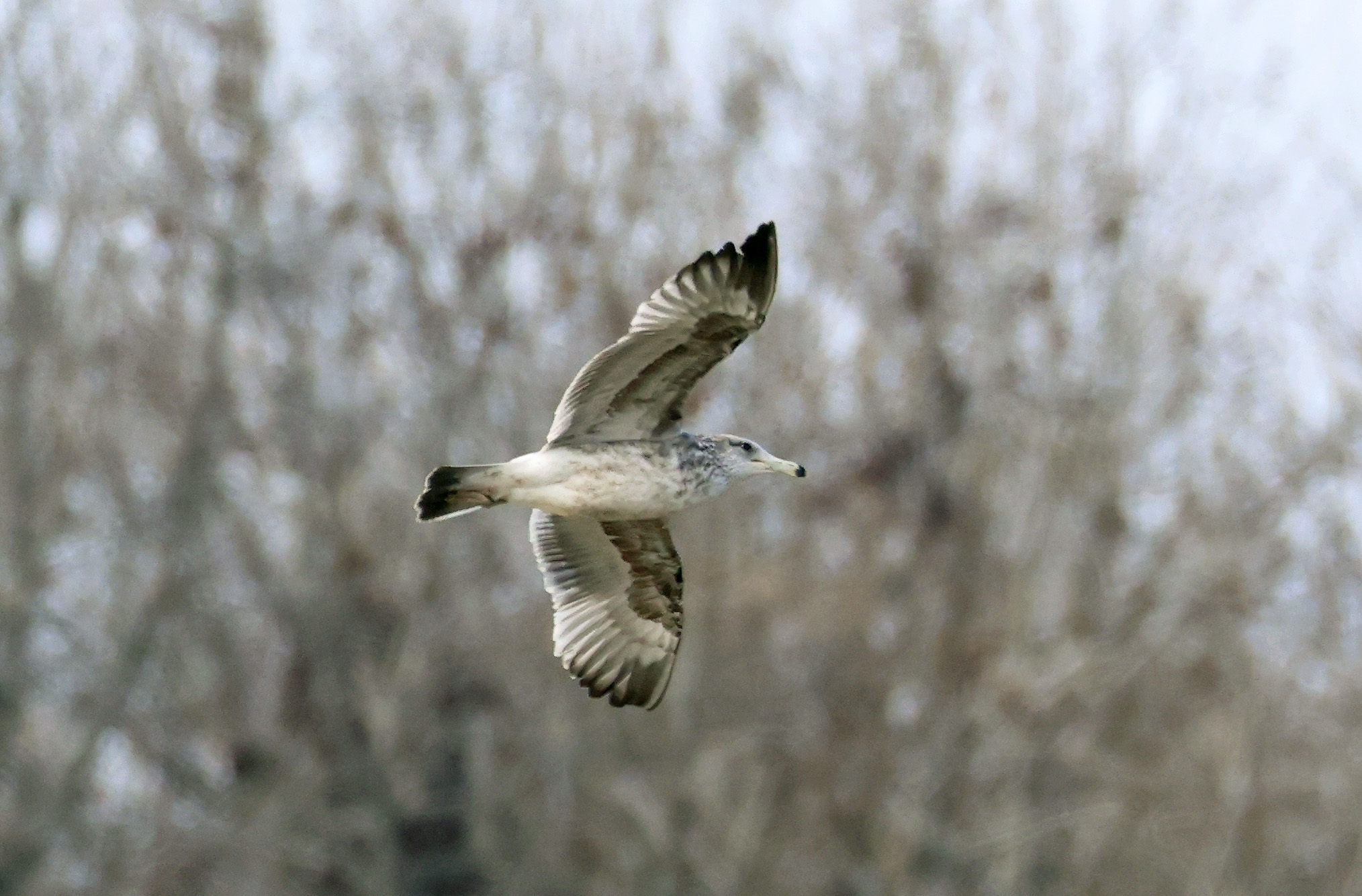
Iceland Gull

Another rare gull has been spotted at the Lake Dardanelle Lock and Dam, although this time on the Russellville side.

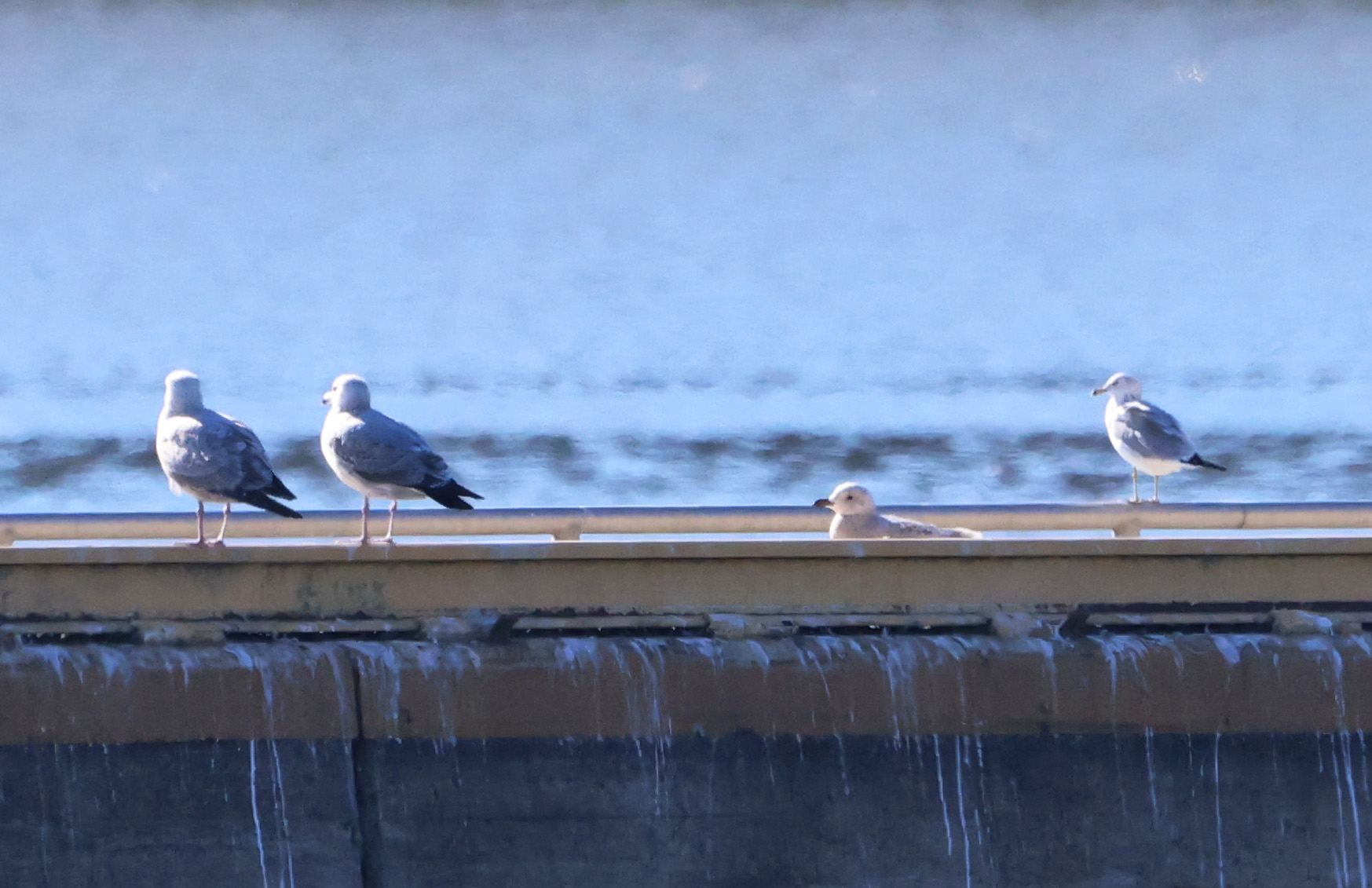
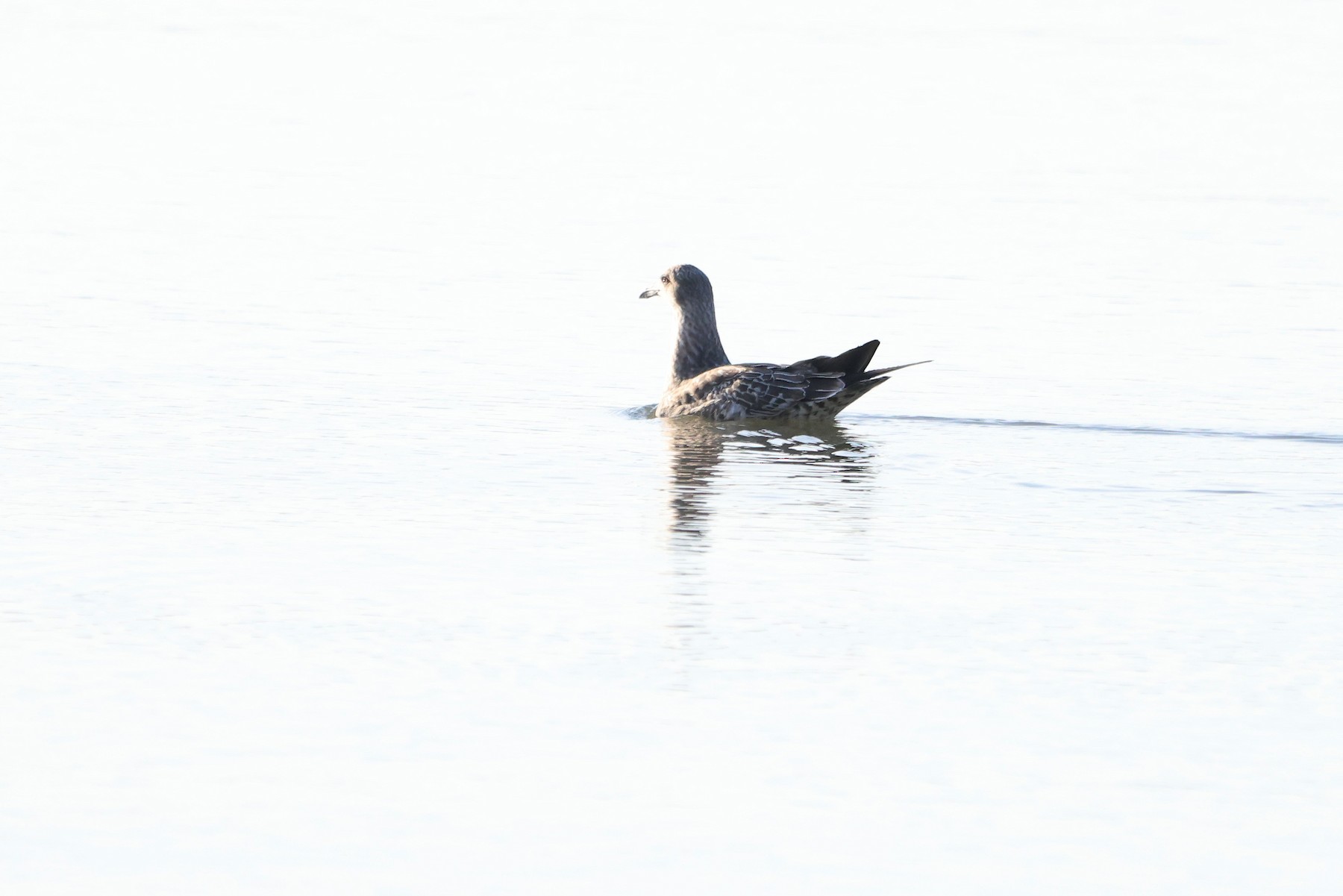
The latest find is a first-year Iceland Gull – Thayer’s (second from right in photo). This gull has first-cycle plumage, a dirty white color, and is smaller than a Herring Gull with an all black bill. It looks like a smaller Glaucous Gull, another rare-to-Arkansas gull that was recently spotted at the same location.

The Iceland Gull breeds in the Arctic and mostly winter in the Arctic waters and the Northeast, Great Lakes and West Coast regions. The gull has three subspecies (Iceland, Thayer’s and Kumlien’s) and the main difference between the three is in how dark the wingtips are in adults. Thankfully, a local birder who initially spotted the Iceland Gull met me at the lock and dam to help me find the Iceland Gull.

The Iceland Gull marked my 300th bird species spotted in Arkansas, and my 296th photo-wise.

Glaucous Gull

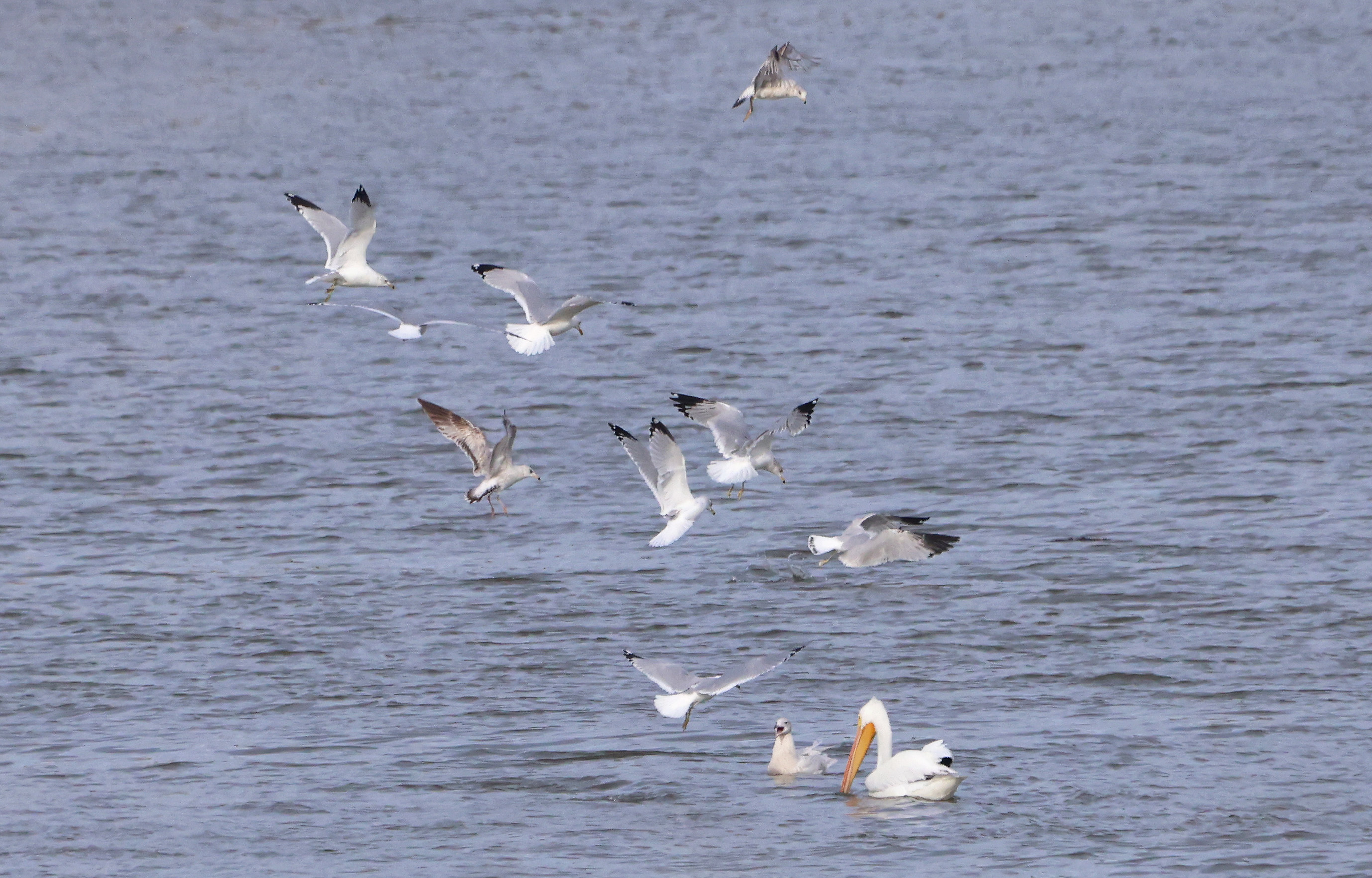
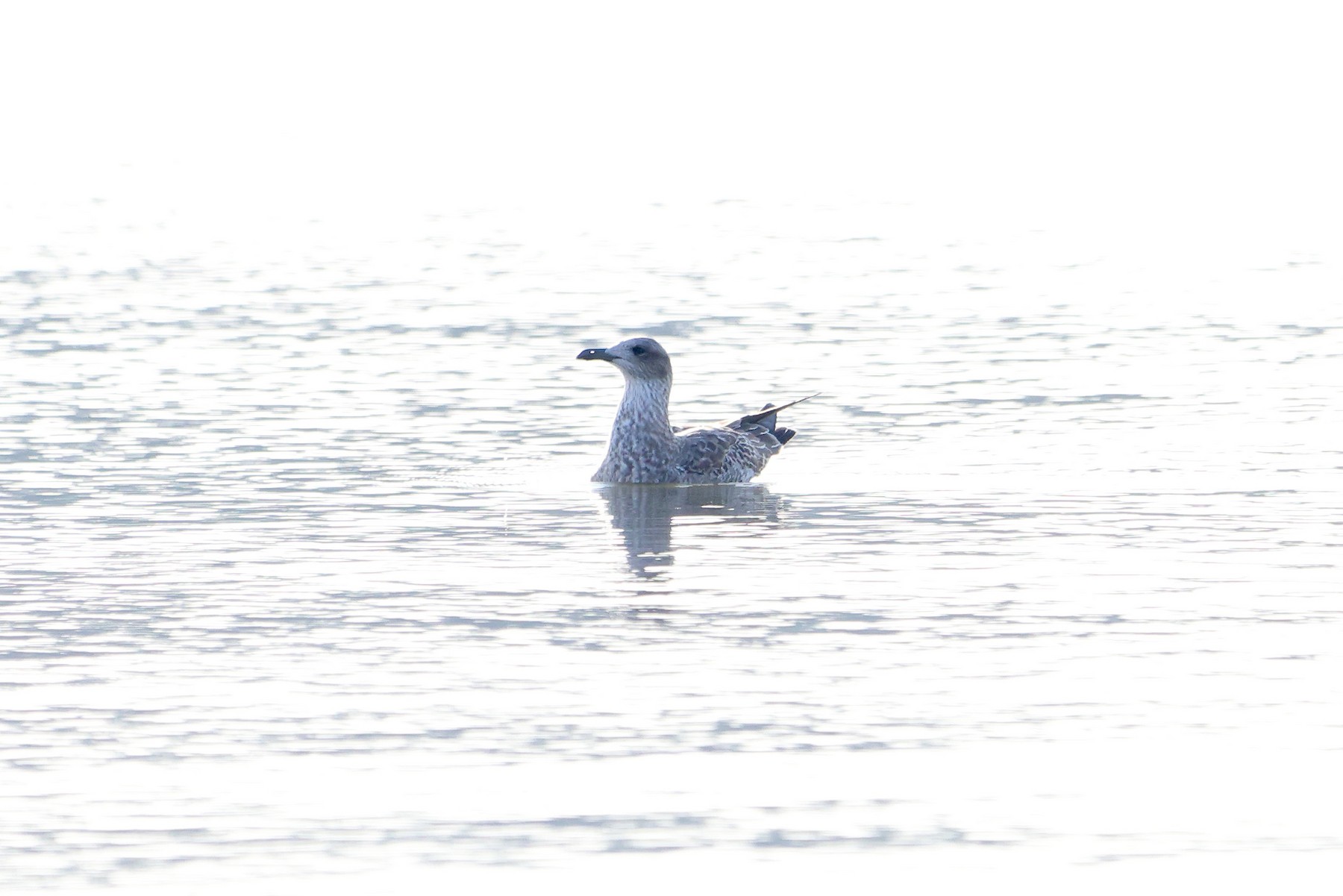
A Glaucous Gull – the second largest gull in the world – was spotted recently at the Lake Dardanelle Lock and Dam. A first winter, the gull was mottled tan and white, and quite larger than the Ring-billed Gulls surrounding it. It also has a pinkish bill with black at the tip.

The Glaucous Gull is in a steep decline, conservation wise. They mostly migrate along coasts and are common in New England and the Pacific Northwest. They nest in the arctic. Needless to say it’s not often you find a Glaucous Gull in Arkansas. But according to AllAboutBirds.org, first- and second-year Glaucous Gulls tend to move farther southward than adults. That makes sense – the one spotted recently was a first-year.

It was fun watching this Glaucous Gull. It had no issue battling over fish with the other gulls and an American White Pelican. It caught one fish and was then chased around by others.

A rainy trip

Yesterday, we had the Arkansas Audubon Society of Central Arkansas’s monthly field trip. this month it was to the Joe Hogan State Fish Hatchery in Lonoke County.

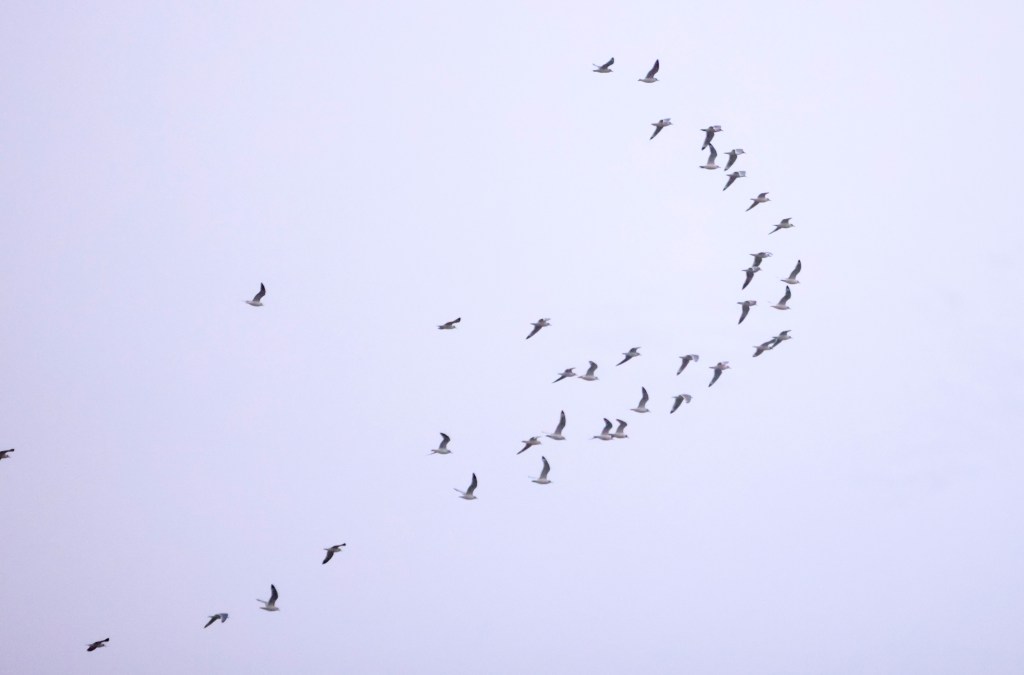
While we were greeted by Scissor-tailed Flycatchers and Bald Eagles, the greatest finds were Black-bellied Whistling Ducks and a large v of 100 Franklin’s Gulls flying over. It took us a while to identify the gulls – none of the trip’s 8 birders had seen that large of a group of Franklin’s before nor seen them fly in a v before.

As for the whistling ducks, they are always just a welcome sight. It was also the first time I’ve heard them whistling. A domestic mallard was hanging out with the whistling ducks.

Find Waldo…I mean the Sabine’s Gull

The search has been on this week for Sabine’s Gulls after two of these gulls were found on Lake Dardanelle. One gull was sighted Tuesday, resulting in me and six others heading over to see if we could spot them. The couple who made the original sighting was gracious enough to let us visit their house and dock to look for the gull. But, we had no luck.

We all headed home. We then got the text: There was two and we needed to hurry back. We got lucky this second time.

Sabine’s Gulls are small seabirds. They nest in the arctic tundra and migrate along the United States’ West Coast. They winter mainly in tropical ocean waters. Despite them mainly being found near the ocean, it’s not unheard of sightings being reported throughout the U.S.’s mainland during migration season. According to All About Birds, one cool fact about this specie is that they will pretend to be injured to lead predators away from their nests. You see this tactic among shorebirds like the Killdeer but it’s actually rare among gulls.

Day 6: African Wildlife Safari

We spent the entire day in the Ngorongoro Crater. We left early to have breakfast by a lake in the crater, which we circled back to for lunch. The above Serval Cat was one of two we saw. This one ran across the road in front of us as we left, while another walked out of a bush only to be greeted by a table full of us eating. I don’t know which one – us or the cat – was surprised the most.

It was fascinating to see so many different types of wildlife – both prey and predator – living so close together. At one point, there was. lion resting nearby a pack of zebras and wildebeest and none seemed to concerned. We also saw a lot of rhinos, which I thought would be a little harder than it was. Gabi, our tour guide, said numbers have risen over the past few years, although he was still surprised at how easily we found them. Below are a few more of our wildlife sightings for the day.

Lesser Black-backed Gull

I spent New Year’s Day participating in the Christmas Bird Count for Lake Dardanelle. It was my first time scouting my particular section, but it was fun, albeit foggy. My most exciting find: A Lesser Black-backed Gull. It was the only one spotted during the count, although the gull has been seen in the area for the past few days.

This particular gull is a first winter with its checkered brown and white body and black bill. AllAboutBirds.org reports that the Lesser Black-backed Gull is common in Eurasia and was once a great rarity in North America; however, it is now becoming relatively common as a winter guest along the eastern coastline even though nesting here has yet to be confirmed. Its range map includes Arkansas in its nonbreeding (scarce) zone. According to eBird, we’ve had a sighting every year since 2016 in the state.

A Short-billed Gull

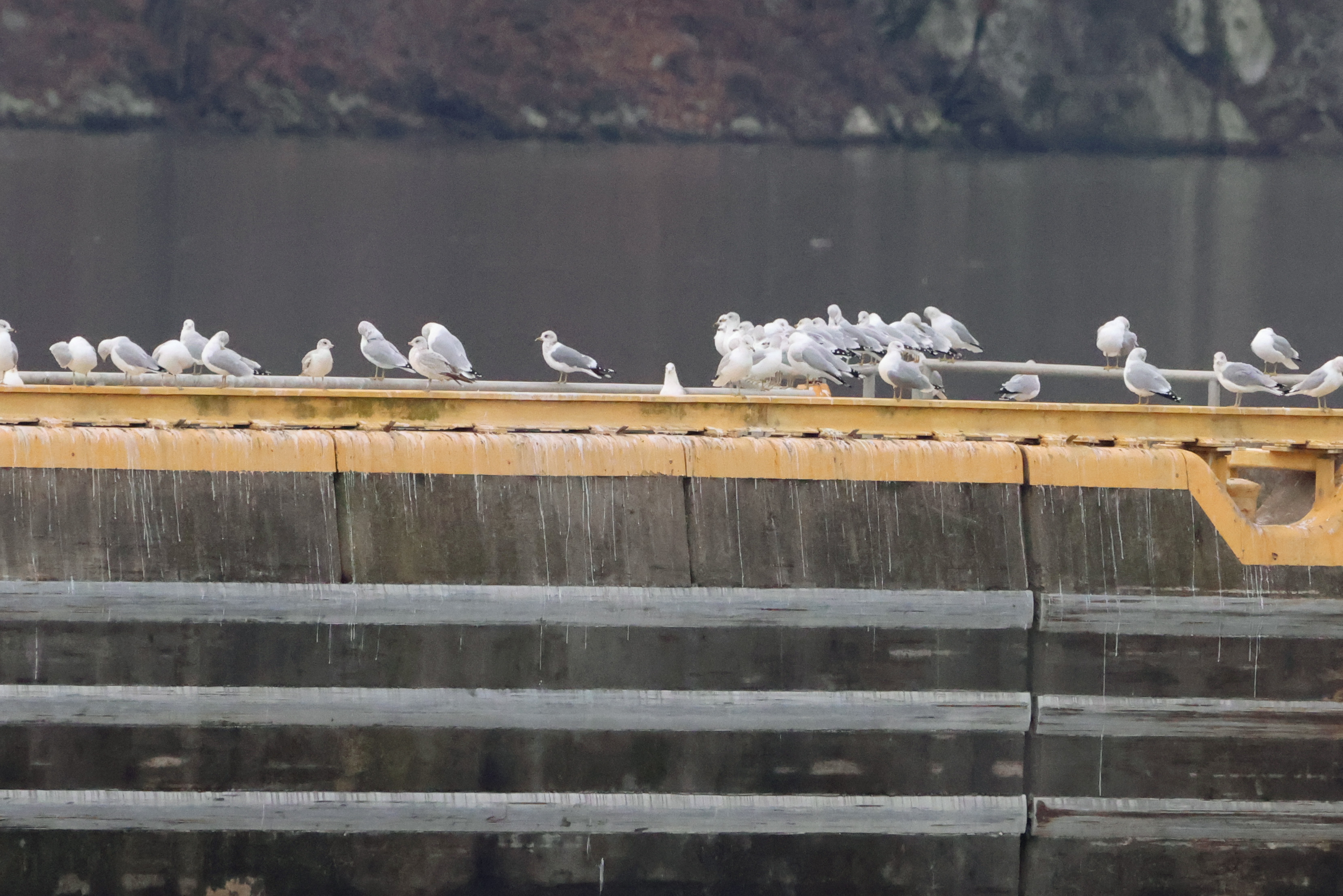
Yesterday, a Short-billed Gull (previously called a Mew Gull until 2021) was spotted at Lake Dardanelle. It’s the small-ish gull standing alone near the middle of the photo with a slightly darker gray back, round head, yellow bill and dark eye.

This gull had birders in a tizzy today – the gull is typically found along the western coastline of the USA, and I’m told these gull rarely travel to the rest of the nation. I arrived at 10:30 a.m. to a flock of people with scopes looking for this sole gull in over 5,000 Ring-billed gulls (the other gulls in the photo). If you are thinking yikes – you said it. It was mind-numbing and basically impossible for me. Luckily, the original spotter was kind enough to spend most of the afternoon with me searching for it. He and his wife were actually the ones who spotted it for me.