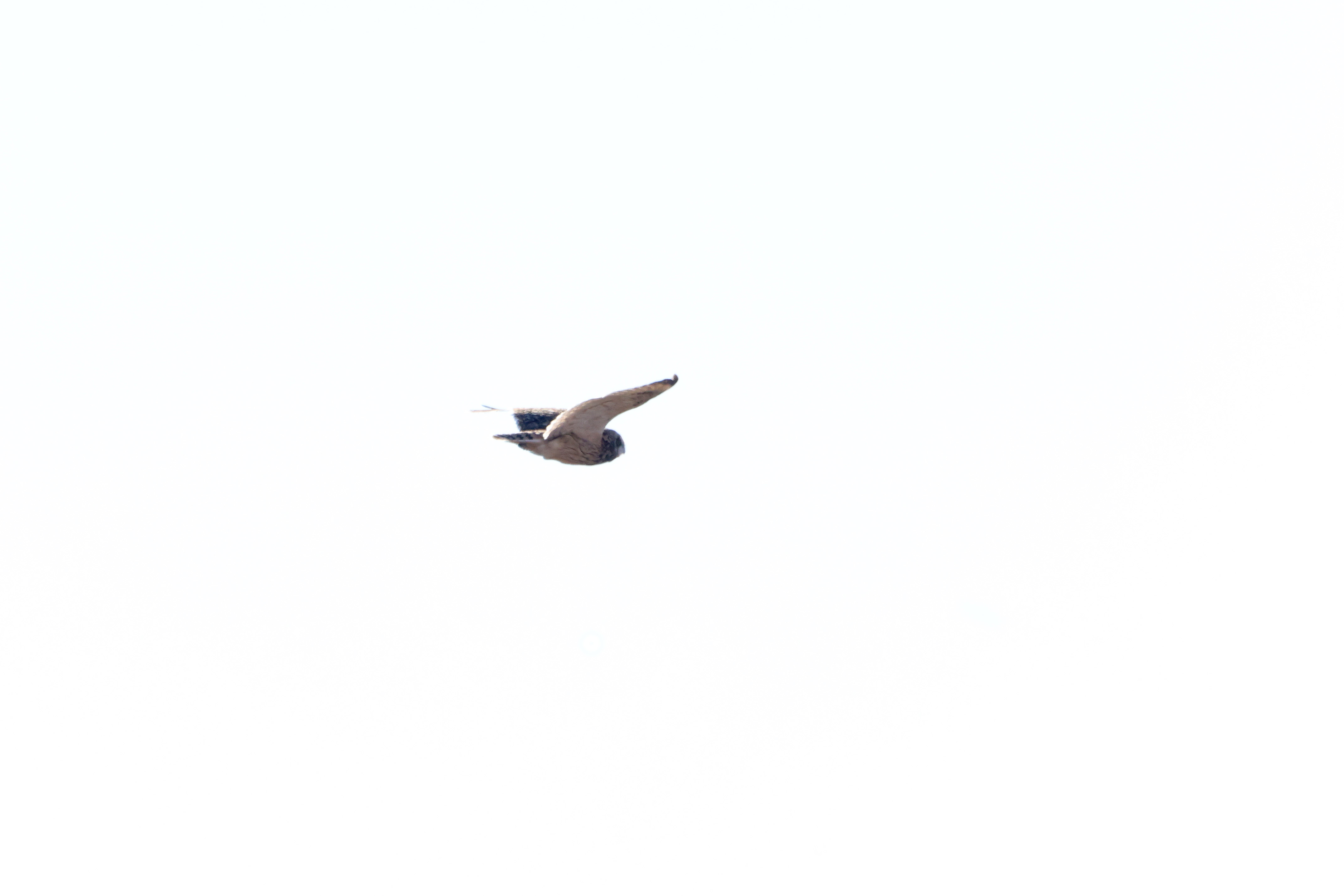
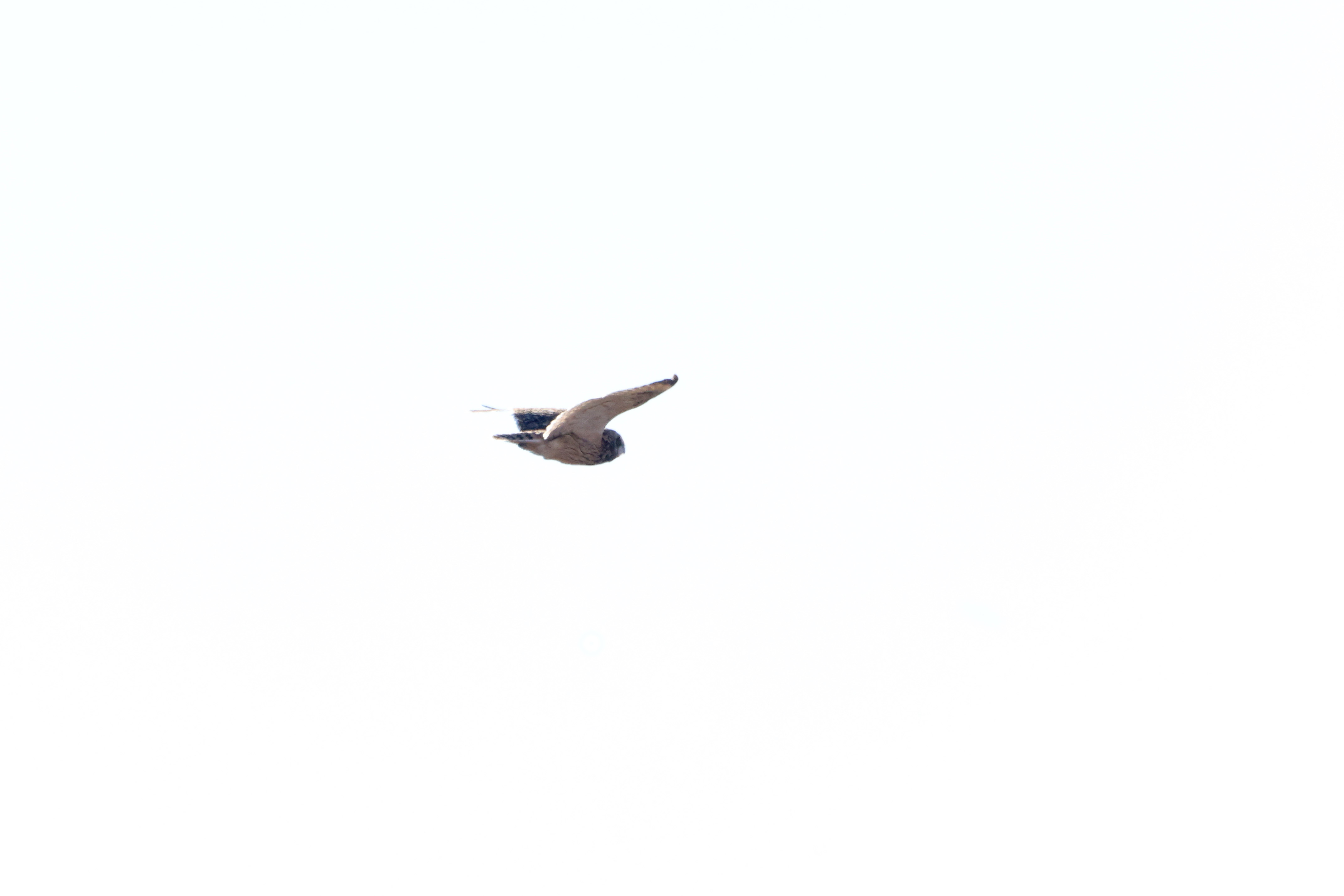
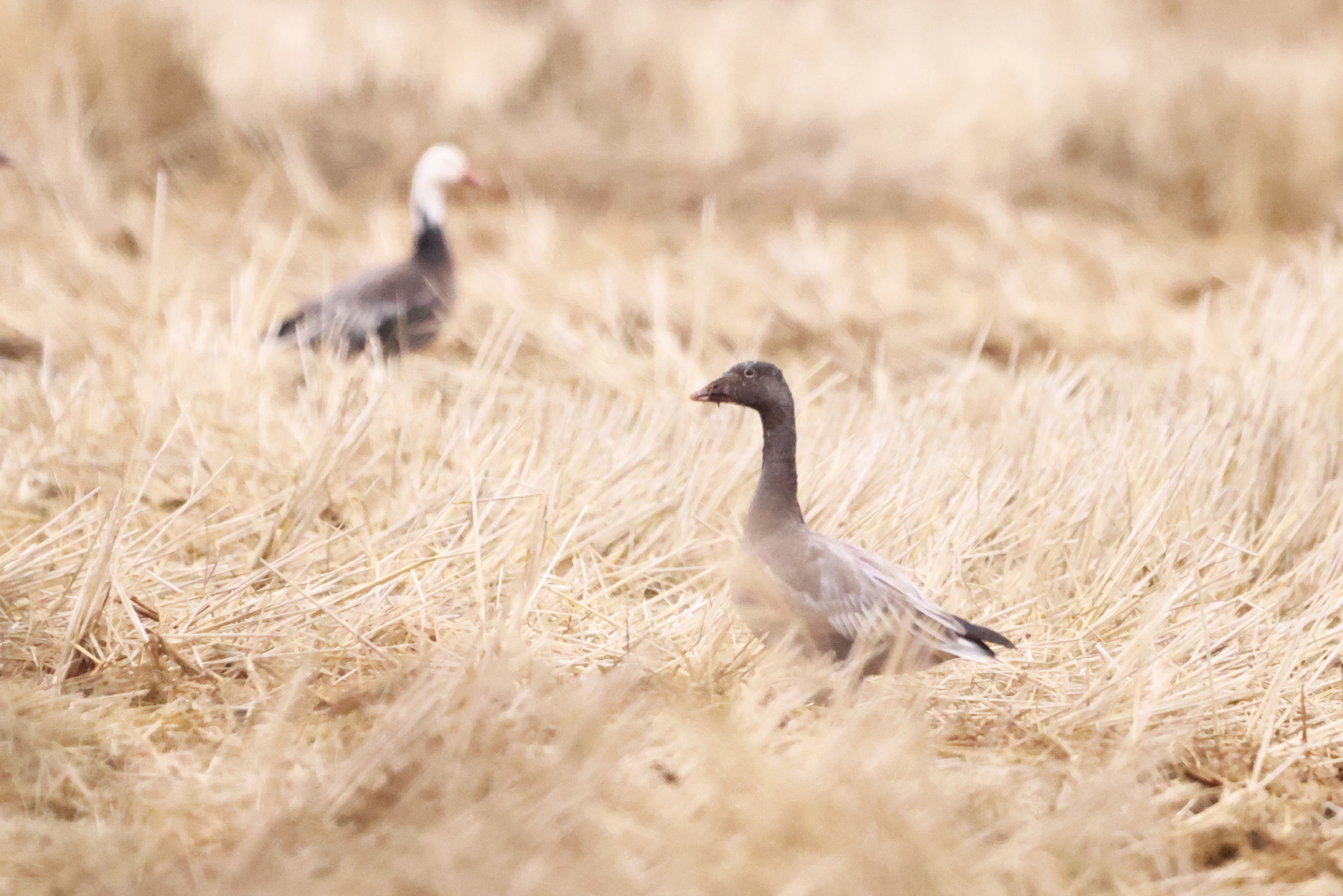
I visited the Stuttgart Municipal Airport recently with a group of birders with the hope of finding Short-eared Owls, Smith’s Longspurs, Lapland Longspurs and possibly even a Barn Owl. While we missed the Lapland Longspurs, we did get lucky on the bird front. Our checklist for the day included four Short-eared Owls, a juvenile Bald Eagle and 77 Smith’s Longspurs.
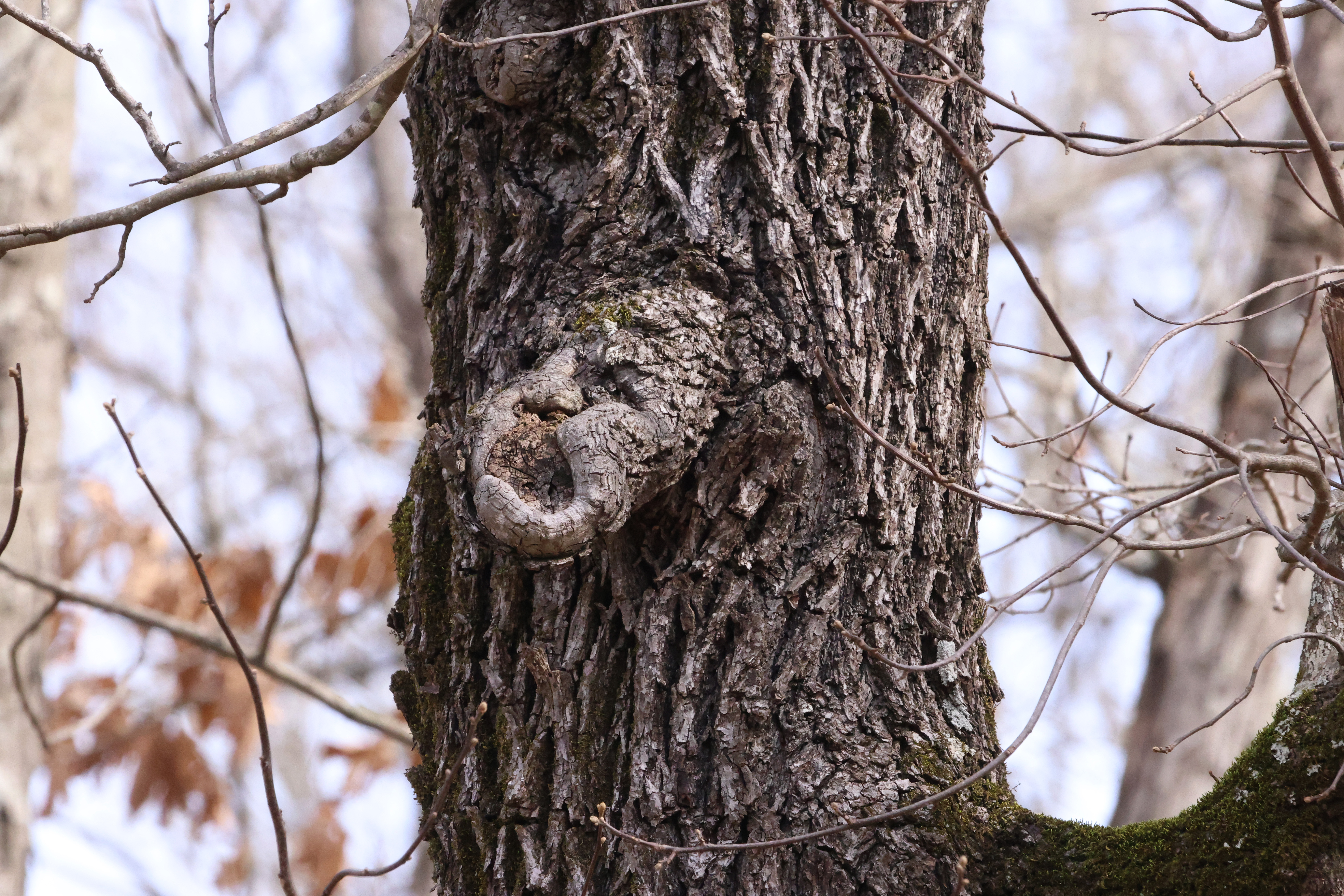
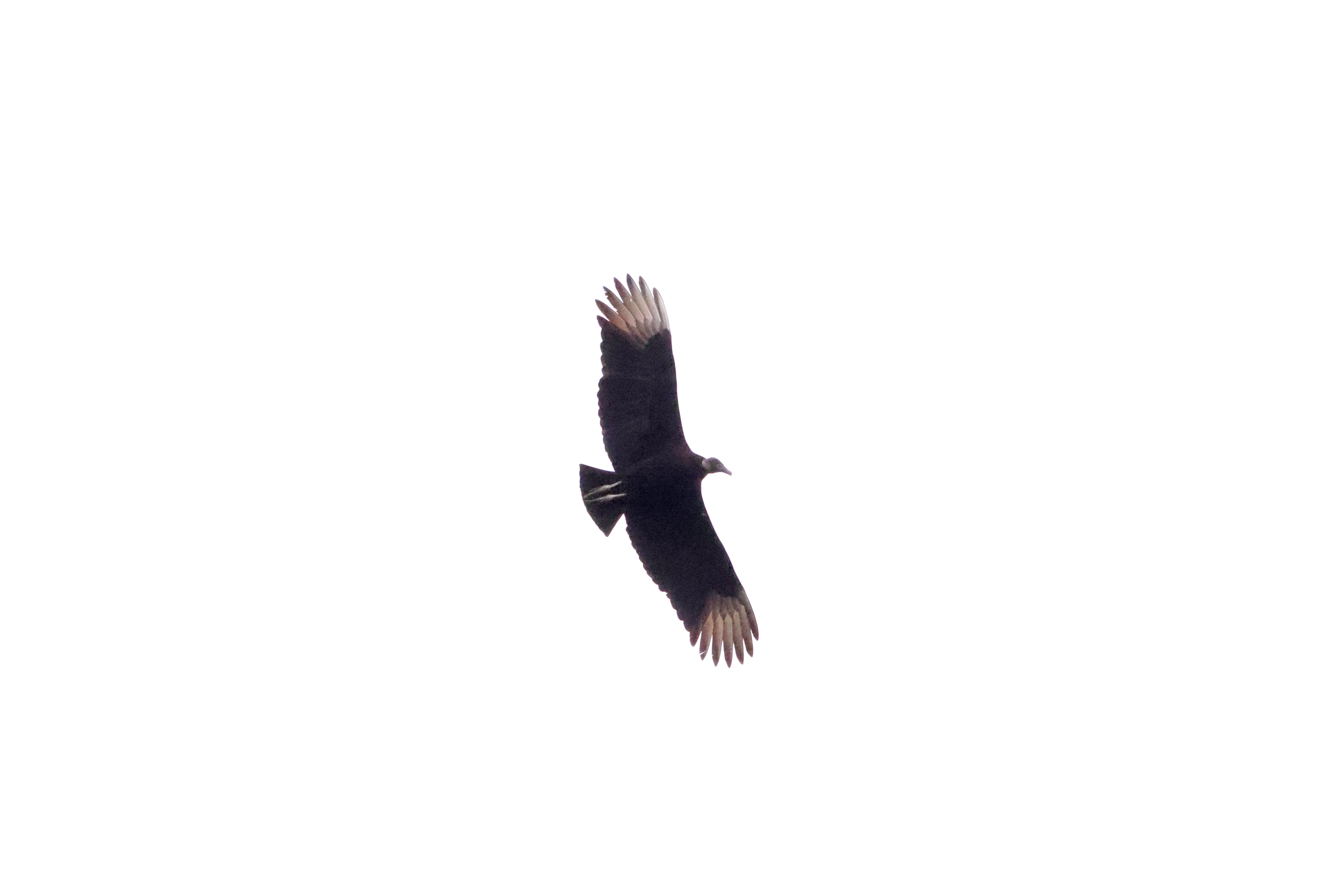
It actually turned out to be a great birding weekend. I traveled to Wynne to visit family and returned to Little Rock via Hwy. 64 through Bald Knob. The route had me stumbling across a birds such as the below Black Vulture, Fox Sparrow, Hooded Mergansers and Mallards. I even spotted a tree that had a hole that eerily looked like a face. What do you think – do you see the face?
Here’s a visual of the birds I saw:
juvenile Bald EagleBlack VultureFox SparrowMallardShort-eared OwlSmith’s Longspurs
The Belted Kingfisher was one of my aunt’s favorite birds. She always got excited when we spotted one and I now think of her every time I see one. On January 1, I passed this cooperative kingfisher sitting on a powerline almost eye level next to the bridge I was crossing. This time, I was the one who got excited to see it.
Belted Kingfishers can be found year-round in Arkansas. I typically find them close to water, whether that be a lake, a big ditch or even a swampy area with lots of big ditches nearby.
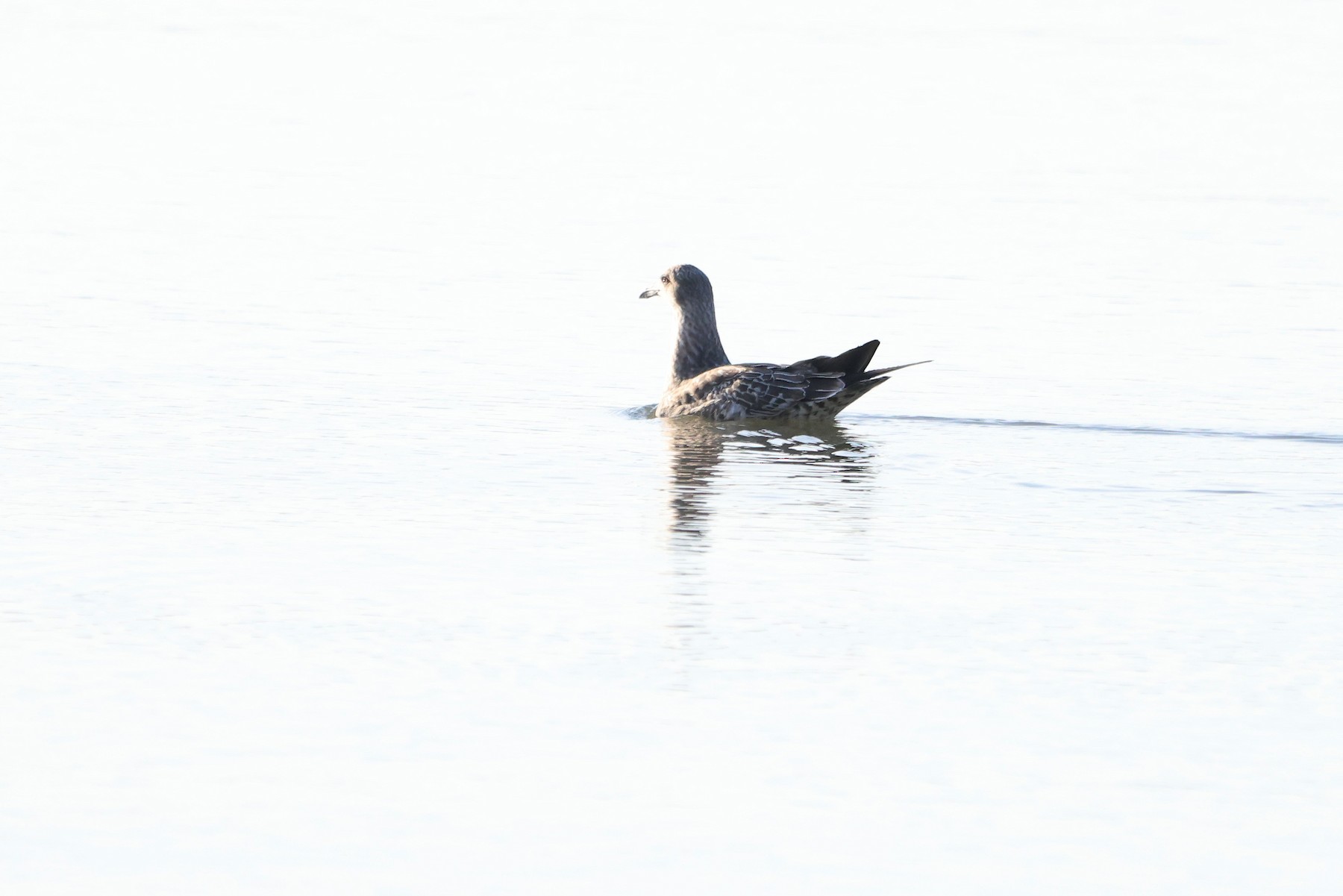
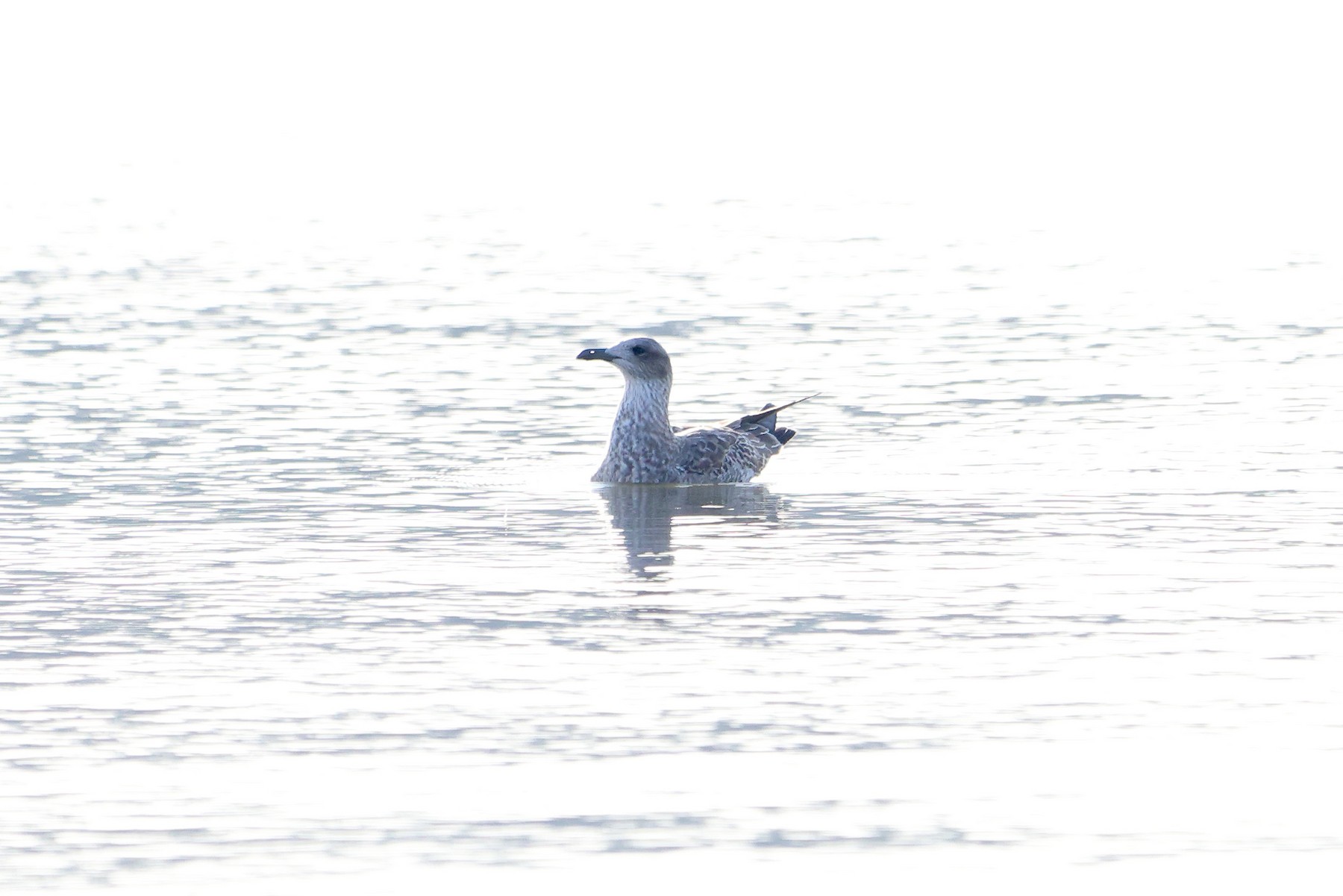
I spent New Year’s Day participating in the Christmas Bird Count for Lake Dardanelle. It was my first time scouting my particular section, but it was fun, albeit foggy. My most exciting find: A Lesser Black-backed Gull. It was the only one spotted during the count, although the gull has been seen in the area for the past few days.
This particular gull is a first winter with its checkered brown and white body and black bill. AllAboutBirds.org reports that the Lesser Black-backed Gull is common in Eurasia and was once a great rarity in North America; however, it is now becoming relatively common as a winter guest along the eastern coastline even though nesting here has yet to be confirmed. Its range map includes Arkansas in its nonbreeding (scarce) zone. According to eBird, we’ve had a sighting every year since 2016 in the state.
Yesterday, a Short-billed Gull (previously called a Mew Gull until 2021) was spotted at Lake Dardanelle. It’s the small-ish gull standing alone near the middle of the photo with a slightly darker gray back, round head, yellow bill and dark eye.
This gull had birders in a tizzy today – the gull is typically found along the western coastline of the USA, and I’m told these gull rarely travel to the rest of the nation. I arrived at 10:30 a.m. to a flock of people with scopes looking for this sole gull in over 5,000 Ring-billed gulls (the other gulls in the photo). If you are thinking yikes – you said it. It was mind-numbing and basically impossible for me. Luckily, the original spotter was kind enough to spend most of the afternoon with me searching for it. He and his wife were actually the ones who spotted it for me.
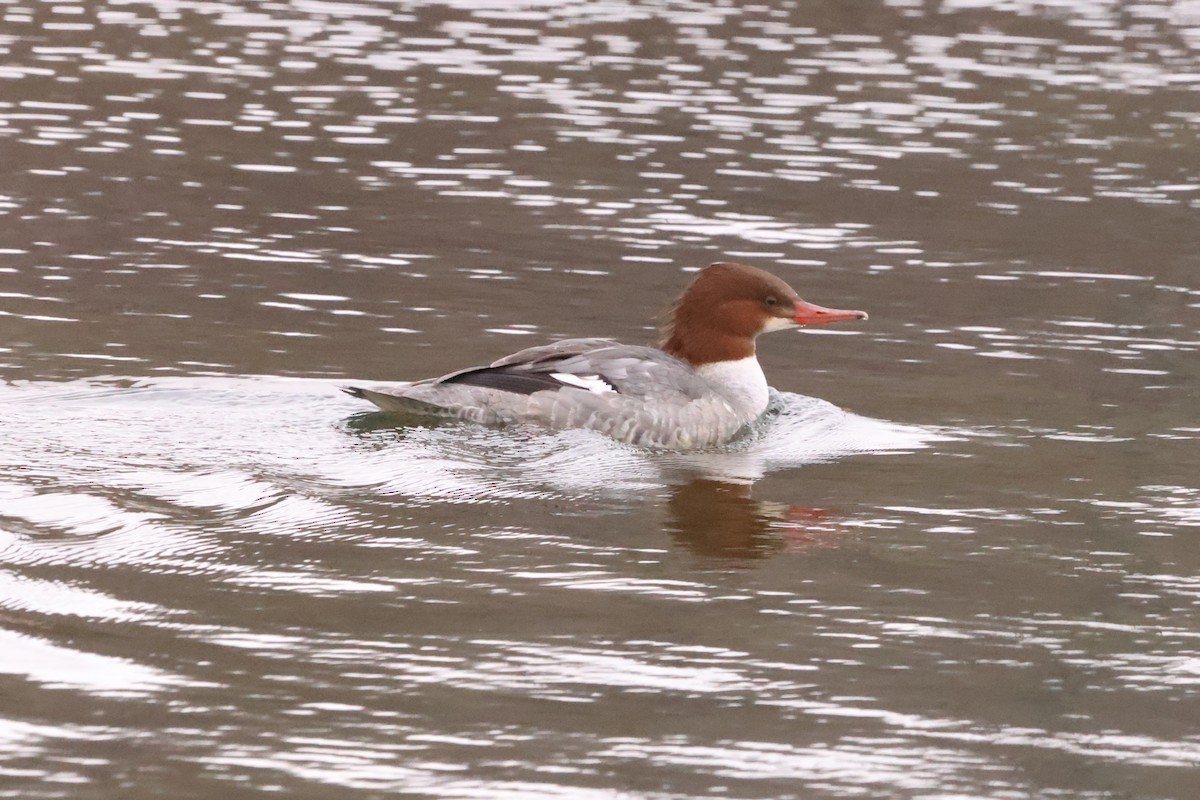
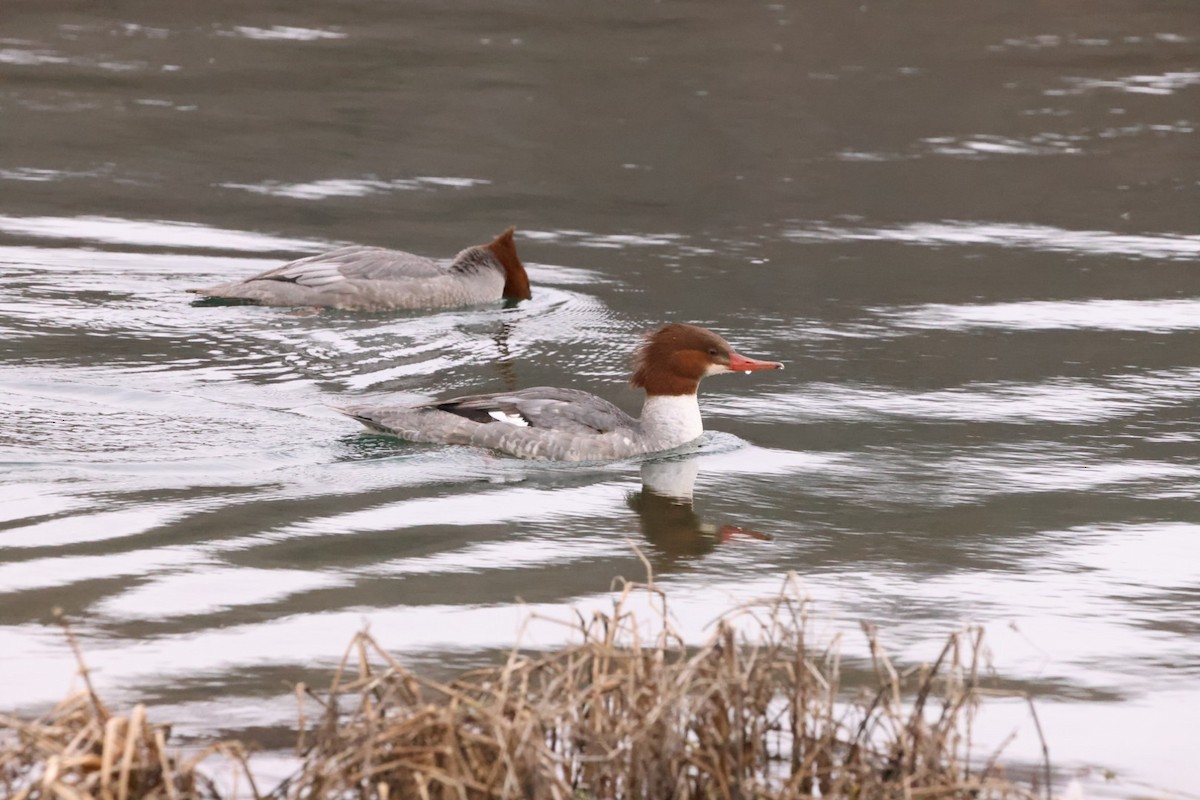
I traveled to Siloam Springs yesterday to find Common Mergansers that were reported on the Siloam Springs City Lake Park. The rare birds were spotted by the boat launch days before, and birders had reported them still being there each day. I quickly spotted them in the distance upon arrival but lost them when I drove around the lake to get a better look.
So, I decided to check out the rest of the city park. They have a pretty cool duck blind set up so people can quietly enter and watch the water birds. It was definitely worth the stop – I saw plenty of ducks, cormorants, sparrows, pied-billed grebes and the Common Mergansers. The Common Mergansers actually flew in and landed right in front of the blind, providing me a perfect look at them even without my camera.
The nonbreeding range for the Common Merganser just dips into the North-Northwest area of Arkansas, although we don’t see them often. eBird reports 356 observations of the species, although I suspect many of those are recent with this sighting. They’ve been spotted within the state from October to May.
I used to visit Wapanocca National Wildlife Refuge each year when I visited my aunt living in Marion. I loved visiting the refuge; however, those visits slowly stopped after my aunt moved, first, to Jonesboro, then to Little Rock to live with me.
On Saturday, I was in the area so I made a pit stop. It was a good visit. Here are some highlights:
The Barn owl has always been one of the top birds that I wanted to see in Arkansas. I finally got the chance yesterday. A birder was gracious enough to take me out to the barn where this pair roosts and nests. They have actually called this barn home for years.
My Dad said a pair of Barn Owls used to nest in a family barn when he was growing up, and he and his siblings used to talk about going to the barn to see the pair and their young. I think hearing those stories is one of the reasons I always wanted to see one myself.
Barn Owls are native to the United States and can be found across the nation. However, it is not common to see one. They hunt at night and sleep during the day. Plus, in some parts of the nation, their numbers are declining due to habitat loss. They require large areas of open land to hunt in – whether it is marsh, grasslands or mixed agricultural fields, according to AllAboutBirds.org. They nest and roost in quiet cavities such as in tress or man-made structures like this barn.
According to AllAboutBirds.org, the Northern American Barn Owl is the largest of the 46 difference races of the Barn Owl found worldwide. The North American Barn Owl weighs more than twice as much as the smallest race from the Galápagos Islands. In the photos, the darker, larger owl is the female. The females tend to be more reddish with more spots on its chest.
On Monday, I got up early to visit the Stuttgart Municipal Airport in hopes of seeing Barn Owls. I didn’t spot the Barn Owls by their known roost, but I did find this Vesper Sparrow that was singing from a hiding spot within tall brush. I was searching for a while before I got lucky: the sparrow flew up to a nearby power line where I was able to get a good look at it.
Vesper Sparrows are typically found in Arkansas from late September through mid-May, according to eBird. According to All About Birds, they are often hidden from sight in grasslands and fields. There are two unique features on the streaky brown sparrow: a thin white eyeing and flashes white tail feathers inflight. It also has a small chestnut patch on the shoulder.
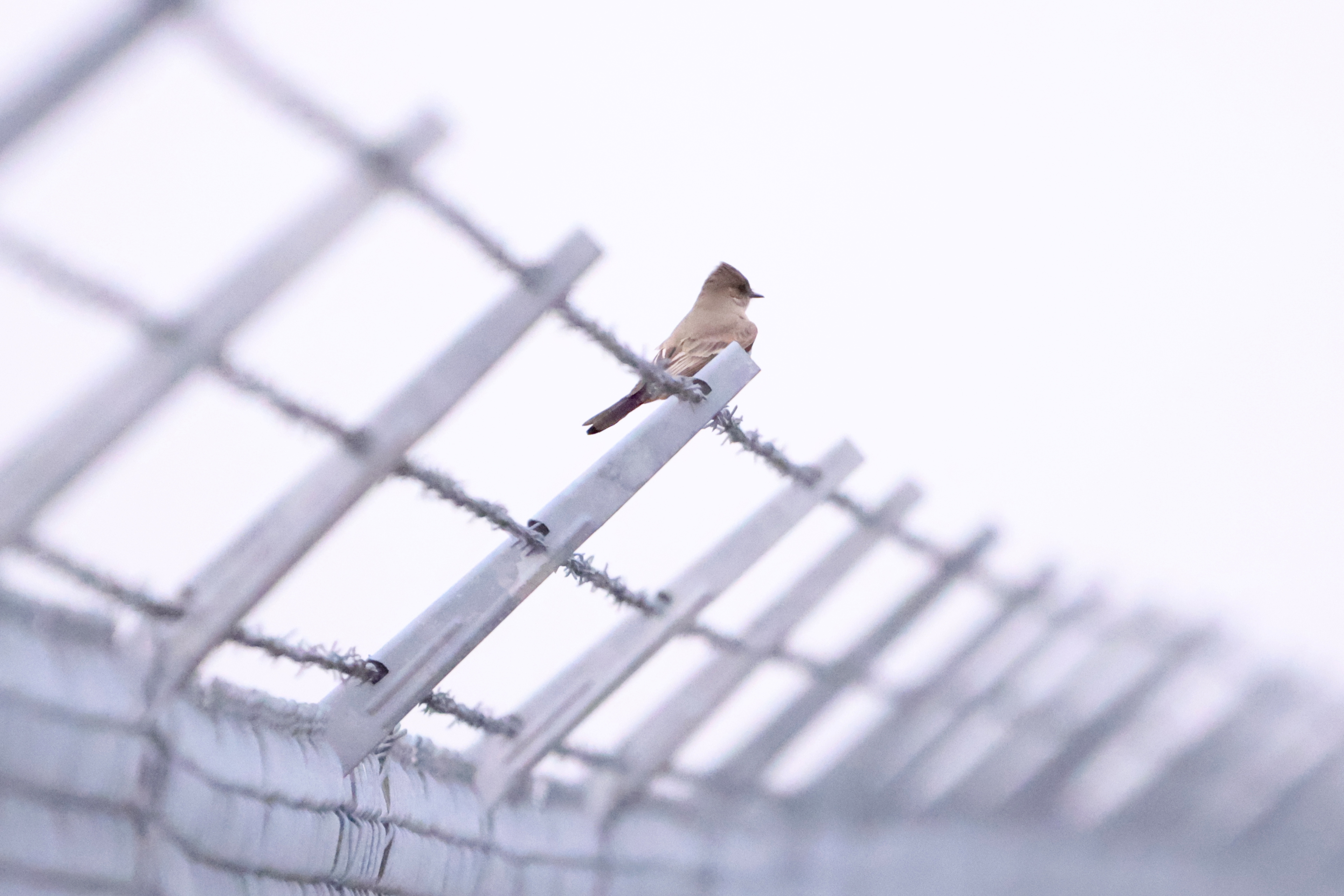
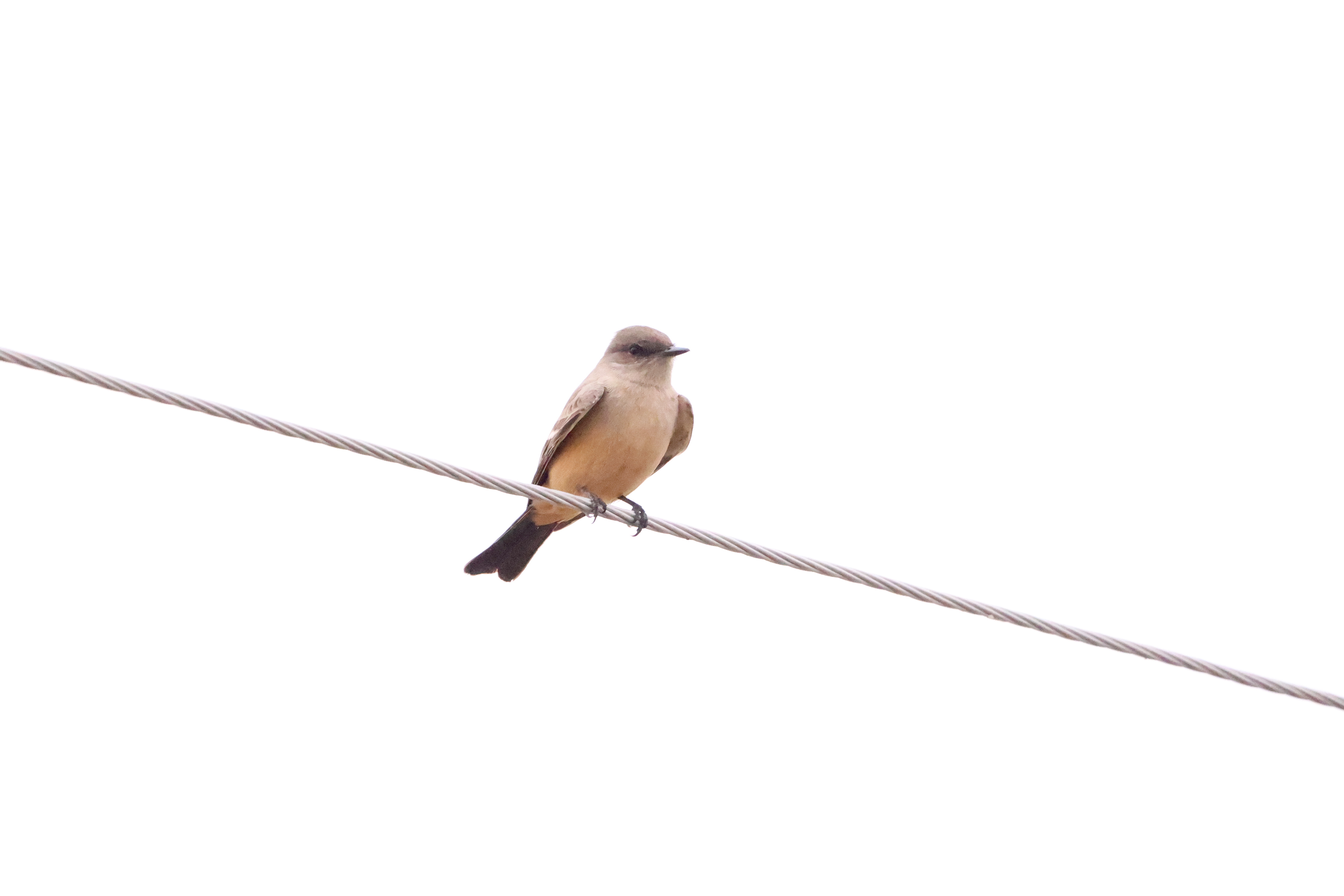
I also spotted a Say’s Phoebe, a rare find in Arkansas, although many have been spotted in the state recently. Another birder had spotted this bird at the airport a few days before me so I was curious to see if it was still hanging around. It was.
Say’s PhoebeSay’s Phoebe
Say’s Phoebes are typically found more west of Arkansas. They differ from the common Eastern Phoebe in having a cinnamon-colored belly. Both phoebes are brownish gray above, although the Eastern Phoebe has a pale belly.
Besides visiting the airport, I also traveled to the nearby Bayo Meto Wildlife Management Area. Here are a few other birds I saw:
For the past few days now, a Red-necked Grebe has been spotted at the city park in Jonesboro, Ark. Today marked my fourth visit to find this rare-to-Arkansas grebe. It was actually becoming frustrating because people would see it right before and right after I was there – I just wouldn’t see it.
This visit started off on a good note. I parmed near the entrance to the park with the plan to walk around the lake and not leave until I saw it or it got dark. With minutes, I found Eastern Bluebirds and Yellow-rumped Warblers flinging in the trees overhead while Mallards, Canada Geese and American Coots scrambled after the food a family was tossing to them. I walked the gravel trail along the water for a minute or two to discover Ruddy Ducks in the water and a Red-breasted Nuthatch in a nearby tree.
Ruddy Ducks
Red-breasted Nuthatch
Immediately after these sightings, I found a Horned Grebe. This grebe is common in the state during its non breeding season especially in October when it’s migrating, according to All About Birds.
Non breeding Horned Grebe
I sat and watched the Horned Grebe for a little bit before deciding to move on. But, I only took a few steps before I saw a water bird fly in just ahead of me. It was the Red-necked Grebe and it swam along the shoreline toward me so I just sat back down.
Red-necked Grebe
Red-necked Grebes are not common to most of the United States – their range crosses a little over the nation’s northern border, according to All About Birds. They typically are found in Canada and Alaska. The last time one was found in Arkansas was two years ago, and this is probably the 11th time one has been spotted in the state.
I was at the park for 30 minutes max, but it turned out highly successful.
I’ve spent the past few days trying to get a better glimpse of a male Spotted Towhee that’s been found at a local park in Little Rock. The above photo is the best photo and look I’ve gotten so far, although I know it is the bird in question since it responded to call backs I played and other birders got better glimpses of it right before I arrived.
The Spotted Towhee is not as commonly found in Arkansas as it’s relative, the Eastern Towhee. The male of both towhees are robin-sized. They have black heads, throats and backs with a white belly that has brown streaks along each side. The Spotted Towhee has white streaks along it’s wings and back while the Eastern Towhee has a white bar on the edge of its wings but not as many white streaks.
The range of the Spotted Towhee is typically more to the west of Arkansas with the non breeding season range including parts of Colorado, Oklahoma and Texas, according to All About Birds.
I previously worked as a news and sports photographer. Recently I have been enjoying wildlife photography. My approach toward bird photos is similar to sports photography. I attempt to capture mostly action and hopefully a unique perspective.

















 Memos for Me