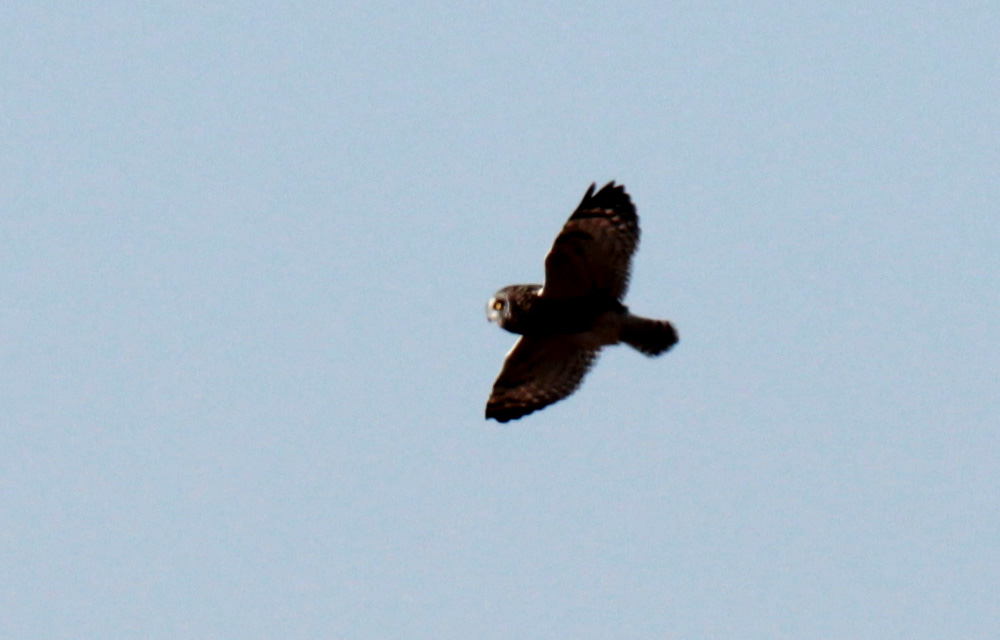
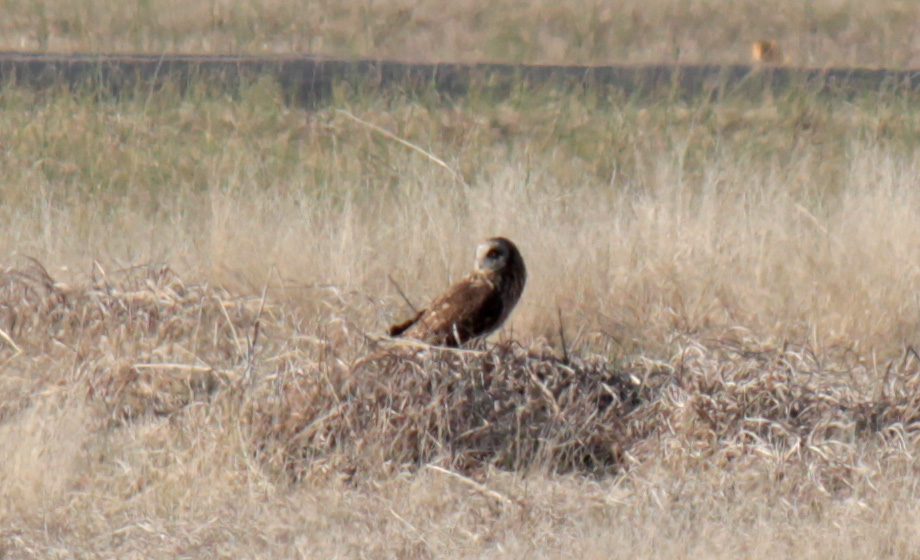
The Great Horned Owl sighting left me so excited that I decided to try spotting a second owl: The Short-eared Owl. The common open grasslands bird is a winter resident of the Stuttgart Municipal Airport. Past trips yielded no results so I finally got my hands on a map of where exactly to look and headed back out.
The trip lasted less than an hour and was a complete success. First, the trip started off on a great note when I discovered an airport employee was back at work after a long bout of illness. After signing in, I immediately stepped out of the airport’s office to find Northern Harriers, Killdeer and Red-winged Blackbirds.
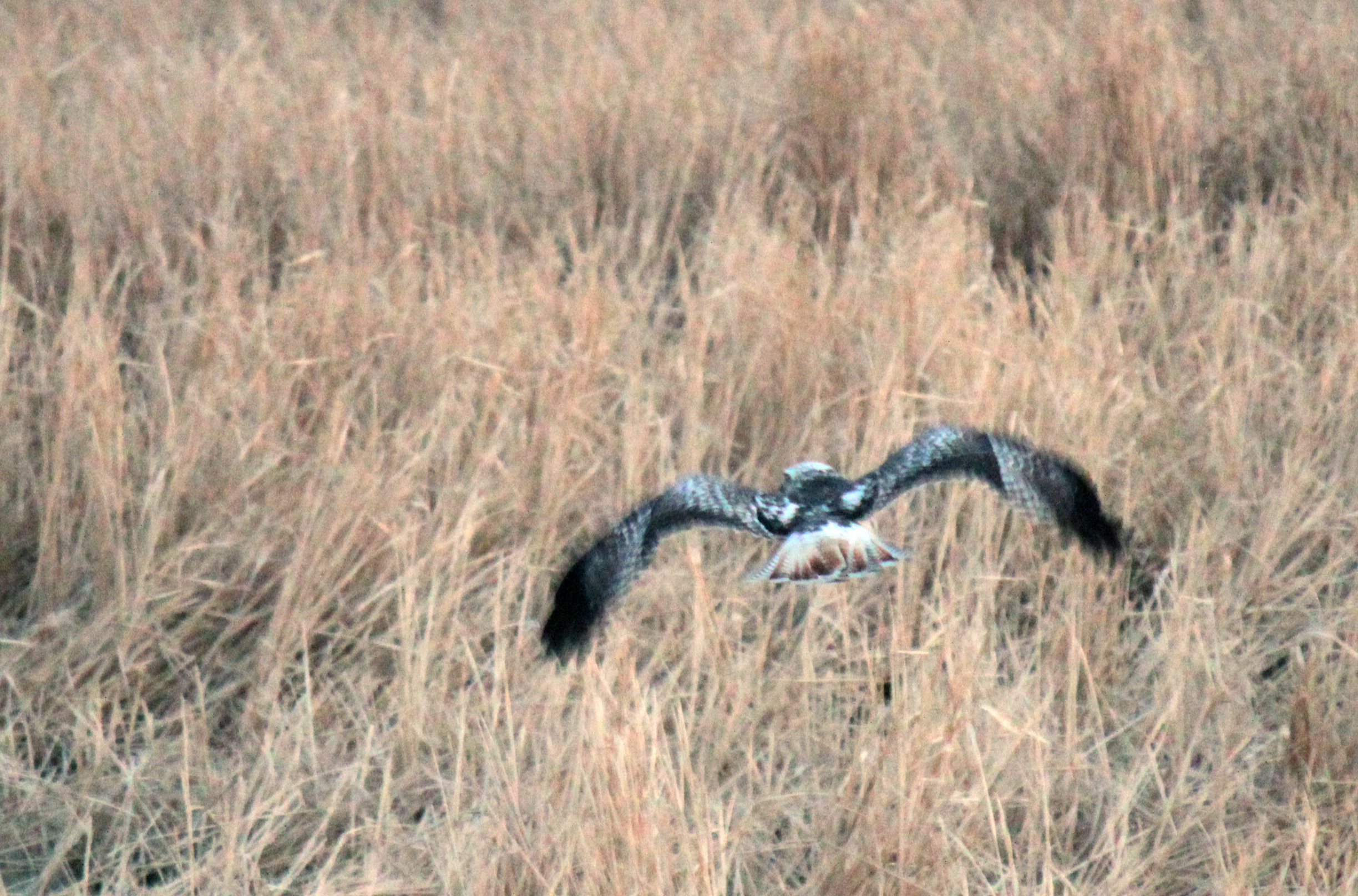
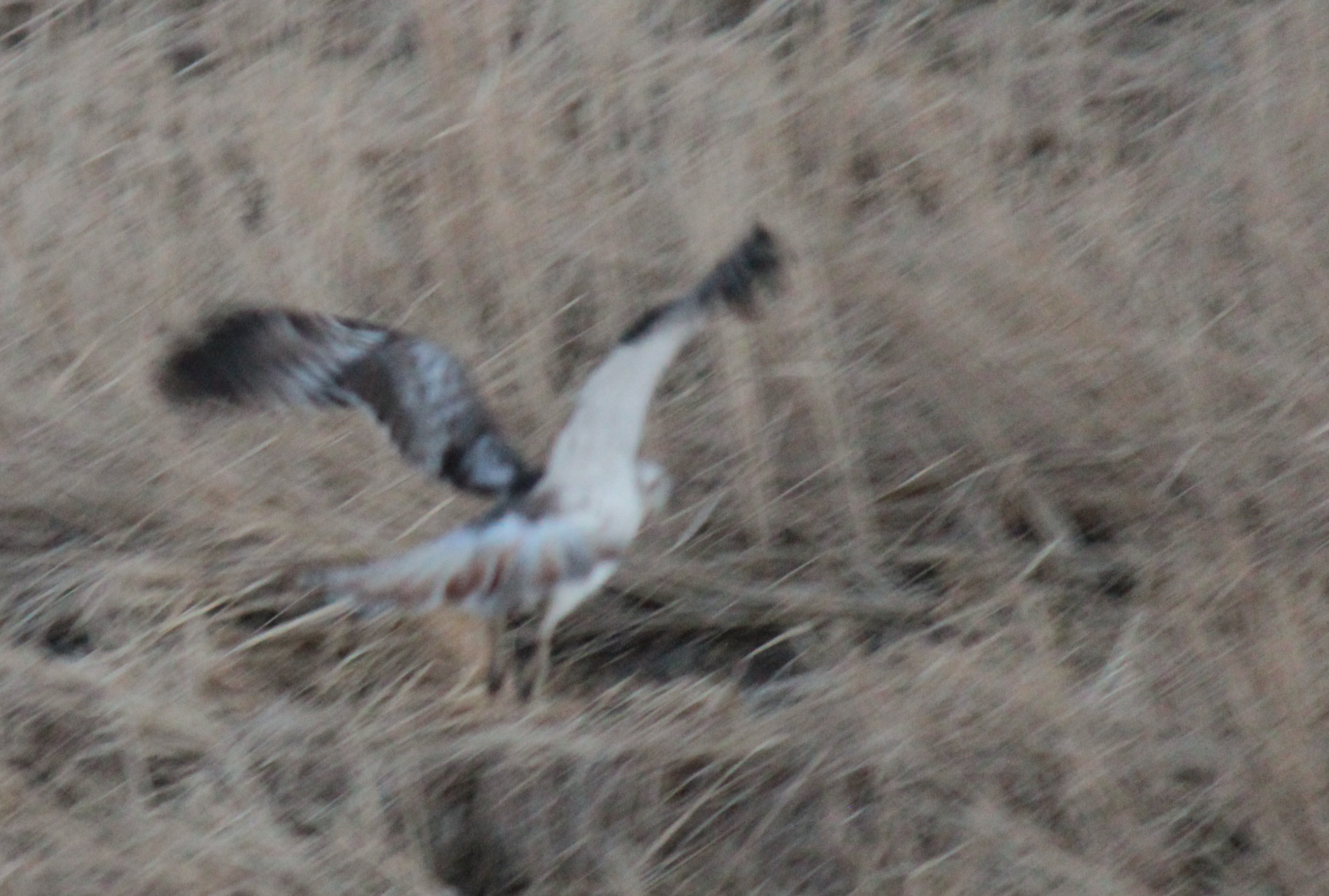
My next stroke of luck came when the below-pictured plane took off, stirring up the owls. I counted about eight in all. According to the National Audubon Society, Short-eared Owls are in serious decline over much of its range with the primary threat being the destruction and degradation of open habitat. I think the owls are fascinating because you can find them easily throughout the day.
The Stuttgart Municipal Airport was originally prime farmland the U.S. government bought for an air force training site during WWII. After the war, the property was handed over to the City of Stuttgart for use as a municipal airport. Today, the military still uses the airport for training exercises.
The airport also remains busy with agricultural-, business- and hunting-related flights as well as birders. Audubon Arkansas and the City of Stuttgart previously started a 252 acre prairie restoration project for grassland birds. There are now prescribed fires, non-native plant control and rubble removal to benefit 13 prairie bird species of great conservation need. According to Audubon Arkansas, the project “continues a landmark collaborative working towards the long-term goal of a 2,000-acre core of contiguous native grassland suitable for the reintroduction of the Greater Prairie-Chicken to Arkansas.”
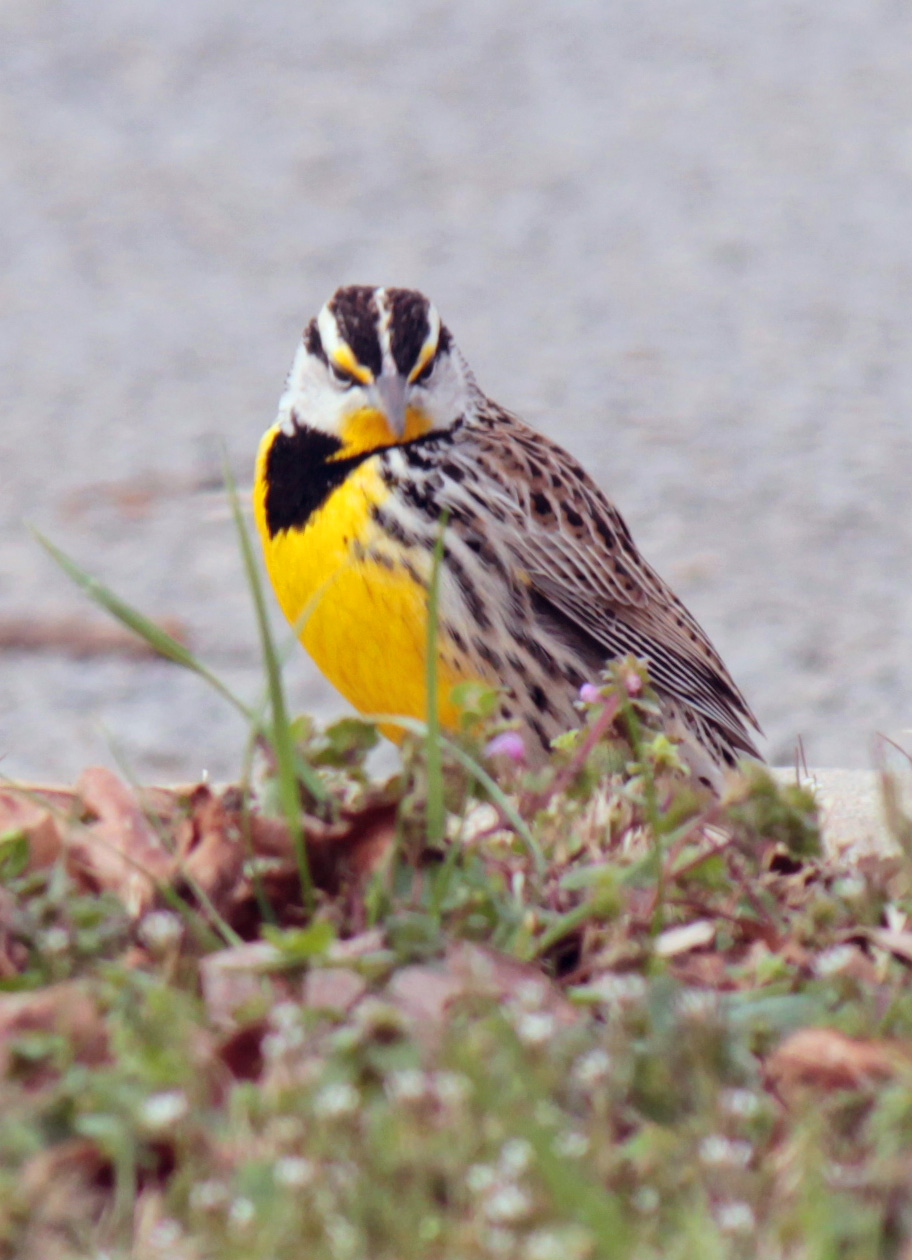
I ended the visit sighting an eastern meadowlark and the above pictured Wilson’s Snipe.
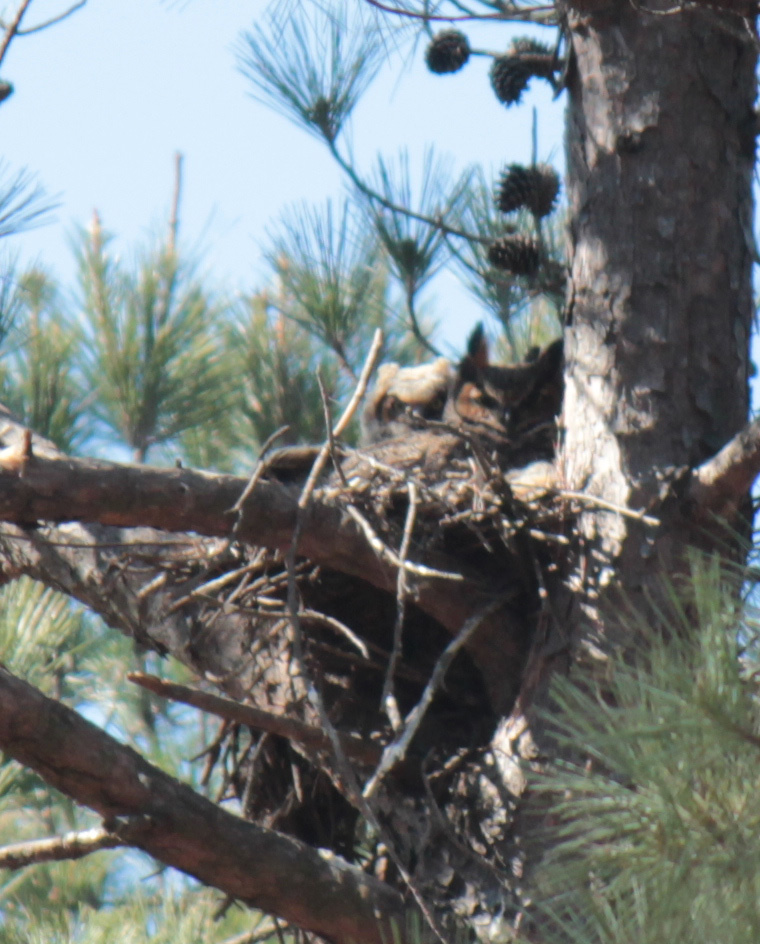
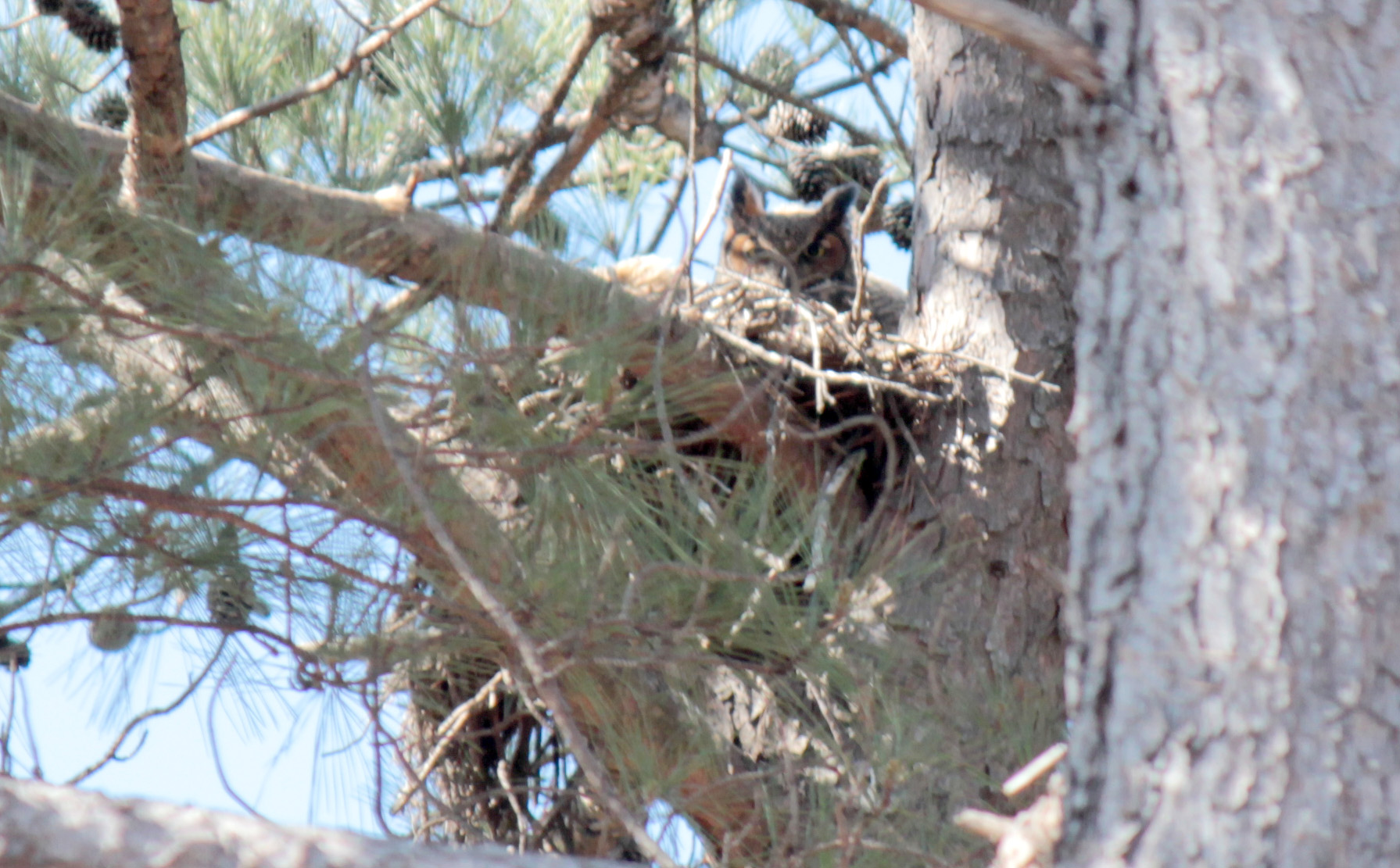
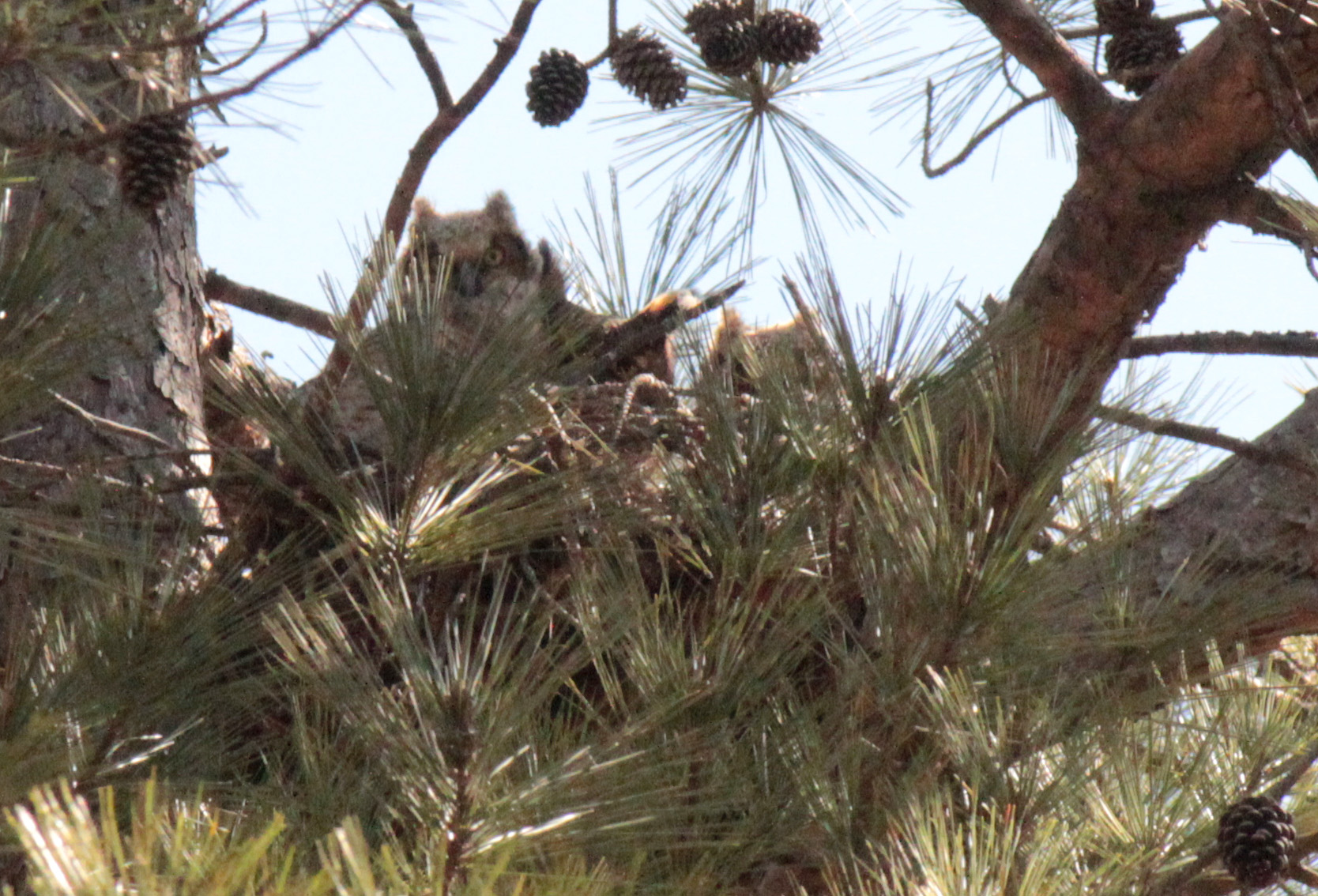
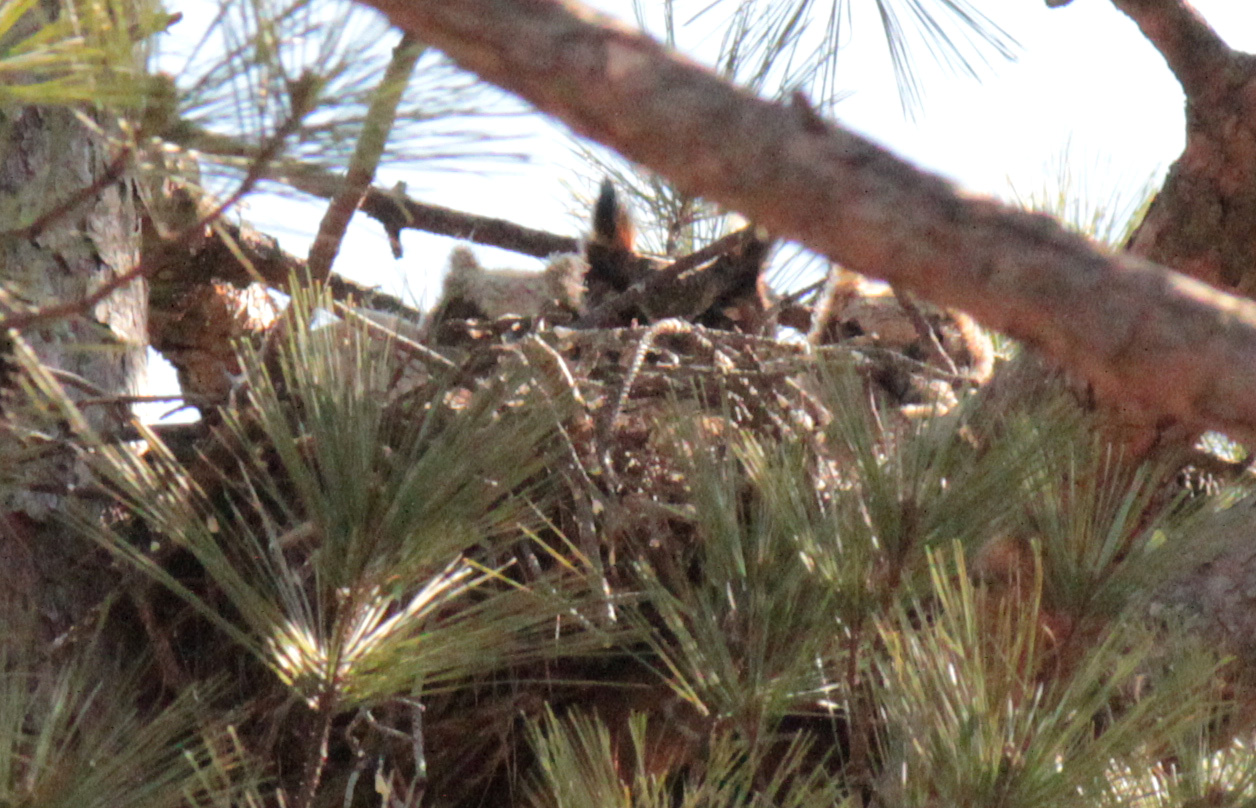
I finally saw my first owl. Well, actually it was three Great Horned Owls — a mother and two juveniles nesting near the top of a pine tree. I visited the area twice, taking pictures from across the street before I finally saw the first baby. I was pretty excited.
Great Horned Owls are common to the United States year-round. However, it was still my first time to clearly see an owl in the wild. I visited the nest mid-morning and late afternoon and, surprisingly, the mid-morning visit yielded the best results.
After the sighting, I had to go to allaboutbirds.org to read up on the Great Horned Owl. It was neat to learn that it is the “only animal that regularly eats skunks” and that they often take large prey, such as other owls, nesting Osprey and falcons.
The Great Horned Owl is also regularly harassed by flocks of American Crows that mob owls and “yell” at them for hours. According to allaboutbirds.org, “the enmity of the crows is well earned, however, as the owl is probably the most important predator on adult crows and nestlings.”
Here’s some more pictures of the Great Horned Owl nest:
I’ll admit I pass the hour driving to Arkansas’ state capital looking for birds. Typically, I’ll look for hawks, ducks and geese. I just never expected to add a Wild Turkey to the list!
I spotted this Wild Turkey, an adult male southwestern, earlier today near the only section of the trip that’s swampy. He was just walking along in the patch of grass between the road and the swamp like he had business to attend to in the small town that edges the swamp. It was random, but definitely worth the time to stop and take pictures.
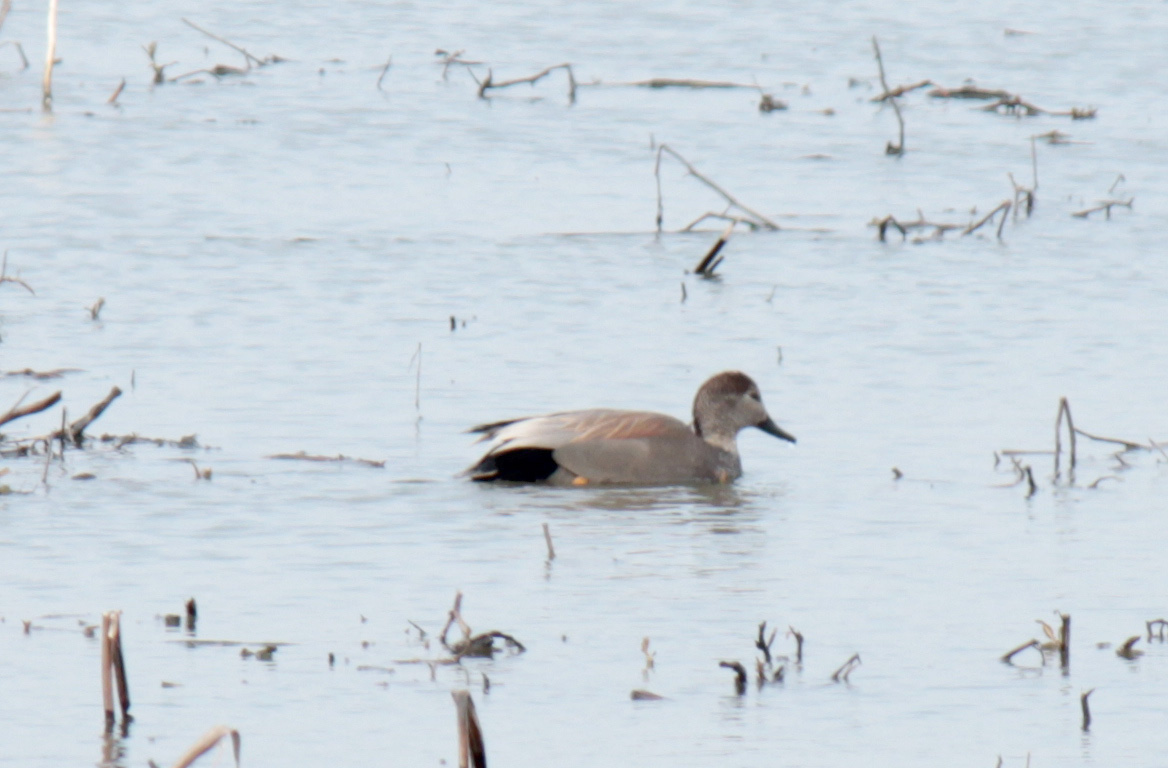
I’ve finally added two more ducks to my list of photographed birds. I headed to Bayou Meto Wildlife Management Area’s Halowell Reservoir earlier this month to see what was there and found both of the above Ruddy and Gadwall ducks. I was also in luck for plenty of other bird sightings as well.
A retired Arkansas National Heritage Commission employee was kind enough to take me and a fellow birder out to the commission’s Pine City Natural Area to find the Red-Cockaded Woodpecker.
We searched the western part of the Pine City Natural Area, which was created in 1988 and has 1,043.21 acres overall. According to the commission, it “provides vital habitat for the only known population of the federally endangered Red-Cockaded Woodpecker in the Mississippi Alluvial Plain of Arkansas.”
The natural area also includes the “Lost Pine of Arkansas” — the loblolly pines. According to the commission, the pines are now an isolated population within the plain and, as a result, are now genetically distinct from the loblolly pines found elsewhere in the United States.
Mature southern pine forests are the main home to the Red-Cockaded Woodpeckers — one of the few bird species endemic to the United States, according to allaboutbirds.org. The birds’ “extreme habitat specificity and loss of breeding habitat” has since caused it to be listed as federally endangered.
State workers now help maintain this area to sustain the Red-Cockaded Woodpeckers’ population. The birds prefer longleaf pines, and only nest in cavities of live pines.
The commission’s work includes placing wire around the bottom of trees with nests to keep snakes away and placing metal around the nests (below) to ensure other types of woodpeckers will not takeover the cavities.
According to allaboutbirds.org, trees infected with red heart fungus are often selected since the fungus softens the wood, allowing the woodpeckers to dig out a cavity. The live pine tree then leaks gum around the nest hole, helping to keep tree-climbing snakes away from the nest.
The woodpeckers live in small family groups with only one breeding pair. The area we visited had about 10-15 woodpeckers living there. The commission had marked each tree with nests, and we even found an additional tree (below) that was not yet marked.
We arrived about 4 p.m. to walk the area, find the nests and get in place for when the woodpeckers arrived. Apparently, the woodpeckers leave their nests just after dawn, have a morning rally of sorts and then head out to forage for food as far as a mile away. They head back to the nest around sunset.
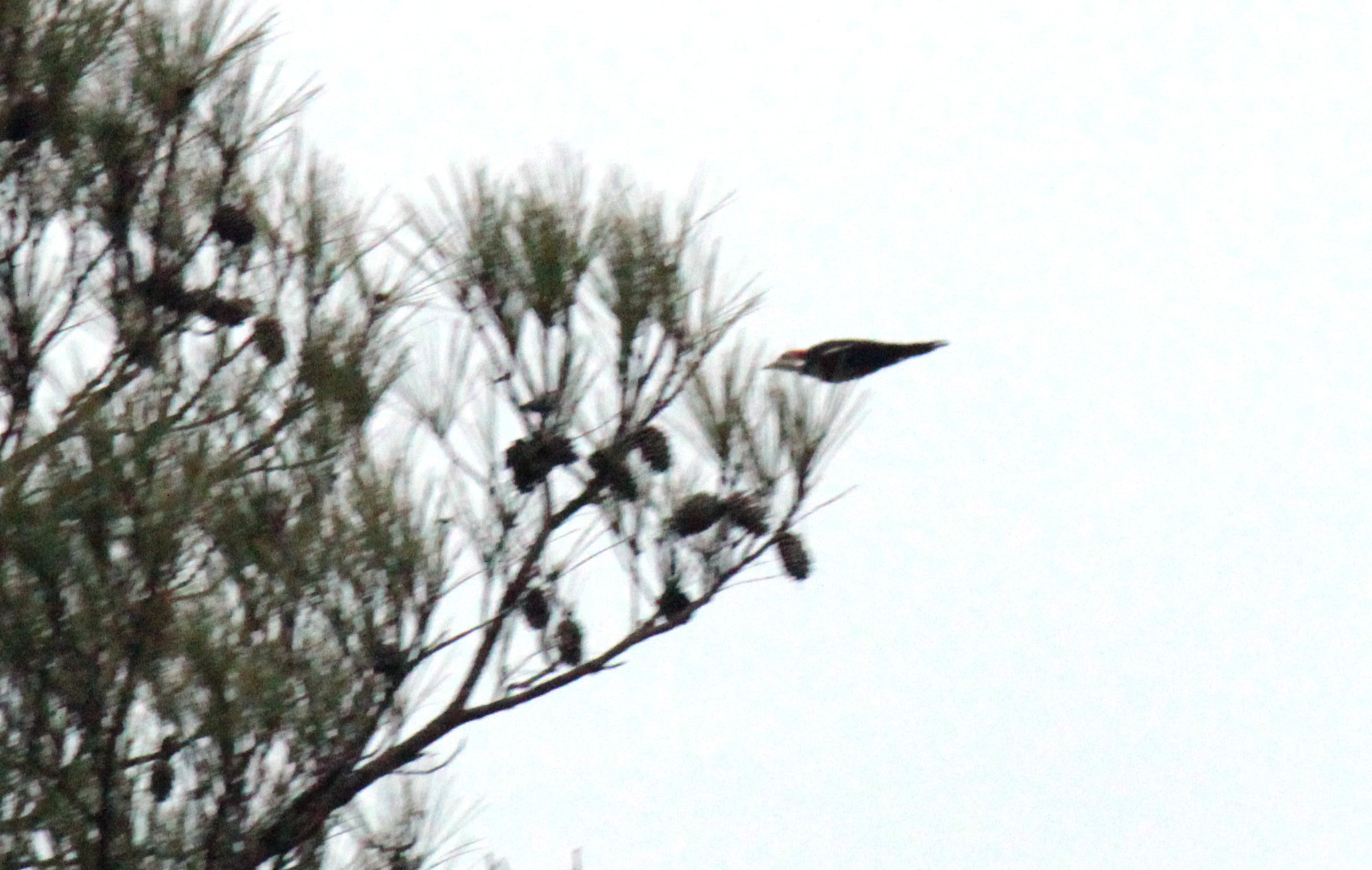
The first bird we saw was the above pictured Pileated Woodpecker, which our guide was delighted to see flying in the opposite direction. Apparently the Pileated Woodpecker wreaks damage on the Red-Cockaded Woodpeckers’ home.
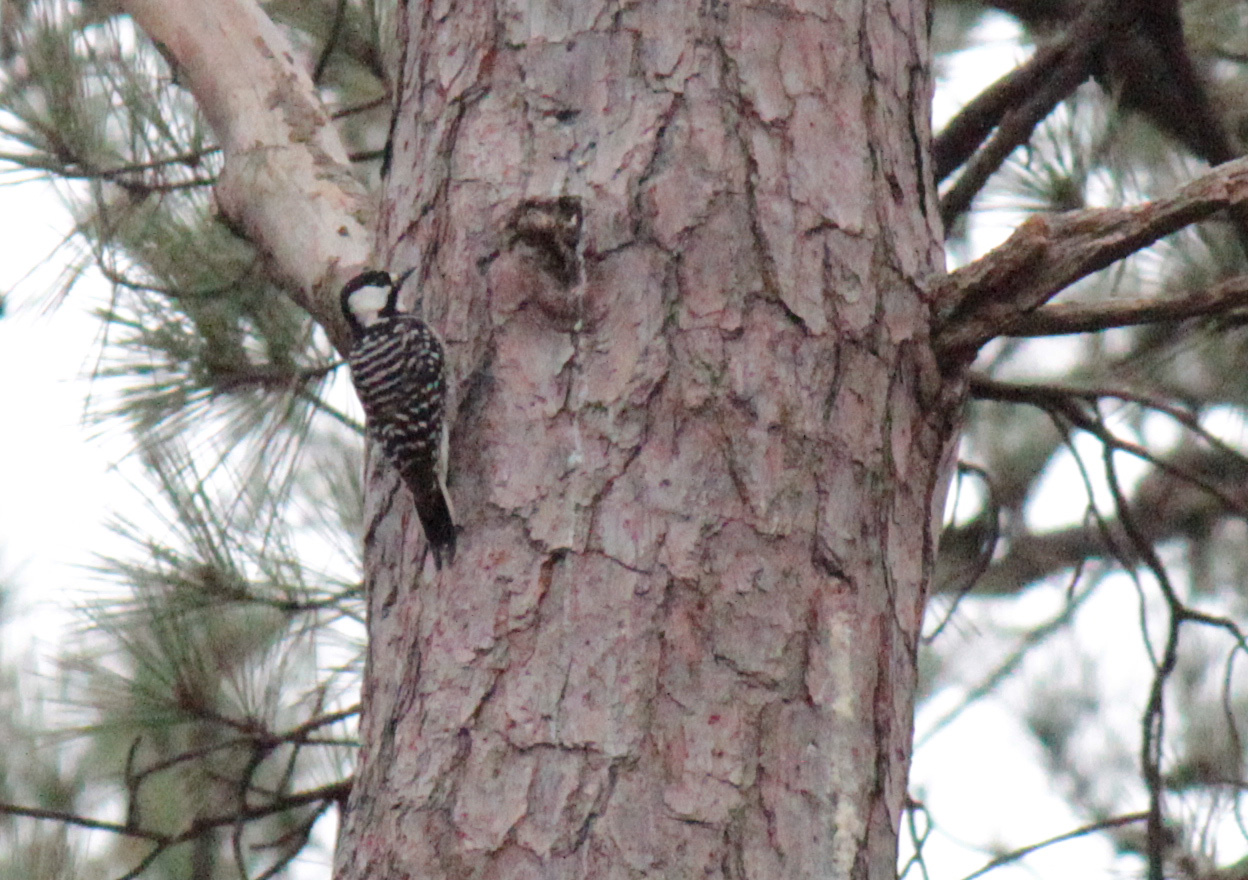
Eventually, the first round of Red-Cockaded Woodpeckers arrived.
The five to six Red-Cockaded Woodpeckers called out to each other, climbed up and down the trees with nests, and finally swooped into their nests for the night.
Their arrival, greeting and turn-in for the night was actually pretty quick. We decided to stay there a little longer just to be sure they wouldn’t come out again. For the next 20 minutes, all we heard were geese and more geese.
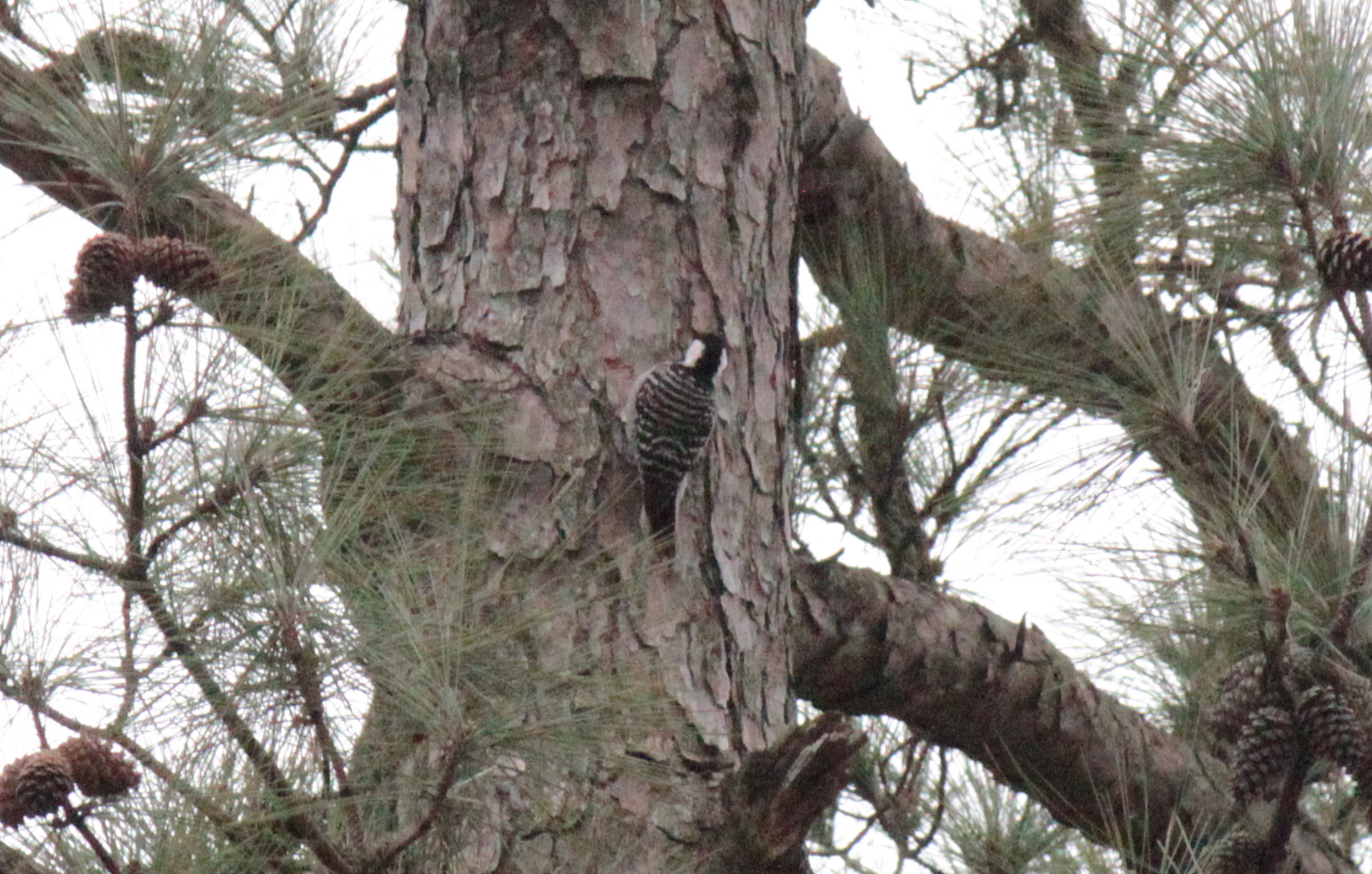
We were about to head back to the car when we heard a second group of Red-Cockaded Woodpeckers arrive. Thankfully, there were no geese overhead. This group stayed out for a while, allowing us to get a pretty good glimpse of them.
Our guide kept a record of how many birds we saw, the time they arrived and the time they went to bed to give to his old coworkers. He plans to update them on the unmarked tree we found as well as information about which birds. Most of the birds are banded — you can see the band in the above picture.
It was also interesting to learn that the commission does occasionally relocate one of these of woodpeckers to other nearby colonies, such as in Louisiana or Texas. In the past, woodpeckers were taken from these sites to help populate the Arkansas colonies.
If one of the birds are relocated, our guide said its done while the birds are young to help them adjust better to their new home. These birds are taken after they arrive home to nest at night. Workers place a soft cage next to the cavity, lightly scratch the bark and then close the door once the bird flies into the cage. The bird is then driven all night to be placed in its new nest before dawn.
We ended up spending three hours at the Pine City Natural Area. It was fascinating — I really enjoyed the visit, which ended with a splash. I was crossing a ditch when my left foot sank deeply in mud.
For a second or two, I figured the Pine City Natural Area would gain a left boot. I was luckily able to get de-mudded without getting too wet. My boots were about knee-high and the water came to just about an inch below the top of the boots. I ended up having only my left sleeve wet. Not bad at all!
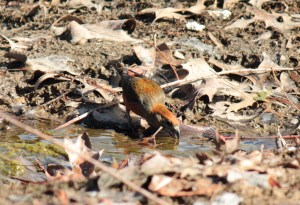
Arkansas’ latest rare birds are 15 Red Crossbills that are making the Fayetteville Country Club their home. A fellow birder and I decided to head that way today to find them.
We luckily ran into two experienced birders at the country club who let us tag along with them. One was great at calling birds and we ended up finding a native Red- Breasted Nuthatch and a Brown Creeper.
Red-Breasted NuthatchBrown Creeper
We mainly stayed near pine trees since Red Crossbills (found in northern and western United States) love to cling to pine cones and extract the cones’ seeds. We were only there for a short while before, luckily, other birders at the course found them for us. In the past, other birders said they searched for two-to-three hours before finally discovering them.
Anyway, we joined a small group to look at the three Red Crossbills that were noisily eating away. It was so fascinating that none of us figured out that there were 12 more Red Crossbills in the tree next to us.
We finally figured it out when all 15 — seven males and eight females — flew to a nearby tree. It was actually a better location since the tree had no leaves. They flew to a third tree that was even better to photograph them in before finally diving down to the pond for a drink of water.
It was definitely a sight worth seeing except for when they finally flew off after taking a drink. I thought two Red Crossbills were going to take me out as they flew past. Luckily, they just missed my face.
We didn’t stay in Fayetteville afterwards. We drove straight back home with a detour to Lake Dardenelle. A couple, who has birded for more than 20 years, invited us to their cabin to see all the birds that flock to the lake.
And, boy, did we get lucky. The couple pulled out their scope and we were able to view (and unfortunately not get pictures of) a Western Grebe, a Pacific Loon and a Lesser Black-Backed Gull, all rare.
We were also able to view the more common species like a Horned Grebe, a Common Loon, a Pied-Billed Grebe, a Common Golden-Eye, Snow Geese, Ring-Billed Gulls and American Pelicans.
The only picture I was able to take was of the Ring-Billed Gulls.
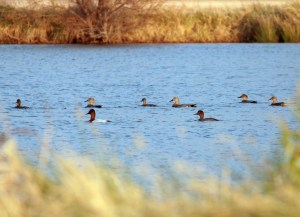
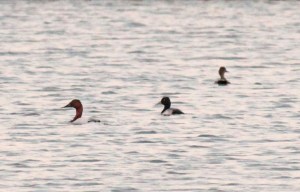
Canvasbacks and a Redhead Duck on my grandparents’ pond.
I wasn’t back home in Wynne long before my parents told me there were ducks on my grandparents’ pond. My grandparents live just a mile down the road from us so, of course, my parents had to drive down to show me.
It was pretty cool — I am pretty sure they are Canvasbacks and a Redhead in the above picture while the below picture has Redheads with a Lesser Scaup.
In 2013, Arkansas County will celebrate its 200th anniversary. It was named a county in 1813 by the Territorial Legislature of Missouri after an American Indian settlement, the Arkansas. Yes, it’s older than the state. According to arkansas.com, the Arkansas Territory was organized in 1819 and Arkansas was admitted to the Union as a state in 1836.
To celebrate, I decided to look back at pictures from my visit to the Arkansas Post Museum. This year marked my first visit to the museum, although I frequently visit the nearby Arkansas Post National Memorial. The museum, established in 1960, is the first county museum in Arkansas.
It focuses on the Arkansas Delta cultural and biological heritage with an emphasis on the Grand Prairie. I’m fascinated with the gallows — the iron piece was built in 1908 and stored in the Arkansas County Jail’s rafters in DeWitt to use as needed for capital punishment. It was never used since the electric chair was invented in 1913.
I also love the historical and cultural artifacts that the museum has displayed, especially the below dollhouse. The dollhouse was built in 1933 for Harriet Jane Carnes Bonner and is life-size. It even has the original toys and furniture as well as a fire place, electric lights and a screened porch.
Nearby are:
WWI clothing worn by an Arkansas County residentThe main house actually had three pianos/organs in a room. The pieces were gorgeous with great details.
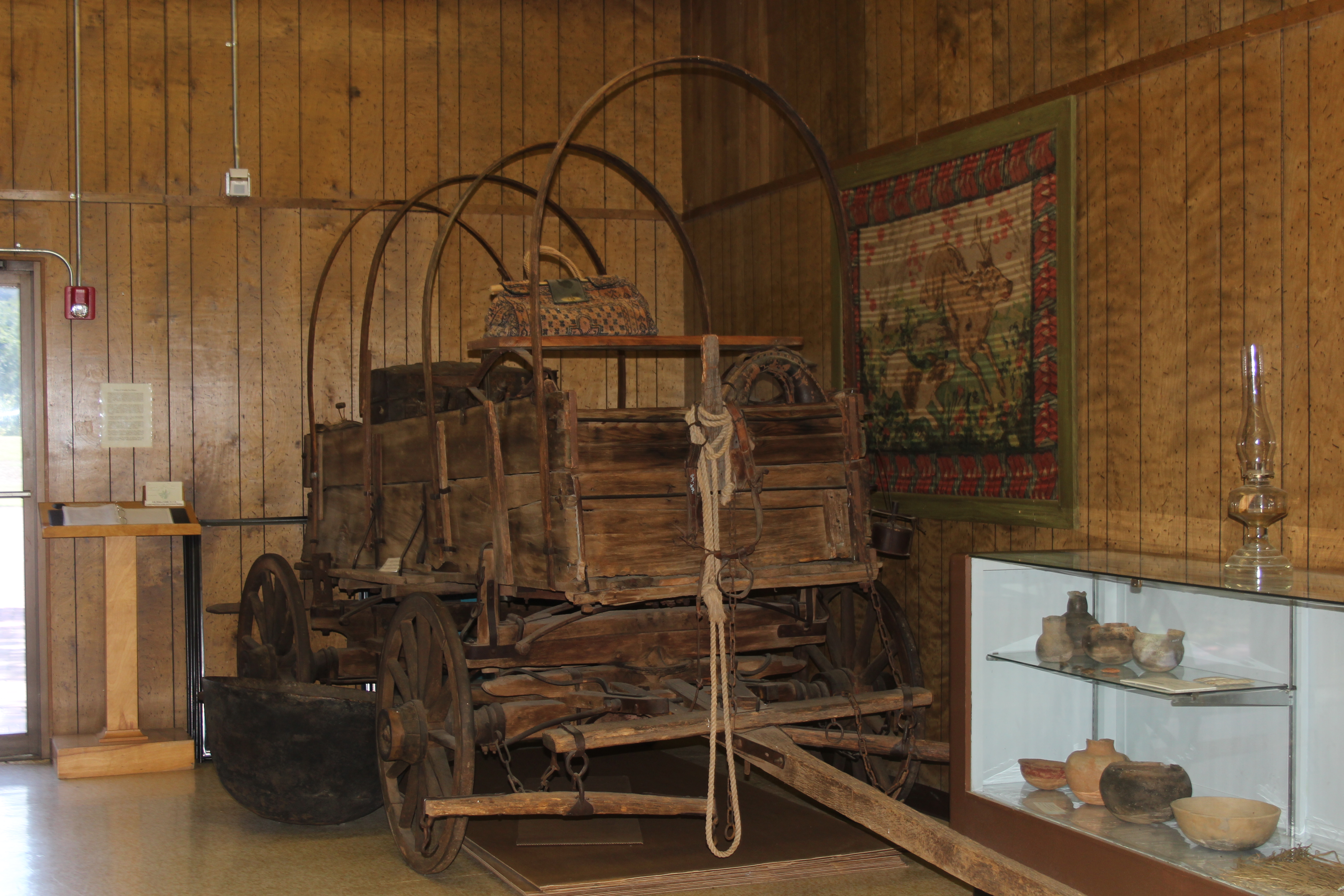
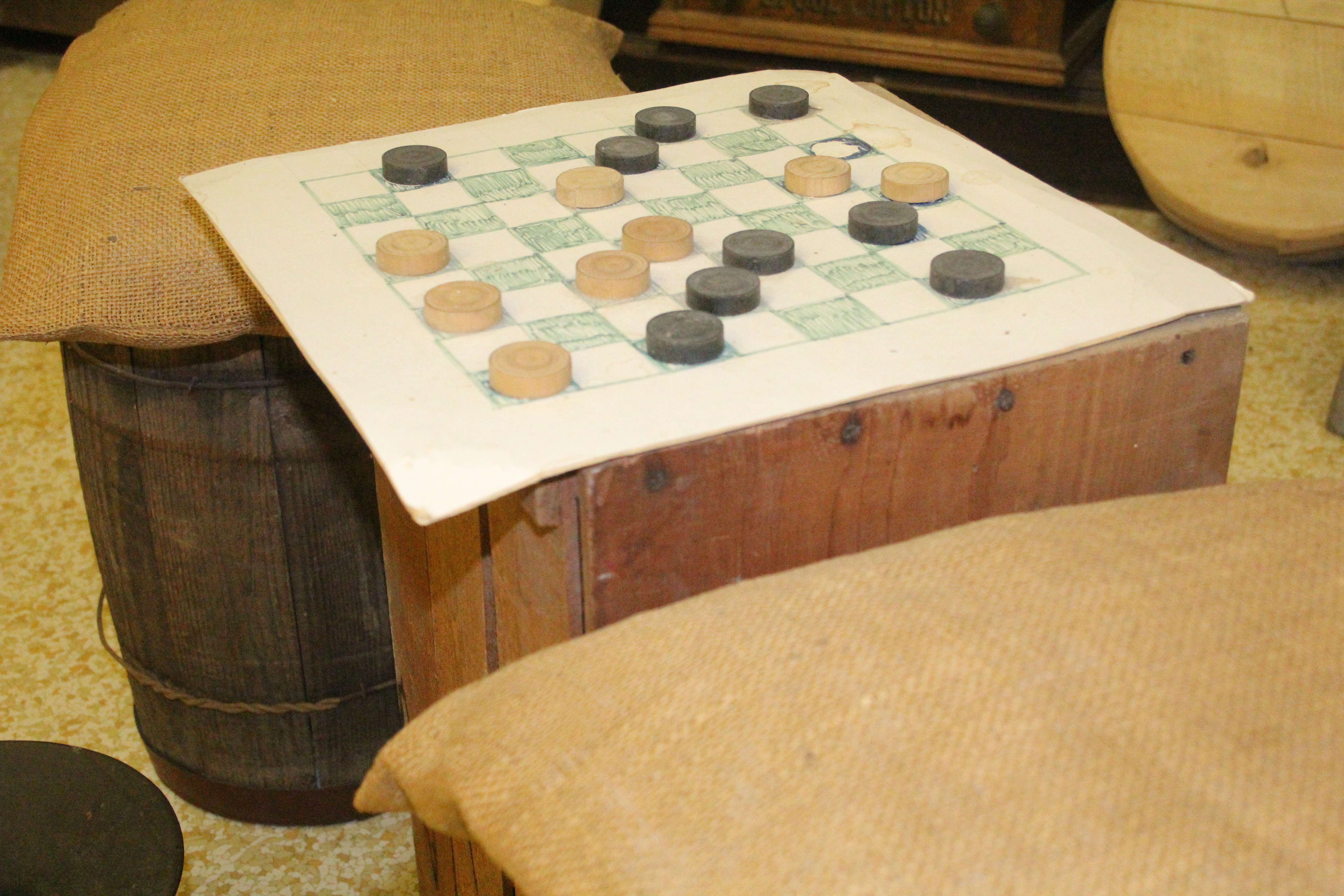
The museum, as the above pictures show, is filled to the brim with fascinating objects relating to the county’s history. It’s worth stopping by to help kickoff the county’s anniversary with a lesson on its history.
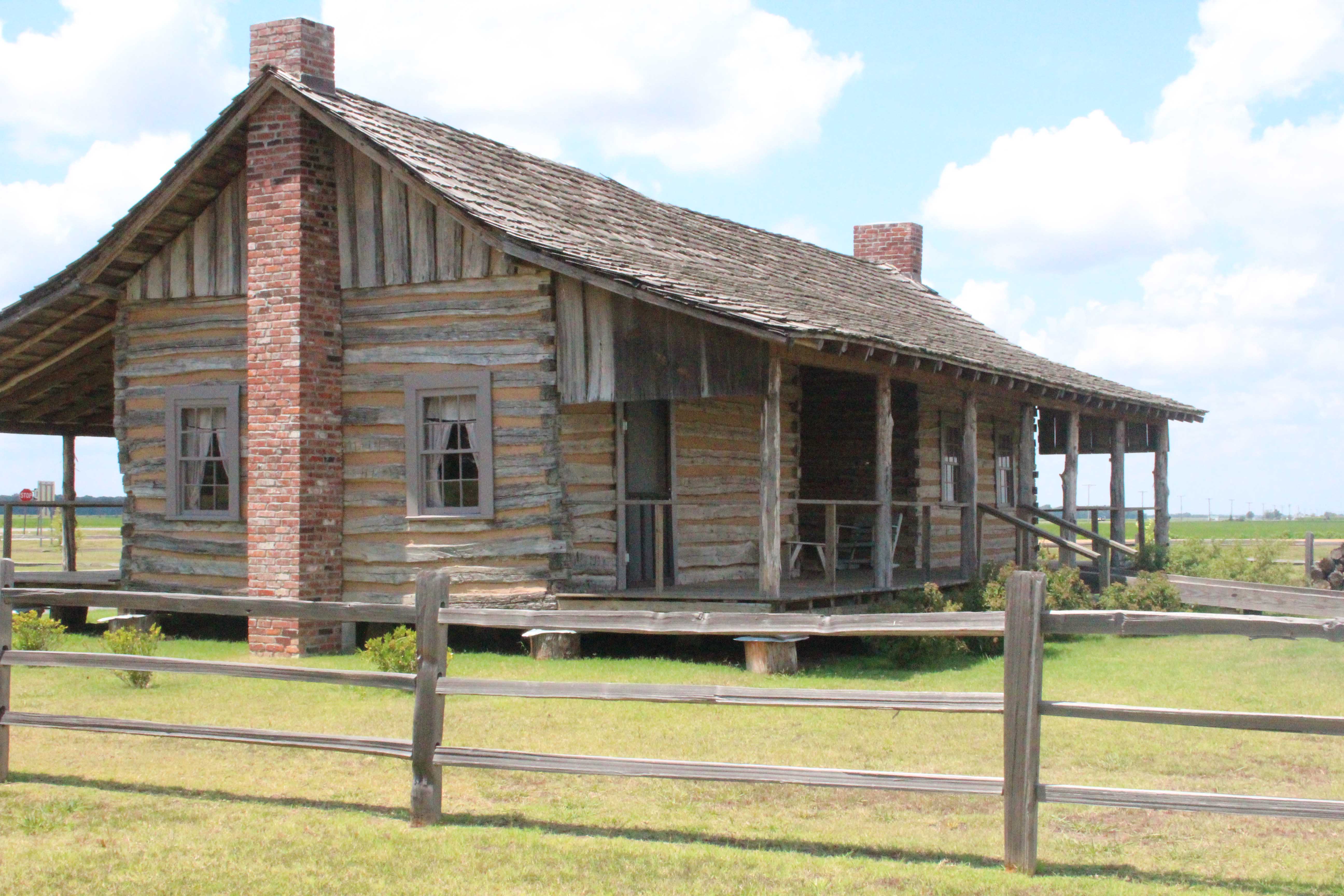
If you do go, don’t forget the Refeld-Hinman Log House! It was built for Amelia Haller Refield in 1877 and the widow actually went on to marry one of the men who helped build it. The house was eventually sold to Curtis Hinman in 1884 and was later restored in the 1930s to serve as the headquarters for the Arkansas Post State Park. The house was moved to the museum once the state park became a national memorial.
My parents joined me as I searched for the Ferruginous Hawk the Wednesday before Thanksgiving. I showed them pictures of the hawk taken by other Arkansas birders and we headed out to Newport. It was an interesting experience.
My Mom kept exclaiming “I can’t even find a Black Bird in the sky” while I kept saying “That’s OK, you’re looking for a hawk.” I had a hard time seeing the hawks before we passed them and, even when we saw them in time to stop, my Dad barely slowed down enough for a picture.
I can’t pronounce the name of the Ferruginous Hawk so I basically call it the “F” Hawk. I might need to come up with a new nickname since I feel like I’m cursing the hawk.
Despite these setbacks, we enjoyed the trip together and I did get pictures of one of the hawks we passed, a Krider’s Redtailed Hawk. It might not be the “F” Hawk, but it’s still a beautiful bird.
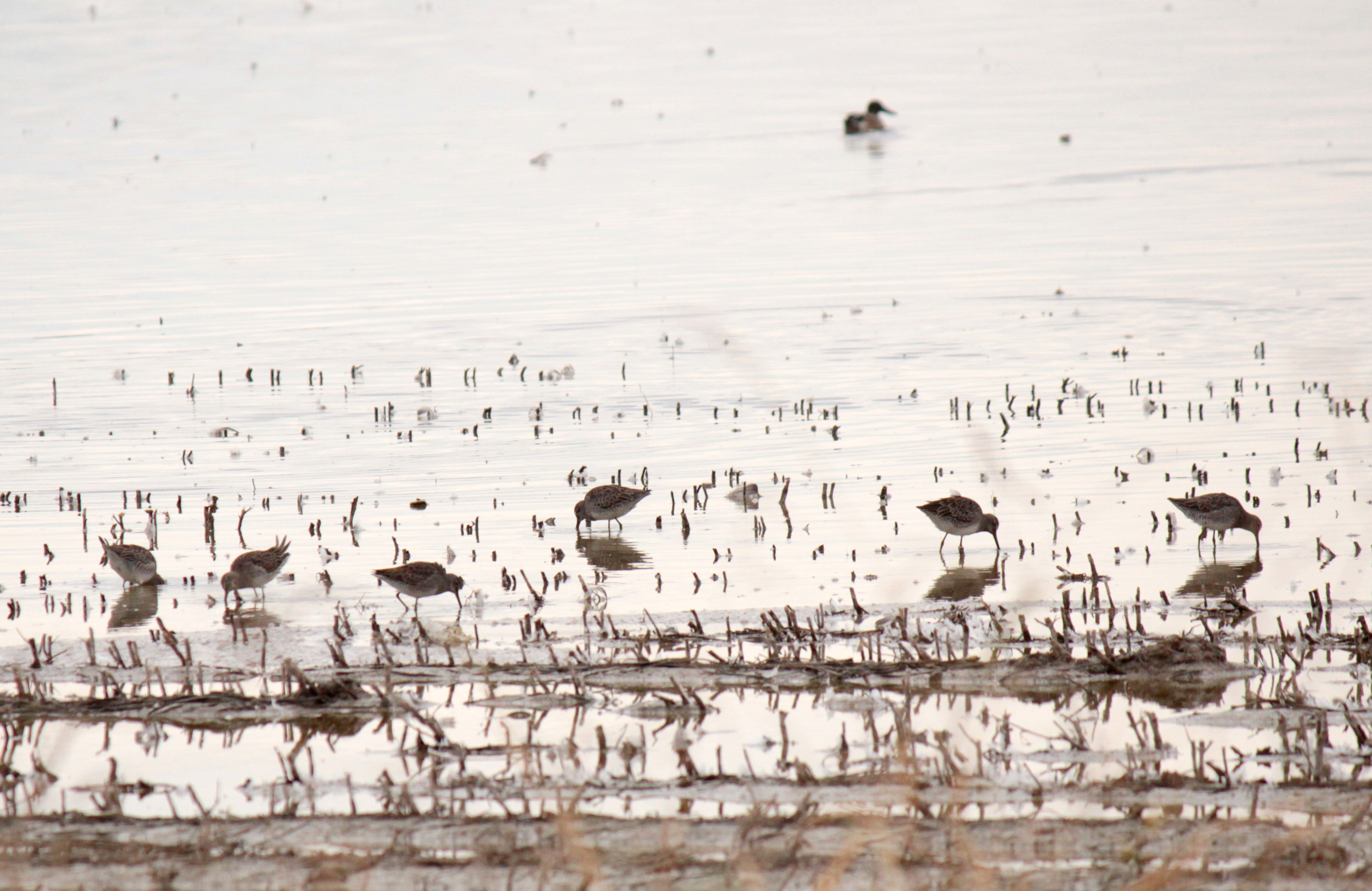
Short-Billed Dowitchers off of Hwy. 306 near Wynne
I shot this picture of Short-billed Dowitchers in a flooded field last Sunday. It was overshadowed when I went on to see Bald Eagles, mallards and Cooper’s Hawk in the following 48 hours. I began attempting to identify the Short-Billed Dowitchers this week and remembered I had similar looking birds in an Aug. 25 picture.
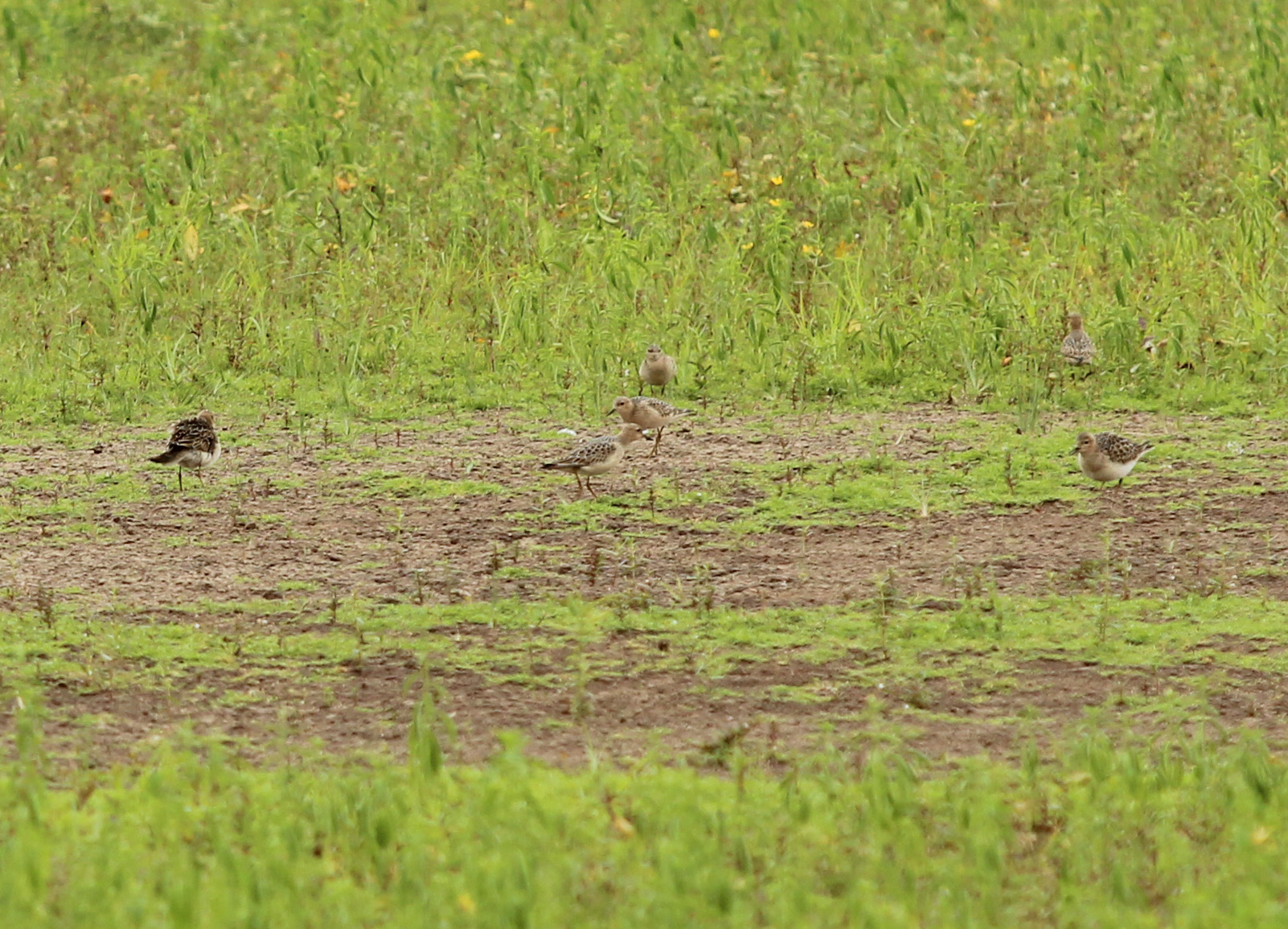
Silly me. I found the August picture and, well, the birds in both pictures really looked the same to me. They’re not, although I was somewhat right in my assessment that they were sandpipers. I successfully begged for help on the Arkansas Bird Listserv today to learn that the below picture is apparently of Buff-Breasted Sandpipers.
Buff-Breasted Sandpipers at the Bald Knob National Wildlife Refuge
Overall, I learned two key things today. The first is that I’m horrible at identifying birds if its not absolutely obvious (re: me thinking the birds in the above pictures were the same). The final fact is, well, I’ve photographed two new birds in Arkansas for my state bird list. Yay for me! 🙂
I previously worked as a news and sports photographer. Recently I have been enjoying wildlife photography. My approach toward bird photos is similar to sports photography. I attempt to capture mostly action and hopefully a unique perspective.
 Short-eared Owl


 I ended the visit sighting an eastern meadowlark and the above pictured Wilson’s Snipe.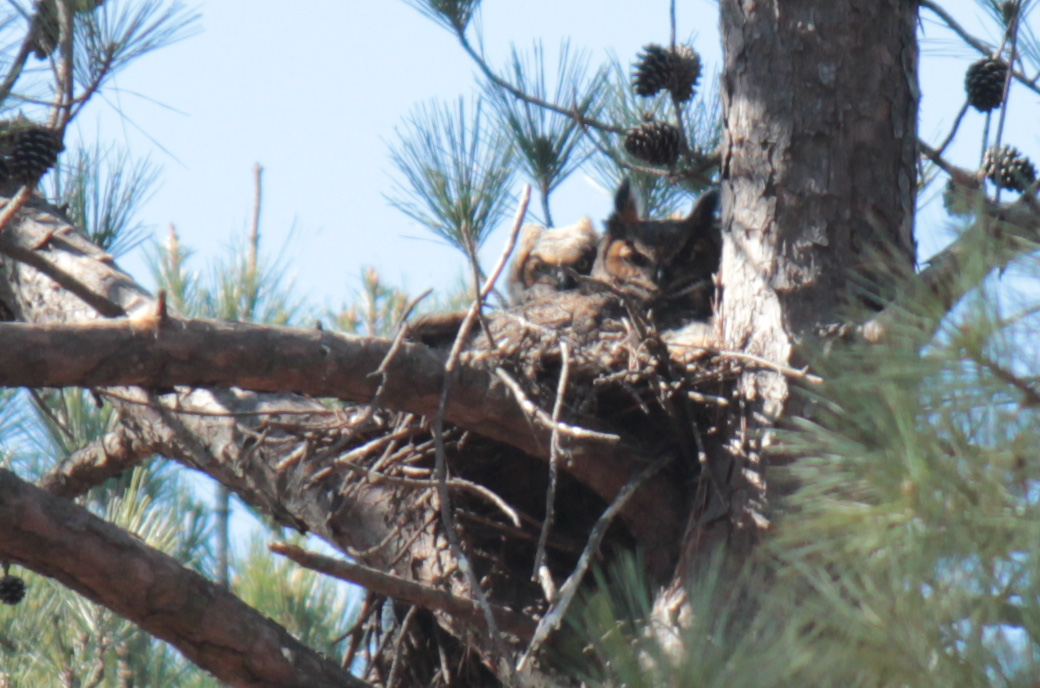




















 Memos for Me