Hummingbirds & Tree Sap

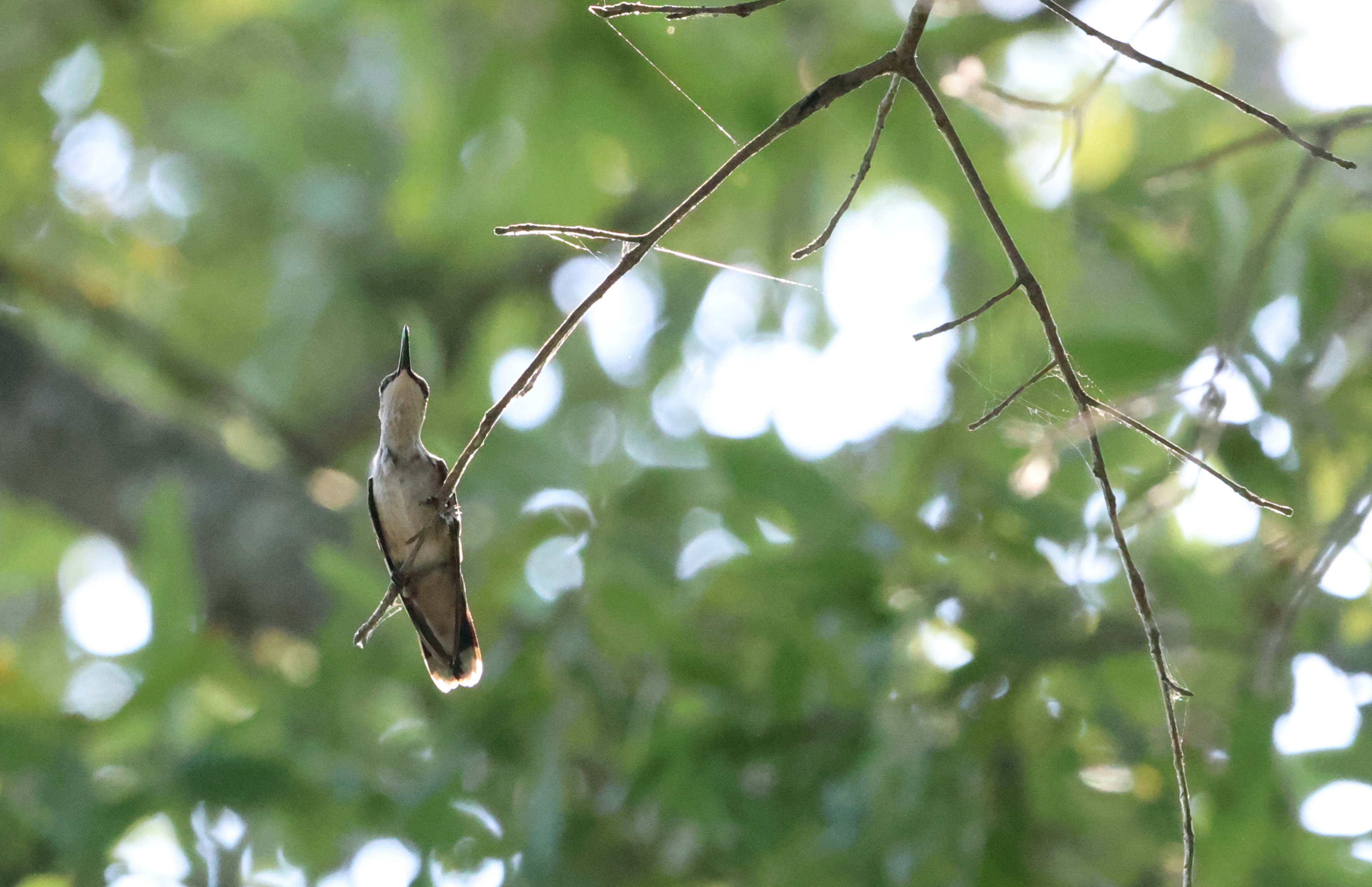
While Ruby-throated Hummingbirds typically feed on insects and nectar from flowers, another source of food is tree sap when it is available. Tree sap is similar in sugar content to the nectar hummingbirds take from flowers. Hummingbirds drink it from holes made by woodpeckers.

This is something I didn’t realize until recently. I was looking for shorebirds at Bald Knob National Wildlife Refuge, when I discovered three Ruby-throated Hummingbirds hovering around one particular spot on a nearby tree. It was pretty interesting to watch:
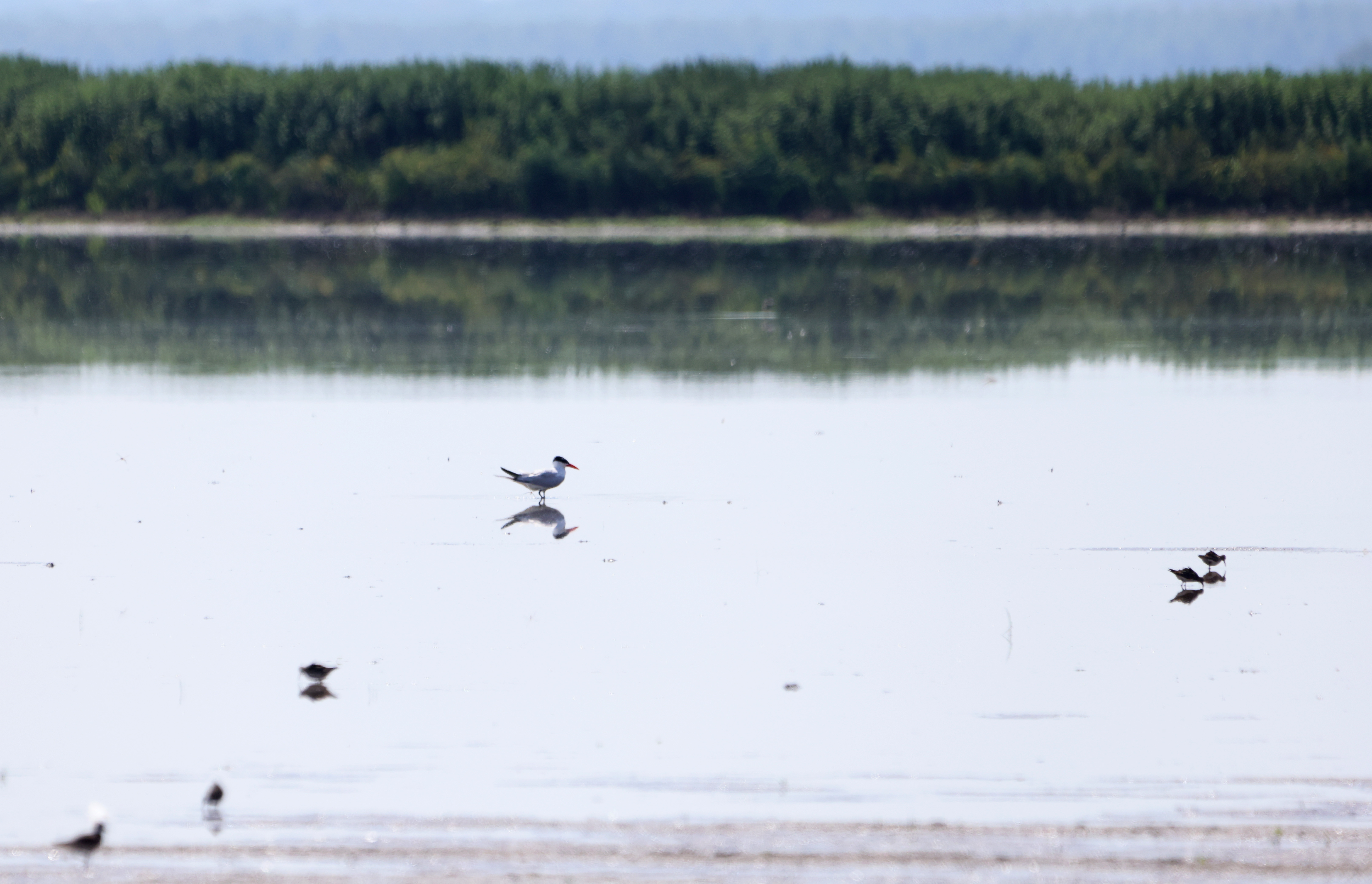
Caspian Tern

The Caspian Tern is the largest tern in the world, yet I almost missed the one pictured above that was standing in the middle of a field yesterday at the Bald Knob National Wildlife Refuge. Caspian Terns migrate through Arkansas yet sighting don’t happen every day. eBird reports they are “widespread but typically uncommon.” According to AllAboutBirds.org, the species is listed as endangered, threatened or special concern in several U.S. states. Partners in Flight estimates a global breeding population of 530,000 and rates the species a 10 out of 20 on the Continental Concern Score, indicating a species of low conservation concern. In Arkansas, eBird has 710 reports of Caspian Tern sightings over the years.

Red-necked Phalarope

I photographed my first Red-necked Phalarope on Thursday at Bald Knob National Wildlife Refuge. This one was a non breeding adult/immature, which have a white body with a gray/black back. There is a black streak by the eye, and they have a black bill.

This small shorebird is typically found along the coast. According to AllAboutBirds.org, it’s at home on the open ocean and breeds on the Arctic tundra.

There are three types of phalaropes that show up in Arkansas. A more experienced birder explained to me that the Wilson’s Phalarope is the most common – it’s the one I’ve seen multiple times over the years. The Red Phalarope is the most unusual. The third type is the Red-necked Phalarope.

Photos: Bald Knob NWR

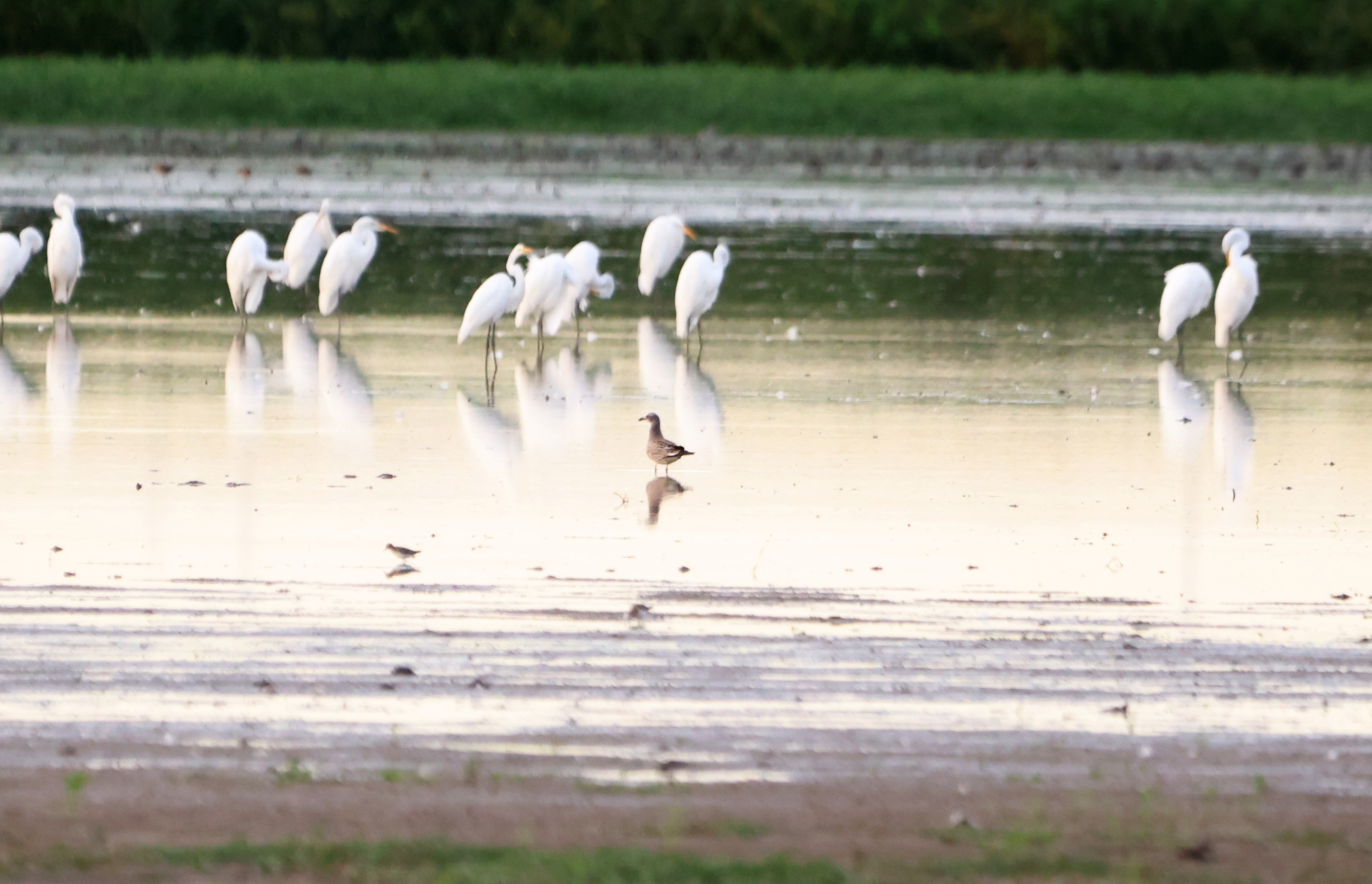
Laughing Gull

It’s been a busy few days at Bald Knob National Wildlife Refuge with more shorebirds – and other species – slowly starting to filter in. One of those newcomers was the above immature Laughing Gull. Laughing Gulls breed along the coast in eastern United States and migrate along the coast twiner in Central America or northern South America. The medium-sized gull not common in Arkansas.

Here are a few other recent sightings at Bald Knob NWR:

Mottled Duck

Mottled Ducks have been spotted at Bald Knob National Wildlife Refuge, and this is the best view I’ve gotten so far – with the exception of a few looks through a scope.

Mottled Ducks are frustrating for me. They are a dark brown, medium-sized duck with a bright yellow bill and a black spot at the gape (the spot where the bill meets feathers/head). They also closely resemble a female Mallard duck – and when they are far from view, it’s hard to tell which is which.

Mottled Ducks are on the watch list. They are commonly along the Gulf of Mexico coast and favor open marshy country, wet prairies and rice fields.

At the refuge, they’ve been spotted in a flooded field that refuge staff maintain for migrating shorebirds. I was lucky to arrive when more experienced birders were already set up. They were able to quickly point them out to me, and even let me peek through their scopes to get a better view.

Willets

Willets, a large, stocky shorebird with a black-and-white wing pattern, are not common in Arkansas, but have been spotted frequently this summer. I saw my first three Willets this weekend at Bald Knob National Wildlife Refuge. They were making their way through a flooded rice field.

Willets are typically found along the U.S. coastline. One fun fact: like Killdeers, Willets pretend to be disabled by a broken wing to draw attention to themselves and way from their eggs or chicks.

Unfortunately, Willets are listed on bird watch lists as one of the bird species at risk of becoming threatened or endangered without conservation action.

Photos: Dowitchers

Long-billed Dowitcher on May 7 at Bald Knob National Wildlife Refuge

This month, I was able to get a better look at long-billed and short-billed dowitchers. I consider that a great feat for me. The two species are very similar in appearance – AllAboutBirds.org notes you tell them apart by the short-billed dowitcher having a shorter bill (although there can be an overlap in bill size) and a slimmer underbelly. The best way to tell them apart is by their call.

Short-billed Dowitcher on May 14 at Bald Knob National Wildlife Refuge

Photo: American Bittern

The American Bittern has been my goal bird for 2023. And for weeks I kept missing it despite other birders seeing it just minutes before or after I visited a spot. Heck, a person I bird with spotted one flying across the road while in the same car as me. I saw it land in the field but I did not get a good enough view of it for the sighting to count (at least for me). That bittern landed by another vehicle of birders who confirmed its identity.

I finally spotted the above American Bittern earlier tonight. It was an especially great sighting because it happened on my 500th day of submitting a daily eBird checklist.

American Bitterns are heard more often than seen, and pass through Arkansas during migration, according to AllAboutBirds.org. Another birder actually told me to not expect to get a photo of one because they are hard to spot, much less photograph. The American Bittern is found in marsh areas, and typically are found with their necks stretched and bill pointed upward (which helps them hide better among the reeds they are usually found in). Mine was found on the edge of a ditch at Bald Knob National Wildlife Refuge in the same spot that other birders reported finding one in several times over the past few weeks.

Now that I’ve found and photographed an American Bittern, I haven’t decided what my next goal bird will be.

American Wigeon

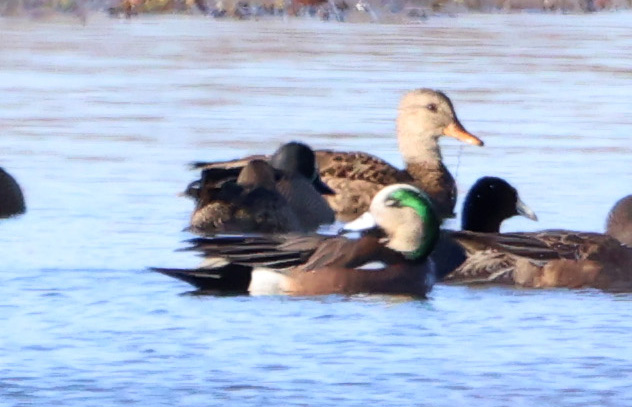
This winter, my “goal bird” was the American Wigeon. It was the bird I wanted to see. It took me until the end of winter to meet that goal – and even then I didn’t realize what I had actually seen until I got home and reviewed my photos.

The American Wigeon is a pretty duck. The male has brown-gray head with a bright green stripe behind the eye and white cap. It has a short, pale bill. I’ve zoomed in close to the male below for a better (if blurry) view. While I saw reports of them across Arkansas (they winter in the state), I saw my first two American Wigeons at Bald Knob National Wildlife Refuge. They were mixed in with Gadwalls, American Coots, Blue-winged Teal and Northern Shovelers.

Acadian Flycatcher

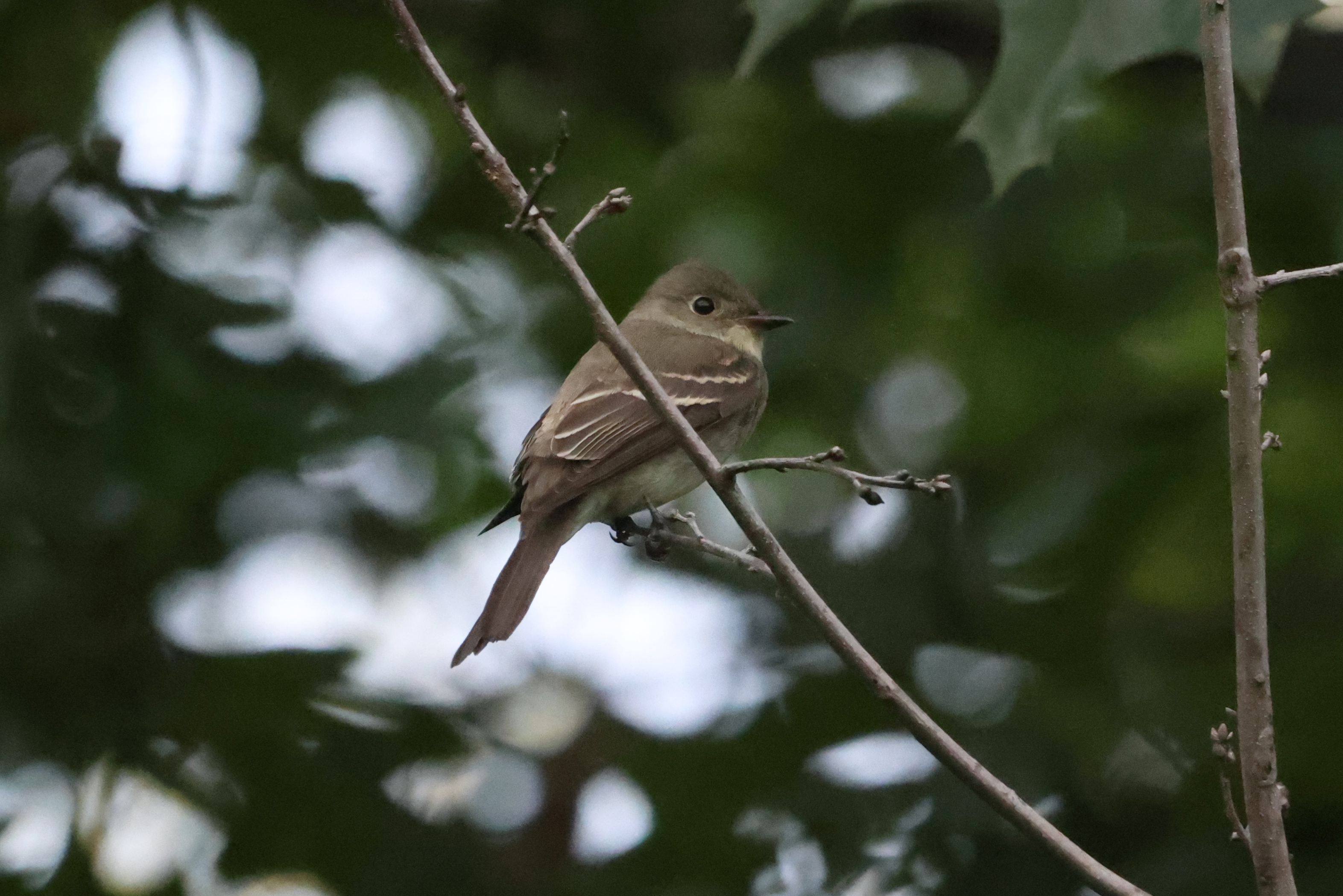
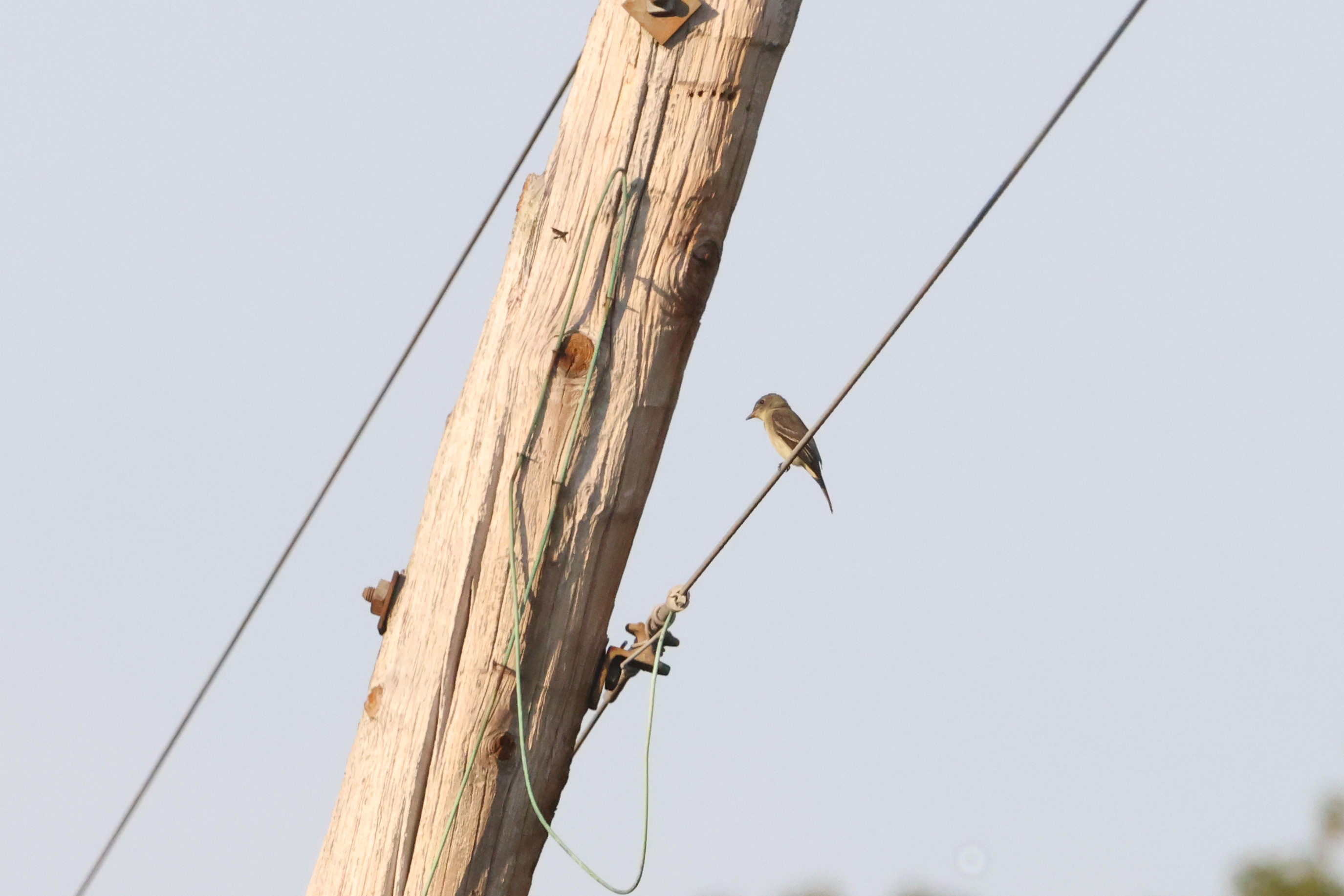
I’ve been hearing Acadian Flycatchers for a while at Bald Knob National Wildlife Refuge, but I haven’t been able to spot one until today. This one finally responded to call playbacks and showed up so I could get a good look.

Acadian Flycatchers are sparrow-sized and are olive-green above with a whitish eye ring and underparts. They can be found in Arkansas during breeding season before migrating to Central America and spending their non breeding season in the upper parts of South America.

One cool fact from AllAboutBirds.org: they “are such adept fliers that they sometimes take a bath not by wading into water but by diving at it, hitting the surface with its chest, and then returning to a perch to preen and shake.”